Polyclonal Antibodies
Anti-NRCAM Polyclonal Antibody for WB and ELISA - Q92823
Item Number : CM0022845
Price varies based on specs and customizations
- Application
- WB, ELISA
- Cross Reactivity
- Human, Mouse
- Protein Weight
- 144kDa

Shipping:
Contact us to get shipping details Enjoy On-time Dispatch Guarantee.
Why Choose Us
Easy ordering process, quality products, and dedicated support for your business success.
Core Product Specifications and Parameters
| Parameter | Value |
|---|---|
| Product Name | NRCAM Rabbit pAb |
| Remarks/Alias | NEDNMS; NRCAM |
| Species | Human |
| Gene ID (Human) | 4897 |
| Gene ID | 4897 |
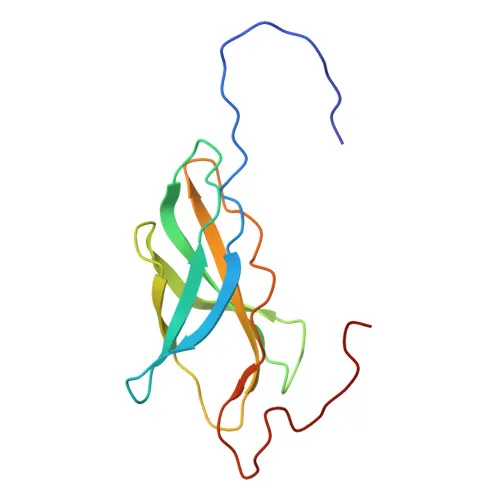
| Immunogen | Recombinant fusion protein containing a sequence corresponding to amino acids 25-115 of human NRCAM (Q92823). |
| Source | Rabbit |
| Category | Polyclonal Antibodies |
| Application | WB, ELISA |
| Cross Reactivity | Human, Mouse |
| SWISS | Q92823 |
| Protein Weight | 144kDa |
| Shipping | Ice bag |
Biological Background: NRCAM Function and Localization
- NRCAM (Neuronal cell adhesion molecule) is a cell adhesion protein of the immunoglobulin superfamily that mediates cell-cell interactions in the nervous system.
- It plays a critical role in neurite outgrowth in response to contactin binding, contributing to neuronal development and regeneration.
- NRCAM facilitates cell-cell contacts between Schwann cells and axons, essential for proper myelination and peripheral nerve function.
- The protein is required for the formation and maintenance of nodes of Ranvier, where it organizes sodium channel clustering to enable saltatory conduction.
- NRCAM localizes to the cell membrane, axon projections, and can be secreted, reflecting its roles in both cell-surface adhesion and extracellular signaling.
- It is broadly expressed, with detection in brain regions such as the amygdala, hippocampus, and thalamus, as well as in non-neural tissues.
- Post-translational modifications include glycosylation, disulfide bond formation, and phosphorylation; alternative splicing produces multiple isoforms.
Experimental Guidance and Technical Tips
- For western blotting, use reducing conditions and note the predicted molecular weight of approximately 144 kDa; include appropriate loading controls.
- Since NRCAM can be secreted, consider analyzing both whole-cell lysates and conditioned medium to capture all forms.
- For ELISA, validate the antibody with the recombinant immunogen or a characterized protein standard to ensure specificity.
- Confirm cross-reactivity in your specific sample system, as reactivity is reported for human and mouse.
- Optimize primary antibody dilution and blocking conditions empirically for your assay format.
CamelBio: Your One-Stop Sourcing Bridge
CamelBio supports diagnostic manufacturers and research laboratories with a comprehensive portfolio of IVD raw materials, including antibodies for neurobiology targets such as this anti-NRCAM polyclonal antibody. We streamline procurement of validated antibody pairs, bulk ancillary reagents, and custom raw-material sourcing, helping you accelerate assay development in neuronal disease research. From concept to clinical application, CamelBio is your dedicated partner in building reliable diagnostic solutions.
REQUEST A QUOTE
Our professional team will reply to you within one business day. Please feel free to contact us!