Polyclonal Antibodies
Anti-NMUR1 Polyclonal Antibody for WB, ELISA - Q9HB89
Item Number : CM0020283
Price varies based on specs and customizations
- Application
- WB, ELISA
- Cross Reactivity
- Human, Mouse
- Protein Weight
- 47kDa

Shipping:
Contact us to get shipping details Enjoy On-time Dispatch Guarantee.
Why Choose Us
Easy ordering process, quality products, and dedicated support for your business success.
Core Product Specifications and Parameters
| Parameter | Value |
|---|---|
| Product Name | NMUR1 Rabbit pAb |
| Remarks/Alias | FM3; FM-3; GPC-R; GPR66; NMU1R; (FM-3); NMUR1 |
| Species | Human |
| Gene ID | 10316 |
| Immunogen | Recombinant fusion protein containing a sequence corresponding to amino acids 360-426 of human NMUR1 (NP_006047.3) |
| Source | Rabbit |
| Category | Polyclonal Antibodies |
| Application | WB, ELISA |
| Cross Reactivity | Human, Mouse |
| SWISS | Q9HB89 |
| Protein Weight | 47kDa |
| Shipping | Ice bag |
Biological Background: Neuromedin-U Receptor 1 Function and Localization
-
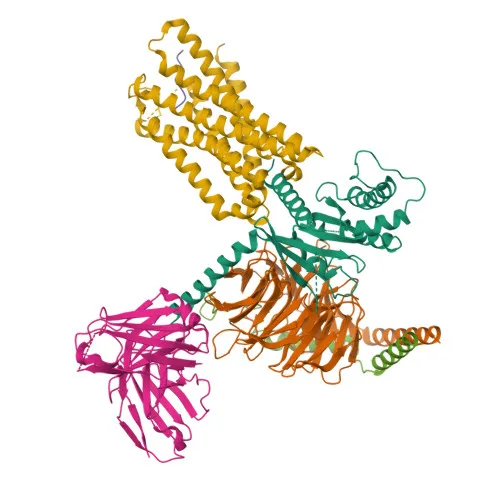
NMUR1 functions as a G protein-coupled receptor for the neuropeptides neuromedin-U (NMU) and neuromedin-S (NMS), orchestrating key physiological processes such as feeding, energy balance, blood pressure regulation, and smooth muscle contraction. Related references: PMID:10899166, PMID:15635449, PMID:35440625
-
Upon ligand binding, NMUR1 couples to GNAQ/Gαq or GNA11/Gα11 and GNAI1/Gαi subunits. Gαq/11 activates phospholipase C, generating IP3 and DAG to mobilize intracellular calcium, while Gαi inhibits adenylate cyclase-mediated cAMP production. Related references: PMID:10899166, PMID:15331768
-
NMUR1 localizes to the cell membrane, consistent with its role as a membrane-bound receptor.
-
It is predominantly expressed in peripheral tissues, with highest levels in the testes, gastrointestinal tract, and urogenital system; lower expression is observed in the central nervous system, including the cerebellum, dorsal root ganglia, hippocampus, and spinal cord.
-
As a typical GPCR, NMUR1 contains seven transmembrane helices, disulfide bonds, and glycosylation sites that contribute to its structural stability and function.
-
Additional tissue-dependent roles include modulation of hormone release and regulation of inflammatory responses.
Experimental Guidance and Technical Tips
-
The immunogen corresponds to the C-terminal intracellular region (aa 360-426) of human NMUR1. For Western blot, consider using membrane protein extraction protocols and include a reducing agent to detect the full-length receptor.
-
A band near the predicted 47 kDa molecular weight is expected; however, post-translational modifications such as glycosylation may cause a shift. Validate the observed band with appropriate controls.
-
Listed reactivity covers human and mouse; if using samples from other species, cross-reactivity should be verified experimentally.
-
In ELISA, the antibody may be suitable as a capture or detection reagent. Titration experiments are recommended to determine optimal working concentrations.
CamelBio: Your One-Stop Sourcing Bridge
CamelBio is a specialized IVD raw-material sourcing partner, providing integrated access to antibodies, reagents, and technical services for diagnostic assay development. For GPCR targets like NMUR1, critical in metabolic and inflammatory disease research, we offer validated antibody pairs, polyclonal antibodies, bulk ancillary reagents, and rare target raw-material solutions. From concept to clinic, CamelBio supports your workflow with reliable, one-stop supply and expert consultation.
REQUEST A QUOTE
Our professional team will reply to you within one business day. Please feel free to contact us!