Polyclonal Antibodies
Anti-NMNAT1 Polyclonal Antibody for WB and ELISA - Q9HAN9
Item Number : CM0028842
Price varies based on specs and customizations
- Application
- WB, ELISA
- Cross Reactivity
- Human
- Protein Weight
- 32kDa

Shipping:
Contact us to get shipping details Enjoy On-time Dispatch Guarantee.
Why Choose Us
Easy ordering process, quality products, and dedicated support for your business success.
Core Product Specifications and Parameters
| Parameter | Value |
|---|---|
| Product Name | NMNAT1 Rabbit pAb |
| Remarks/Alias | LCA9, NMNAT, PNAT1, SHILCA, NMNAT1 |
| Species | Human |
| GeneID (Human) | 64802 |
| GeneID | 64802 |
| Immunogen | Recombinant fusion protein containing a sequence corresponding to amino acids 1-150 of human NMNAT1 (NP_073624.2) |
| Source | Rabbit |
| Category | Polyclonal Antibodies |
| Application | WB, ELISA |
| Cross Reactivity | Human |
| SWISS | Q9HAN9 |
| Protein Weight | 32kDa |
| Shipping | Ice bag |
Biological Background: NMNAT1 Function and Localization
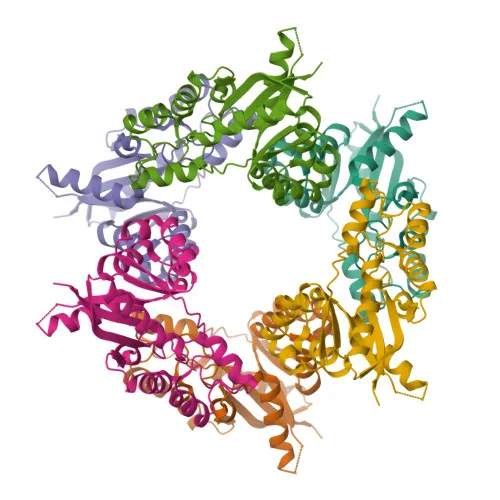
- NMNAT1 (Nicotinamide/nicotinic acid mononucleotide adenylyltransferase 1) is also known as nicotinamide-nucleotide adenylyltransferase 1 and nicotinate-nucleotide adenylyltransferase 1. It is a key enzyme in NAD+ biosynthesis.
- Catalyzes the ATP-dependent conversion of nicotinamide mononucleotide (NMN) and nicotinic acid mononucleotide (NaMN) to NAD+ and NaAD+, respectively. Also accepts triazofurin monophosphate as a substrate and can perform the reverse pyrophosphorolytic cleavage of NAD+. Related references: PMID:17402747
- Functions in nuclear ATP generation together with PARP1, PARG, and NUDT5, providing energy for extensive chromatin remodeling. Related references: PMID:27257257
- Acts as a cofactor directing PARP1 catalytic activity to glutamate and aspartate residues on histones, influencing ADP-ribosylation.
- Localizes predominantly to the nucleus.
- Widely expressed with highest levels in skeletal muscle, heart, and kidney; also found in liver, pancreas, placenta, and throughout the brain.
- Protects against axonal degeneration following mechanical or toxic insults, a function that may require enzymatic activity but does not correlate with cellular NAD+ levels.
- Contains a zinc-binding motif and undergoes phosphorylation, as indicated by proteomics studies.
Experimental Guidance and Technical Tips
- The immunogen corresponds to the N-terminal region (amino acids 1-150) of human NMNAT1. This region is likely exposed and may recognize both full-length and certain truncated forms. Consider verifying specificity in your sample system.
- Recommended for Western blot (WB) and ELISA. For WB, a band around 32 kDa is expected in human-derived lysates. Optimize antibody dilution and detection conditions, as polyclonal antibodies may require titration.
- Cross-reactivity is reported for human NMNAT1. If working with other species, validate cross-reactivity experimentally, as it is not guaranteed.
- Due to the target’s nuclear localization, consider appropriate lysis and fractionation methods to enrich nuclear proteins if signal is weak.
CamelBio: Your One-Stop Sourcing Bridge
CamelBio supplies diagnostic manufacturers, laboratories, and research institutes with a comprehensive range of IVD raw materials, technical services, and consulting—from early concept to clinical application. For NMNAT1-related metabolism and chromatin research, we offer validated rabbit polyclonal antibodies, optimized antibody pairs, and bulk ancillary reagents. Our one-stop sourcing model streamlines procurement of rare-target raw materials, ensuring consistent quality and supply for your assay development pipelines.
REQUEST A QUOTE
Our professional team will reply to you within one business day. Please feel free to contact us!