Polyclonal Antibodies
Anti-NMDAR2A Rabbit Polyclonal Antibody for WB, IF-P, IHC-P, ELISA - Q12879
Item Number : CM0013316
Price varies based on specs and customizations
- Application
- WB, IF-P, IHC-P, ELISA
- Cross Reactivity
- Human, Mouse, Rat
- Protein Weight
- 165kDa

Shipping:
Contact us to get shipping details Enjoy On-time Dispatch Guarantee.
Why Choose Us
Easy ordering process, quality products, and dedicated support for your business success.
Core Product Specifications and Parameters
| Parameter | Value |
|---|---|
| Product Name | NMDAR2A Rabbit pAb |
| Remarks/Alias | LKS; EPND; FESD; NR2A; GluN2A; NMDAR2A |
| Species | Human |
| Gene ID (Human) | 2903 |
| Gene ID | 2903 |
| Immunogen | Recombinant protein|Recombinant fusion protein containing a sequence corresponding to amino acids 1130-1400 of human NMDAR2A (NP_000824.1). |
| Source | Rabbit |
| Category | Polyclonal Antibodies |
| Application | WB, IF-P, IHC-P, ELISA |
| Cross Reactivity | Human, Mouse, Rat |
| SWISS | Q12879 |
| Protein Weight | 165kDa |
| Shipping | Ice bag |
Biological Background: NMDAR2A Function and Localization
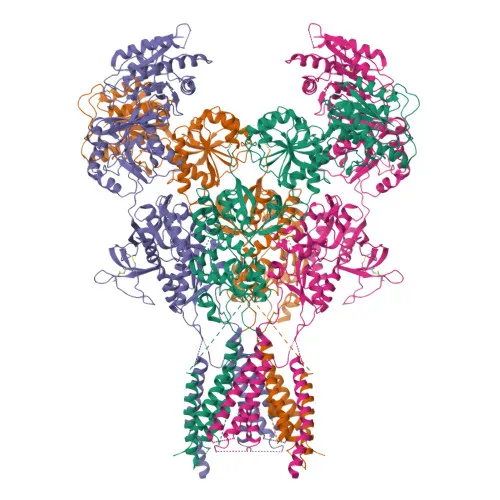
- NMDAR2A (GRIN2A) encodes the glutamate receptor ionotropic NMDA 2A subunit, also known as GluN2A or NR2A, a key component of N-methyl-D-aspartate (NMDA) receptors.
- NMDARs are heterotetrameric, ligand-gated cation channels with high calcium permeability and voltage-dependent Mg2+ block, requiring both glutamate binding to GluN2 and glycine/D-serine binding to GluN1 for activation. Related references: PMID:20890276 PMID:23933818 PMID:23933819
- NMDARs contribute to synaptic plasticity, learning, and memory by mediating the slow excitatory postsynaptic current and long-term potentiation.
- Each GluN2 subunit, including GluN2A, confers distinct channel kinetics, pH sensitivity, Ca2+ permeability, and allosteric modulation, shaping NMDAR functional diversity. Related references: PMID:26875626 PMID:26919761
- The protein is localized mainly to the postsynaptic cell membrane of dendritic spines, and also found in cytoplasmic vesicles, consistent with regulated synaptic trafficking.
- Post-translational modifications include phosphorylation and disulfide bond formation; it is a glycoprotein and contains zinc-binding sites.
- Genetic variants in GRIN2A are associated with epilepsy and other neurological disorders, highlighting its critical role in brain function.
Experimental Guidance and Technical Tips
- The immunogen corresponds to the C-terminal region (aa 1130-1400) of human NMDAR2A, which is conserved across human, mouse, and rat, supporting the observed cross-reactivity.
- For Western blotting (WB), the predicted molecular weight is 165 kDa; consider using low-percentage gels and extended transfer times due to the high molecular weight.
- In immunofluorescence (IF-P) and immunohistochemistry (IHC-P), nuclear and cytoplasmic signals may be observed based on subcellular localization; include appropriate controls to confirm specificity.
- ELISA performance may depend on coating antigen and antibody concentration; validate with recombinant protein or positive control samples.
- As a polyclonal antibody, lot-to-lot variability can occur; validate each new lot in your intended application.
CamelBio: Your One-Stop Sourcing Bridge
CamelBio streamlines IVD raw material procurement with one-stop sourcing of validated antibodies and ancillary reagents. This NMDAR2A antibody supports neuroscience research and diagnostic development for synaptic targets. Reach out for bulk orders, custom formulations, or rare-target material sourcing to accelerate your assay development.
Product Datasheet
Anti-NMDAR2A Rabbit Polyclonal Antibody for WB, IF-P, IHC-P, ELISA - Q12879
REQUEST A QUOTE
Our professional team will reply to you within one business day. Please feel free to contact us!