Polyclonal Antibodies
Anti-NMDAR1 Rabbit Polyclonal Antibody for WB, IHC, IF, ELISA - Q05586
Item Number : CM0030132
Price varies based on specs and customizations
- Application
- WB, IHC-P, IF/ICC, ELISA
- Cross Reactivity
- Human, Mouse, Rat
- Protein Weight
- 105kDa

Shipping:
Contact us to get shipping details Enjoy On-time Dispatch Guarantee.
Why Choose Us
Easy ordering process, quality products, and dedicated support for your business success.
Core Product Specifications and Parameters
| Parameter | Value |
|---|---|
| Product Name | NMDAR1 Rabbit pAb |
| Remarks/Alias | NR1; MRD8; GluN1; NMDA1; DEE101; NDHMSD; NDHMSR; NMD-R1; NMDAR1 |
| Species | Human |
| GeneID (Human) | 2902 |
| GeneID | 2902 |
| Immunogen | Synthetic peptide |
| Source | Rabbit |
| Category | Polyclonal Antibodies |
| Application | WB, IHC-P, IF/ICC, ELISA |
| Cross Reactivity | Human, Mouse, Rat |
| SWISS | Q05586 |
| Protein Weight | 105kDa |
| Shipping | Ice bag |
Biological Background: NMDAR1 Function and Localization
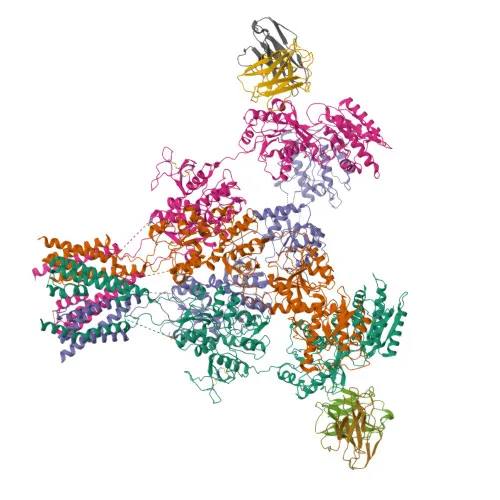
- NMDAR1 (GRIN1) encodes the essential GluN1 subunit of N-methyl-D-aspartate (NMDA) receptors, ligand-gated cation channels that mediate excitatory neurotransmission in the central nervous system. The full-length protein has a predicted molecular weight of approximately 105 kDa.
- NMDA receptors are heterotetrameric complexes typically composed of two GluN1 subunits and two GluN2 or GluN3 subunits. Channel activation requires simultaneous binding of glutamate to GluN2 and glycine or D-serine to GluN1, plus membrane depolarization to relieve voltage-dependent Mg²⁺ block. Related references: PMID:21376300, PMID:26875626, PMID:26919761
- Receptor activation leads to influx of Ca²⁺ and Na⁺ and efflux of K⁺, contributing to postsynaptic calcium signaling. The high calcium permeability of NMDARs is essential for triggering intracellular cascades involved in synaptic plasticity.
- NMDARs play a central role in long-term potentiation (LTP), a cellular correlate of learning and memory. Disruption of GRIN1 or NMDAR function is associated with neurodevelopmental and psychiatric disorders, including epilepsy and intellectual disability. Related references: PMID:26875626
- Different GluN2 (A-D) and GluN3 (A-B) subunits confer distinct kinetic and pharmacological properties to the receptor, influencing activation, deactivation, desensitization, pH sensitivity, and allosteric modulation. Related references: PMID:26875626, PMID:26919761, PMID:36309015
- The GluN1 subunit is subject to multiple post-translational modifications, including phosphorylation, ubiquitination, and disulfide bond formation, which regulate receptor trafficking and function. It contains binding sites for zinc and magnesium.
- Subcellular localization is primarily at the postsynaptic density of excitatory synapses, where NMDARs anchor to scaffolding proteins. The receptor cycles between intracellular pools and the synaptic membrane.
- Alternative splicing of GRIN1 generates multiple isoforms (e.g., NR1-1 to NR1-4) that differ in their C-terminal domains, affecting protein interactions and subcellular distribution.
Experimental Guidance and Technical Tips
- The immunogen corresponds to a synthetic peptide within the C-terminal intracellular domain (residues 810–910) of human NMDAR1. This region may be useful for detecting full-length protein or specific splice variants.
- For Western blotting, the predicted molecular weight is 105 kDa. Consider using a 6–8% SDS-PAGE gel and PVDF membrane for efficient transfer of this large protein. Validate band specificity with appropriate controls.
- In immunohistochemistry (IHC-P) and immunofluorescence (IF/ICC), optimize fixation and permeabilization conditions for your tissue or cell type. Antigen retrieval may enhance signal in formalin-fixed paraffin-embedded sections.
- Human, mouse, and rat cross-reactivity is indicated by the manufacturer, but sequence homology of the immunogen across these species should be verified before use in non-human systems.
- This polyclonal antibody may also be suitable for ELISA; consider pairing it with a monoclonal capture antibody if developing a sandwich assay.
CamelBio: Your One-Stop Sourcing Bridge
CamelBio streamlines the sourcing of IVD raw materials for diagnostic developers and research laboratories, covering targets from neurological disorders to infectious diseases. This NMDAR1 antibody is part of our broad portfolio supporting neuroscience and synaptic biomarker research. Beyond individual antibodies, we offer validated antibody pairs, optimized monoclonal and polyclonal reagents, bulk ancillary reagents, and custom sourcing for rare targets—helping you accelerate assay development from concept to clinic.
Product Datasheet
Anti-NMDAR1 Rabbit Polyclonal Antibody for WB, IHC, IF, ELISA - Q05586
REQUEST A QUOTE
Our professional team will reply to you within one business day. Please feel free to contact us!