Monoclonal Antibodies
Anti-NMDAR1 Rabbit Monoclonal Antibody for WB, IF-P, ELISA - Q05586
Item Number : CM0003378
Price varies based on specs and customizations
- Application
- WB, IF-P, ELISA
- Cross Reactivity
- Mouse, Rat
- Protein Weight
- 105kDa

Shipping:
Contact us to get shipping details Enjoy On-time Dispatch Guarantee.
Why Choose Us
Easy ordering process, quality products, and dedicated support for your business success.
Core Product Specifications and Parameters
| Parameter | Value |
|---|---|
| Product Name | NMDAR1 Rabbit mAb |
| Remarks / Alias | NR1; MRD8; GluN1; NMDA1; DEE101; NDHMSD; NDHMSR; NMD-R1; NMDAR1 |
| Species | Human |
| Gene ID (Human) | 2902 |
| Gene ID | 2902 |
| Immunogen | Synthetic peptide corresponding to a sequence within amino acids 800-900 of human NMDAR1 (Q05586) |
| Source | Rabbit |
| Category | Monoclonal Antibodies |
| Application | WB, IF-P, ELISA |
| Cross Reactivity | Mouse, Rat |
| SWISS | Q05586 |
| Protein Weight | 105kDa |
| Shipping | Ice bag |
Biological Background: NMDAR1 Function and Localization
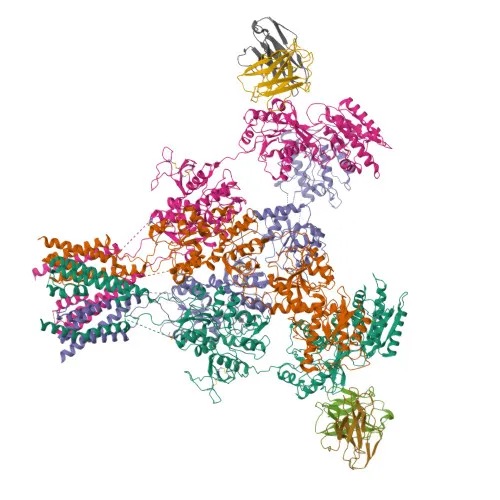
- Protein identity and gene: NMDAR1 (also known as NR1, GluN1, or Glutamate receptor ionotropic, NMDA 1) is encoded by the GRIN1 gene. It is the essential subunit of N-methyl-D-aspartate (NMDA) receptors.
- Core ion channel function: NMDAR1 is an obligate subunit of heterotetrameric, ligand-gated cation channels with high calcium permeability and voltage-dependent magnesium block. Related references: PMID:21376300 | PMID:26875626 | PMID:26919761
- Synaptic plasticity and memory: NMDA receptors participate in synaptic plasticity, contributing to long-term potentiation (LTP) during learning and memory formation. Related references: PMID:26875626
- Channel activation mechanism: Channel opening requires binding of glycine or D-serine to the GluN1 subunit, glutamate to the GluN2 subunit, and membrane depolarization to relieve Mg2+ inhibition. Related references: PMID:21376300 | PMID:26875626 | PMID:26919761
- Subunit diversity: Co-assembly with different GluN2 (A-D) or GluN3 (A-B) subunits yields receptors with distinct kinetic properties, pH sensitivity, Ca2+ permeability, and allosteric modulation. Related references: PMID:26875626 | PMID:26919761 | PMID:36309015
- Subcellular localization: NMDAR1 localizes to the cell membrane, specifically at postsynaptic and postsynaptic density membranes, placing it at the core of excitatory neurotransmission.
- Post-translational modifications: The protein undergoes phosphorylation, glycosylation, isopeptide bond formation, and ubiquitination (Ubl conjugation), which regulate receptor trafficking, stability, and function.
- Clinical relevance: Mutations in GRIN1 are associated with neurological disorders including epilepsy and intellectual disability, highlighting its critical role in brain function.
Experimental Guidance and Technical Tips
- The immunogen corresponds to amino acids 800–900 within the intracellular C-terminal domain, suggesting the antibody may detect total NMDAR1. In Western blot, validate specificity using knockout or knockdown controls.
- The antibody is suitable for WB, IF-P, and ELISA. For IF-P, optimize permeabilization to access the intracellular epitope.
- The reported cross-reactivity with mouse and rat makes this antibody suitable for studies in common model organisms. Verify reactivity in your tissue or cell system.
- The predicted molecular weight is 105 kDa. Post-translational modifications (glycosylation, phosphorylation) may cause slight band shifts or multiple bands in WB.
- For ELISA, consider pairing with a capture antibody for sandwich immunoassay development, but perform independent validation.
CamelBio: Your One-Stop Sourcing Bridge
CamelBio provides diagnostic manufacturers, laboratories, and research institutes with one-stop access to validated IVD raw materials and technical services. This product targets NMDAR1, a key subunit of NMDA receptors widely studied in neuroscience, synaptic plasticity, and neurological disorders. Beyond this monoclonal antibody, CamelBio supports your pipeline with curated antibody pairs, bulk ancillary reagents, and sourcing assistance for rare or custom targets, streamlining your development from concept to clinic.
REQUEST A QUOTE
Our professional team will reply to you within one business day. Please feel free to contact us!