Polyclonal Antibodies
Anti-NLRC4 Polyclonal Antibody for WB - Q3UP24
Item Number : CM0023086
Price varies based on specs and customizations
- Application
- WB, IF/ICC, IF-P, ELISA
- Cross Reactivity
- Human, Mouse, Rat
- Protein Weight
- 116kDa

Shipping:
Contact us to get shipping details Enjoy On-time Dispatch Guarantee.
Why Choose Us
Easy ordering process, quality products, and dedicated support for your business success.
Core Product Specifications and Parameters
| Parameter | Value |
|---|---|
| Product Name | NLRC4 Rabbit pAb |
| Remarks/Alias | CLAN; IPAF; AIFEC; CLAN1; CLANA; CLANB; CLANC; CLAND; FCAS4; CARD12; CLR2.1; NLRC4 |
| Species | Mouse |
| GeneID (Human) | 58484 |
| GeneID | 268973 |
| Immunogen | Recombinant protein|Recombinant fusion protein containing a sequence corresponding to amino acids 71-170 of mouse NLRC4. (NP_001028539.1) |
| Source | Rabbit |
| Category | Polyclonal Antibodies |
| Application | WB, IF/ICC, IF-P, ELISA |
| Cross Reactivity | Human, Mouse, Rat |
| SWISS | Q3UP24 |
| Protein Weight | 116kDa |
| Shipping | Ice bag |
Biological Background: NLRC4 Function and Localization
- NLRC4 (NLR family CARD domain-containing protein 4) is also known as Ipaf, CARD12, CLAN, and other aliases; it is a key component of inflammasomes that drive innate immune responses against intracellular pathogens.
- The protein acts as a sensor that assembles the NLRC4 inflammasome complex upon indirect recognition of bacterial and fungal components, leading to caspase-1 activation, pro-inflammatory cytokine production (e.g., IL-1β), and macrophage pyroptosis.
- NLRC4 functions in cooperation with NAIP family proteins (NAIP1, NAIP2, NAIP5), which directly bind specific pathogen-derived ligands such as flagellin, T3SS rod proteins (e.g., PrgJ), and T3SS needle proteins, thereby triggering NLRC4 inflammasome assembly.
- The NLRC4 inflammasome is critical for host defense against Gram-negative bacteria like Salmonella typhimurium, Shigella flexneri, Legionella pneumophila, and Pseudomonas aeruginosa, as well as the fungal pathogen Candida albicans.
- In the intestinal mucosa, NLRC4 distinguishes between commensal and pathogenic bacteria, eliciting protective IL-1β secretion specifically in response to pathogens like Salmonella or P. aeruginosa.
- Subcellularly, NLRC4 localizes to the cytosol and can form inflammasome specks upon activation.
- Tissue expression: NLRC4 is expressed by intestinal mononuclear phagocytes, underscoring its role in mucosal immunity.
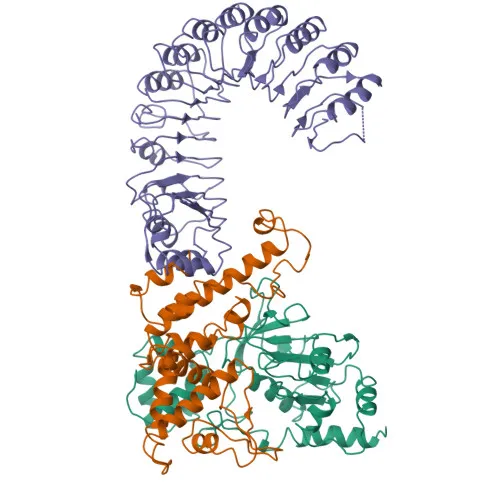
- The protein features a C-terminal leucine-rich repeat (LRR) domain, a central nucleotide-binding domain (NBD/NACHT) with ATP-binding activity, and an N-terminal CARD domain; it undergoes phosphorylation during inflammasome activation.
Experimental Guidance and Technical Tips
- The immunogen used for this polyclonal antibody corresponds to amino acids 71-170 of mouse NLRC4. This region lies within the N-terminal domain, which may provide cross-reactivity with human and rat orthologs due to sequence conservation. Validate cross-reactivity in your specific experimental setup.
- Predicted molecular weight of NLRC4 is approximately 116 kDa. For Western blotting, consider using a suitable percentage gel and transfer conditions, and include positive controls such as macrophage cell lines (e.g., J774, RAW 264.7) stimulated to induce NLRC4 expression.
- In immunofluorescence (IF) or IF-P applications, NLRC4 is typically cytosolic under steady-state conditions but can form punctate inflammasome specks upon stimulation. Co-staining with ASC or caspase-1 may help visualize activated inflammasomes.
- For ELISA applications, this antibody may be used as a capture or detection reagent after appropriate pairing validation. Titrate and test in your assay conditions.
CamelBio: Your One-Stop Sourcing Bridge
CamelBio supports diagnostic manufacturers, laboratories, and research institutes with comprehensive access to IVD raw materials. For innate immunity and inflammasome research, CamelBio offers ready-to-use antibody pairs, optimized polyclonal antibodies like this anti-NLRC4 pAb, and bulk ancillary reagents. Our supply network assists in sourcing rare-target raw materials, ensuring you can transition from concept to clinic with reliable, well-characterized components.
REQUEST A QUOTE
Our professional team will reply to you within one business day. Please feel free to contact us!