Polyclonal Antibodies
Anti-NIFK Rabbit Polyclonal Antibody for WB and ELISA - Q9BYG3
Item Number : CM0016773
Price varies based on specs and customizations
- Application
- WB, ELISA
- Cross Reactivity
- Human, Mouse, Rat
- Protein Weight
- 34kDa

Shipping:
Contact us to get shipping details Enjoy On-time Dispatch Guarantee.
Why Choose Us
Easy ordering process, quality products, and dedicated support for your business success.
Core Product Specifications and Parameters
| Parameter | Value |
|---|---|
| Product Name | NIFK Rabbit pAb |
| Remarks/Alias | Nopp34, MKI67IP, NIFK |
| Species | Human |
| GeneID (Human) | 84365 |
| GeneID | 84365 |
| Immunogen | Recombinant fusion protein containing a sequence corresponding to amino acids 180-260 of human NIFK (NP_115766.3) |
| Source | Rabbit |
| Category | Polyclonal Antibodies |
| Application | WB, ELISA |
| Cross Reactivity | Human, Mouse, Rat |
| SWISS | Q9BYG3 |
| Protein Weight | 34kDa |
| Shipping | Ice bag |
Biological Background: NIFK Function and Localization
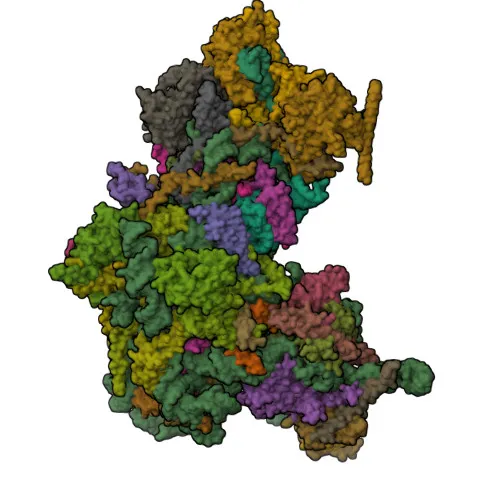
- NIFK, also known as nucleolar phosphoprotein Nopp34 or MKI67IP, is an RNA-binding protein that specifically interacts with the forkhead-associated (FHA) domain of the proliferation marker Ki-67.
- It is predominantly localized to the nucleolus during interphase and associates with chromosomes during mitosis, reflecting its role in cell cycle-dependent nucleolar functions.
- The protein is involved in ribosome biogenesis and pre-rRNA processing, contributing to the regulation of cellular growth and proliferation.
- Post-translational modifications, including phosphorylation, acetylation, methylation, and ubiquitination, modulate its activity and interactions within the nucleolar environment.
- NIFK is a well-characterized reference proteome member with direct protein sequencing evidence, confirming its expression and conservation in human cells.
- The canonical isoform has a calculated molecular weight of approximately 34 kDa.
Experimental Guidance and Technical Tips
- The immunogen corresponds to amino acids 180–260, a region that may be structured and accessible; consider epitope exposure conditions for optimal antibody binding.
- For western blotting, expect a band around 34 kDa in whole-cell lysates; nucleolar enrichment protocols may enhance signal intensity due to the protein’s subcellular localization.
- Cross-reactivity with mouse and rat has been demonstrated; validate detection sensitivity in the relevant species and tissue types, especially those with high proliferative activity.
- For ELISA, the polyclonal nature provides broad epitope recognition; test at multiple dilutions and with appropriate controls to establish linearity and specificity.
- The antibody is suitable for studying cell cycle dynamics and nucleolar stress responses; combine with Ki-67 or other nucleolar markers for co-localization studies.
CamelBio: Your One-Stop Sourcing Bridge
CamelBio provides diagnostic manufacturers and research laboratories with reliable access to specialized IVD raw materials, including validated antibodies targeting nucleolar and cell proliferation markers. Our NIFK polyclonal antibody supports investigations into ribosome biogenesis and cancer biology, offering consistent performance for WB and ELISA applications. As a one-stop sourcing partner, we supply optimized monoclonal and polyclonal antibodies, matched antigen pairs, and bulk ancillary reagents—streamlining your transition from concept to clinical application without compromising on quality or traceability.
REQUEST A QUOTE
Our professional team will reply to you within one business day. Please feel free to contact us!