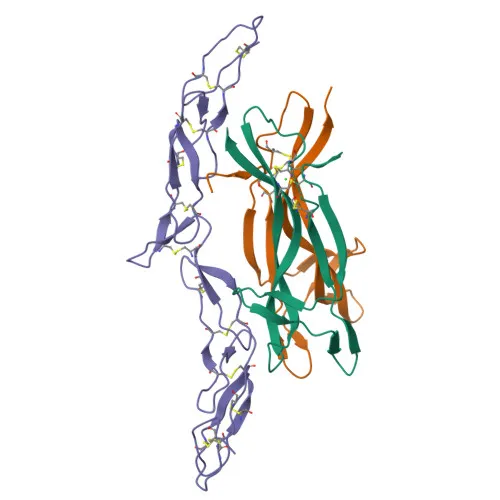
Polyclonal Antibodies
Anti-NGF Polyclonal Antibody for WB, ELISA - P01138
Item Number : CM0017084
Price varies based on specs and customizations
- Application
- WB, ELISA
- Cross Reactivity
- Human, Mouse
- Protein Weight
- 27kDa

Shipping:
Contact us to get shipping details Enjoy On-time Dispatch Guarantee.
Why Choose Us
Easy ordering process, quality products, and dedicated support for your business success.
Core Product Specifications and Parameters
| Parameter | Value |
|---|---|
| Product Name | NGF Rabbit pAb |
| Remarks/Alias | NGFB; HSAN5; Beta-NGF; NGF |
| Species | Human |
| GeneID (human) | 4803 |
| GeneID | 4803 |
| Immunogen | Recombinant fusion protein containing a sequence corresponding to amino acids 19-241 of human NGF (NP_002497.2). |
| Source | Rabbit |
| Category | Polyclonal Antibodies |
| Application | WB, ELISA |
| Cross Reactivity | Human, Mouse |
| SWISS | P01138 |
| Protein Weight | 27kDa |
| Shipping | Ice bag |
Biological Background: NGF Function and Localization
-
NGF is essential for the development and maintenance of sympathetic and sensory neurons (PubMed:14976160, PubMed:20978020).
Related references: PMID:14976160, PMID:20978020 -
Mature NGF acts as a ligand for NTRK1 and NGFR receptors, activating signaling cascades that regulate neuronal proliferation, differentiation, and survival (PubMed:20978020).
Related references: PMID:20978020 -
The proNGF precursor signals through the SORCS2/NGFR heterodimeric receptor, leading to RAC1/RAC2 inactivation, actin cytoskeleton reorganization, and neuronal growth cone collapse; proNGF promotes neuronal apoptosis in vitro.
-
NGF inhibits metalloproteinase-dependent proteolysis of platelet glycoprotein VI, suggesting a role in vascular homeostasis (PubMed:20164177).
Related references: PMID:20164177 -
The lipid-bound NGF homodimer (with lysophosphatidylinositol or lysophosphatidylserine) triggers histamine release from mast cells, unlike the lipid-free form.
-
NGF is a secreted glycoprotein with disulfide bonds; mutations in the NGF gene are associated with hereditary sensory and autonomic neuropathy type 5 (HSAN5) and other neurodegenerative conditions.
Experimental Guidance and Technical Tips
- The polyclonal antibody was raised against a recombinant protein covering amino acids 19–241, which corresponds to the mature NGF sequence; reactivity with the proNGF precursor may also occur.
- For Western blot, consider using both reducing and non-reducing sample preparation, as NGF forms disulfide-linked homodimers; the predicted mature monomer molecular weight is ~13 kDa, with dimer at ~26–27 kDa (post-translational modifications may shift the band).
- In ELISA applications, the antibody may serve as a detection reagent; when developing sandwich ELISA, validate pairing with a capture antibody targeting a distinct epitope.
- Cross-reactivity with human and mouse NGF is reported; confirm reactivity in your specific sample type and application.
- NGF is endogenously expressed in neuronal tissues (e.g., brain, dorsal root ganglia) and in mast cells; these can serve as positive controls for detection.
CamelBio: Your One-Stop Sourcing Bridge
CamelBio provides a comprehensive portfolio of IVD raw materials, scientific services, and consulting to support diagnostics developers from concept to clinic. This anti-NGF polyclonal antibody is part of our neuroscience-focused reagent lineup, suitable for basic research and assay development. Beyond individual antibodies, we offer validated antibody pairs, bulk monoclonal and polyclonal reagents, and bespoke sourcing for rare targets, helping you accelerate your neurodegenerative biomarker projects.
REQUEST A QUOTE
Our professional team will reply to you within one business day. Please feel free to contact us!