Polyclonal Antibodies
Anti-NGDN Rabbit Polyclonal Antibody for WB and ELISA - Q8NEJ9
Item Number : CM0013170
Price varies based on specs and customizations
- Application
- WB, ELISA
- Cross Reactivity
- Human, Rat
- Protein Weight
- 36kDa

Shipping:
Contact us to get shipping details Enjoy On-time Dispatch Guarantee.
Why Choose Us
Easy ordering process, quality products, and dedicated support for your business success.
Core Product Specifications and Parameters
| Parameter | Value |
|---|---|
| Product Name | NGDN Rabbit pAb |
| Remarks/Alias | NGD; LCP5; CANu1; lpd-2; C14orf120; NGDN |
| Species | Human |
| Gene ID | 25983 |
| Immunogen | Recombinant fusion protein containing a sequence corresponding to amino acids 61-209 of human NGDN (NP_001036100.1) |
| Source | Rabbit |
| Category | Polyclonal Antibodies |
| Application | WB, ELISA |
| Cross Reactivity | Human, Rat |
| SWISS | Q8NEJ9 |
| Protein Weight | 36kDa |
| Shipping | Ice bag |
Biological Background: Neuroguidin Function and Localization
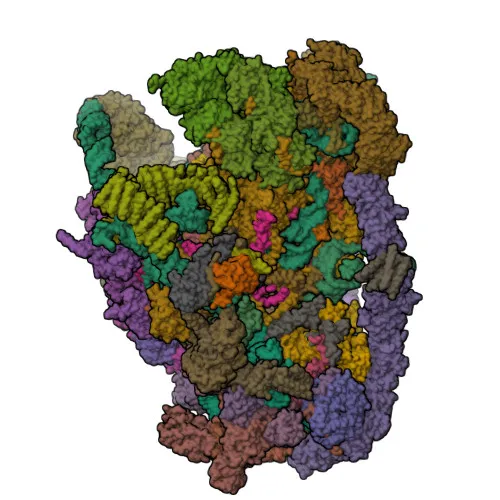
- Neuroguidin (NGDN), also known as CANu1 or EIF4E-binding protein, is a component of the small subunit (SSU) processome, the earliest precursor of the small eukaryotic ribosomal subunit. During SSU processome assembly, it participates in pre-rRNA folding, modification, rearrangement, and cleavage, and its dissociation triggers the transition from state pre-A1 to pre-A1* (PubMed:34516797). Related references: PMID:34516797
- NGDN inhibits mRNA translation in a cytoplasmic polyadenylation element (CPE)-dependent manner, acting as a translational repressor by binding to the cap-binding protein EIF4E (By similarity).
- The protein localizes to multiple subcellular compartments, including the nucleus, nucleolus, centromeres, cytoplasm, and neuronal cell projections such as axons, dendrites, and filopodia, suggesting roles in both nuclear processes and cytoplasmic regulation.
- NGDN is subject to post-translational modifications including acetylation and phosphorylation, as identified by proteomics, and undergoes alternative splicing, generating multiple isoforms.
- It is classified under keywords such as alternative splicing, centromere, chromosome, coiled coil, nucleus, phosphoprotein, translation regulation, and reference proteome, reflecting its multifunctional nature.
Experimental Guidance and Technical Tips
- The immunogen is a recombinant fragment spanning amino acids 61–209, which covers a central region of NGDN; this design likely generates antibodies that recognize multiple isoforms and modification states.
- For Western blot (WB), the predicted molecular weight is ~36 kDa; we recommend using suitable extraction and loading controls from human or rat cell/tissue lysates to verify specificity.
- In ELISA, consider coating with the recombinant protein or peptide to assess titer and cross-reactivity; optimization of blocking and detection conditions is advised.
- As NGDN is expressed in various tissues and cell lines, validate the antibody in your specific experimental system, paying attention to potential species cross-reactivity beyond human and rat if investigated.
CamelBio: Your One-Stop Sourcing Bridge
CamelBio serves as a comprehensive supply partner for IVD raw materials, offering a wide portfolio of validated antibody pairs, optimized polyclonal and monoclonal antibodies, bulk ancillary reagents, and customized sourcing for rare targets. With this anti-NGDN antibody, researchers in ribosome biogenesis, translation control, and neurobiology can streamline their assay development—from concept to clinic—by leveraging CamelBio's integrated supply chain and technical expertise.
REQUEST A QUOTE
Our professional team will reply to you within one business day. Please feel free to contact us!