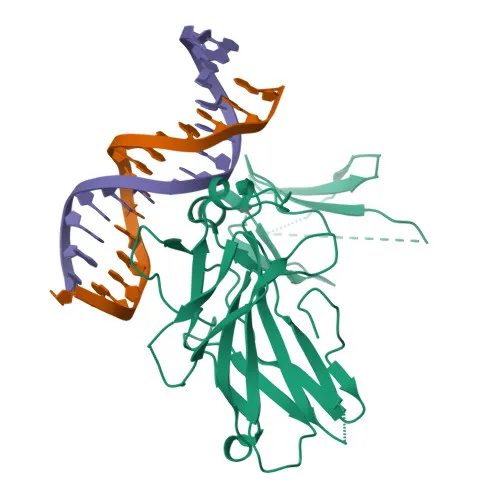
Polyclonal Antibodies
Anti-NFATC2 Rabbit Polyclonal Antibody for WB - Q13469
Item Number : CM0013980
Price varies based on specs and customizations
- Application
- WB, ELISA
- Cross Reactivity
- Human, Mouse, Rat
- Protein Weight
- 100kDa

Shipping:
Contact us to get shipping details Enjoy On-time Dispatch Guarantee.
Why Choose Us
Easy ordering process, quality products, and dedicated support for your business success.
Core Product Specifications and Parameters
| Parameter | Value |
|---|---|
| Product Name | NFATC2 Rabbit pAb |
| Remarks/Alias | JCOSL; NFAT1; NFATP; NFATC2 |
| Species | Human |
| Gene ID (Human) | 4773 |
| Gene ID | 4773 |
| Immunogen | Recombinant protein |
| Source | Rabbit |
| Category | Polyclonal Antibodies |
| Application | WB, ELISA |
| Cross Reactivity | Human, Mouse, Rat |
| SWISS | Q13469 |
| Protein Weight | 100kDa |
| Shipping | Ice bag |
Biological Background: NFATC2 Function and Localization
- NFATC2 (NFAT1) is a member of the nuclear factor of activated T-cells (NFAT) family, functioning as a transcription factor with multiple isoforms generated by alternative splicing.
- It is a critical regulator of inducible cytokine gene expression in T-cells, including IL-2, IL-3, IL-4, TNF, and GM-CSF. Related references: PMID:15790681
- NFATC2 promotes invasive cell migration through the activation of GPC6 expression and the WNT5A signaling pathway. Related references: PMID:21871017
- It negatively regulates chondrogenesis, as demonstrated in developmental studies. Related references: PMID:35789258
- In T-cells, NFATC2 is recruited by AKAP5 to ORAI1 calcium channels, coupling store-operated Ca²⁺ influx to calcineurin-mediated dephosphorylation and nuclear translocation.
- Subcellular localization is predominantly cytoplasmic in resting cells; it translocates to the nucleus upon activation and dephosphorylation.
- Tissue expression is broad, with high levels in thymus, spleen, heart, testis, brain, placenta, muscle, and pancreas; isoform 1 is enriched in small intestine, heart, testis, prostate, thymus, placenta, and thyroid; isoform 3 is abundant in stomach, uterus, placenta, trachea, and thyroid.
- Post-translational modifications include phosphorylation and ubiquitin conjugation, which regulate its activity and stability.
Experimental Guidance and Technical Tips
- The immunogen covers the N‑terminal 1–300 amino acids of human NFATC2, a region highly conserved across human, mouse, and rat—consistent with the reported cross‑reactivity. Consider sequence alignment when planning experiments with other species.
- For western blot (WB), a band near 100 kDa is expected; however, actual mobility may vary due to post‑translational modifications and isoform‑specific differences. Validate the antibody in your relevant sample system.
- For ELISA applications, optimization of coating antigen and antibody dilutions is recommended to achieve optimal signal‑to‑noise ratios.
- The polyclonal nature may recognize multiple NFATC2 isoforms; consult the UniProt entry (Q13469) for isoform details and select appropriate controls.
CamelBio: Your One-Stop Sourcing Bridge
CamelBio serves as a comprehensive sourcing partner for IVD raw materials, supporting diagnostic developers from concept to clinic. For immunology and T‑cell signaling research focused on transcription factors like NFATC2, we offer validated antibody pairs, optimized monoclonal and polyclonal antibodies, bulk ancillary reagents, and tailored rare‑target raw‑material sourcing to accelerate your assay development.
REQUEST A QUOTE
Our professional team will reply to you within one business day. Please feel free to contact us!