Phosphorylated Antibodies
Anti-NF-κB2 (phospho S866+S870) Rabbit Monoclonal Antibody for WB, IHC-P, ELISA - Q00653
Item Number : CM0001373
Price varies based on specs and customizations
- Application
- WB, IHC-P, ELISA
- Cross Reactivity
- Human, Mouse
- Protein Weight
- 97kDa

Shipping:
Contact us to get shipping details Enjoy On-time Dispatch Guarantee.
Why Choose Us
Easy ordering process, quality products, and dedicated support for your business success.
Core Product Specifications and Parameters
| Parameter | Value |
|---|---|
| Product Name | Phospho-NF-κB2-S866/S870 Rabbit mAb |
| Remarks/Alias | p52; p100; H2TF1; LYT10; CVID10; LYT-10; NF-kB2; p49/p100; Phospho-NF-κB2-S866/S870 |
| Species | Human |
| GeneID (Human) | 4791 |
| Immunogen | Synthetic peptide around S866 & S870 of human NF-κB2 |
| Source | Rabbit |
| Category | Phosphorylated Antibodies |
| Application | WB, IHC-P, ELISA |
| Cross Reactivity | Human, Mouse |
| SWISS | Q00653 |
| Protein Weight | 97kDa |
| Shipping | Ice bag |
Biological Background: NF-κB2 Function and Localization
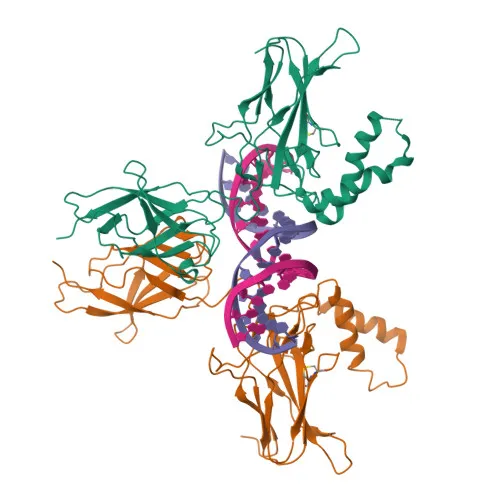
- NF-κB2 encodes the p100 precursor protein, which undergoes proteasomal processing to generate the active p52 DNA-binding subunit; alternate names include LYT10, H2TF1, and p49/p100.
- NF-κB2 is a central component of the NF-κB transcription factor family, forming heterodimers with RELB that activate gene expression, or p52 homodimers that repress transcription, in response to immune and inflammatory stimuli.
- p100 serves as a cytoplasmic inhibitor of NF-κB by retaining associated proteins; its phosphorylation at serines 866 and 870 triggers ubiquitin-dependent processing to p52, enabling nuclear translocation.
- The non-canonical NF-κB pathway relies on MAP3K14/CHUK-mediated phosphorylation of p100 to produce p52-RELB complexes, which regulate genes involved in lymphoid organogenesis, B-cell survival, and tumorigenesis.
- NF-κB2 is implicated in chromosomal rearrangements in lymphomas (hence the oncogene designation LYT10) and is associated with primary immunodeficiency diseases (e.g., CVID10).
- In the circadian clock, NF-κB2 represses CLOCK-BMAL1 transcriptional activity, linking inflammatory signaling to biological rhythms.
Experimental Guidance and Technical Tips
- The immunogen is a synthetic phosphorylated peptide spanning S866 and S870 of human NF-κB2; antibody reactivity is expected to be specific to the phosphorylated forms of p100 and p52.
- For Western blot, treat target cells with non-canonical pathway activators (e.g., CD40L or lymphotoxin β) to induce phosphorylation and processing. Bands near 97 kDa (p100) and 52 kDa (p52) may be detected.
- Use phosphatase inhibitors during sample preparation to preserve phosphorylation. For IHC-P, optimize antigen retrieval conditions and validate staining with appropriate tissue controls.
CamelBio: Your One-Stop Sourcing Bridge
CamelBio offers diagnostic manufacturers and research labs a streamlined, end-to-end sourcing solution for IVD raw materials. For NF-κB signaling and inflammation-related targets, we provide validated antibody pairs, optimized monoclonal/polyclonal antibodies, bulk ancillary reagents, and customized sourcing for rare or phosphorylated epitope-specific probes. Our technical team supports your transition from concept to clinic with reliable supply and procurement efficiency.
REQUEST A QUOTE
Our professional team will reply to you within one business day. Please feel free to contact us!