Monoclonal Antibodies
Anti-Neuropilin-1 (NRP1) Monoclonal Antibody for WB, IF/ICC, ELISA - O14786
Item Number : CM0002909
Price varies based on specs and customizations
- Application
- WB, IF/ICC, ELISA
- Cross Reactivity
- Human
- Protein Weight
- 68 kDa/71k Da/103 kDa

Shipping:
Contact us to get shipping details Enjoy On-time Dispatch Guarantee.
Why Choose Us
Easy ordering process, quality products, and dedicated support for your business success.
Core Product Specifications and Parameters
| Parameter | Value |
|---|---|
| Product Name | Neuropilin-1 (NRP1) Rabbit mAb |
| Remarks/Alias | NP1; NRP; BDCA4; CD304; VEGF165R; Neuropilin-1 (NRP1) |
| Species | Human |
| GeneID (Human) | 8829 |
| GeneID | 8829 |
| Immunogen | Recombinant fusion protein containing a sequence corresponding to amino acids 22-644 of human Neuropilin-1 (NRP1) (NP_003864.5). |
| Source | Rabbit |
| Category | Monoclonal Antibodies |
| Application | WB, IF/ICC, ELISA |
| Cross Reactivity | Human |
| SWISS | O14786 |
| Protein Weight | 68 kDa/71k Da/103 kDa |
| Shipping | Ice bag |
Biological Background: Neuropilin-1 (NRP1) Function and Localization
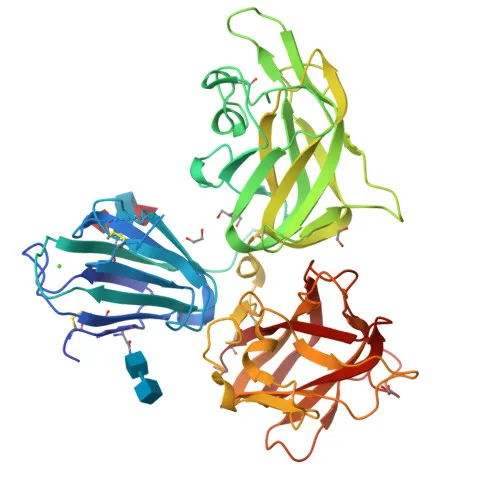
- Neuropilin-1 (NRP1), also known as Vascular endothelial cell growth factor 165 receptor (VEGF165R) and CD304, is a single-pass transmembrane glycoprotein receptor with a predicted molecular weight of approximately 103 kDa. It belongs to the neuropilin family and functions as a co-receptor for semaphorins and VEGF family members.
- It mediates the chemorepulsive activity of semaphorins, particularly SEMA3A, and binds VEGF165, PLGF-2, and VEGFB to regulate angiogenesis and cardiovascular development. Recognition of a C-terminal CendR motif (R/KXXR/K) on ligands triggers cellular internalization and vascular leakage. Related references: PMID:10688880, PMID:9288753, PMID:9529250, PMID:19805273
- NRP1 is crucial for nervous system development, guiding motor neuron axon pathfinding and neuronal migration, including the caudal migration of facial motor neurons during embryogenesis.
- The protein localizes to the cell membrane, cytoplasm, mitochondria membrane, and can also be secreted. It undergoes alternative splicing, producing isoforms with distinct expression patterns.
- Post-translational modifications include N-glycosylation, disulfide bond formation, and phosphorylation. It also contains heparan sulfate/heparin-binding domains, contributing to its role as a proteoglycan coreceptor.
- In human tissues, NRP1 is highly expressed in heart and placenta, moderately in lung, liver, skeletal muscle, kidney, and pancreas, and at low levels in adult brain. It is also expressed in olfactory epithelium and fibroblasts.
- NRP1 acts as a host factor for SARS-CoV-2 infection by binding to the CendR motif RRAR on the spike protein, facilitating viral entry.
Experimental Guidance and Technical Tips
- For Western blotting (WB), consider using whole-cell lysates from NRP1-expressing tissues such as heart or placenta, or from transfected cell lines. Note that the protein may appear as multiple bands due to glycosylation and alternative splicing; the predicted unmodified weight is ~103 kDa, with observed bands around 68–103 kDa reported.
- In immunofluorescence (IF/ICC), NRP1 is primarily membrane-localized. Validate fixation and permeabilization conditions in your specific cell system, as over-permeabilization may alter signal distribution.
- For ELISA, this antibody, recognizing the extracellular domain (aa 22-644), can be used for capture or detection in sandwich immunoassays. Pair with a detection antibody against a different epitope or use as a detection antibody in combination with a capture antibody; titrate to optimize signal-to-background ratio.
- Given that the immunogen spans nearly the entire extracellular region, the antibody may recognize multiple NRP1 isoforms. Cross-reactivity with other species is not guaranteed; validate if needed.
CamelBio: Your One-Stop Sourcing Bridge
CamelBio provides diagnostic manufacturers and research laboratories with a comprehensive sourcing platform for IVD raw materials, including validated antibody pairs, recombinant proteins, and specialized biological reagents. For projects involving Neuropilin-1 (NRP1) — a key target in angiogenesis, cancer, and infectious disease research — we offer flexible supply of this monoclonal antibody alongside complementary ancillary reagents and technical consultation to support your assay development and scale-up. Our expertise in rare target sourcing ensures you can transition from concept to clinic with efficiency and confidence.
Product Datasheet
Anti-Neuropilin-1 (NRP1) Monoclonal Antibody for WB, IF/ICC, ELISA - O14786
REQUEST A QUOTE
Our professional team will reply to you within one business day. Please feel free to contact us!