Polyclonal Antibodies
Anti-NDUFS3 Polyclonal Antibody for WB and ELISA - O75489
Item Number : CM0026496
Price varies based on specs and customizations
- Application
- WB, ELISA
- Cross Reactivity
- Human, Mouse
- Protein Weight
- 30kDa

Shipping:
Contact us to get shipping details Enjoy On-time Dispatch Guarantee.
Why Choose Us
Easy ordering process, quality products, and dedicated support for your business success.
Core Product Specifications and Parameters
| Parameter | Value |
|---|---|
| Product Name | NDUFS3 Rabbit pAb |
| Remarks/Alias | CI-30; MC1DN8; NDUFS3 |
| Species | Human |
| GeneID (Human) | 4722 |
| GeneID | 4722 |
| Immunogen | Recombinant fusion protein containing a sequence corresponding to amino acids 37-264 of human NDUFS3 (NP_004542.1). |
| Source | Rabbit |
| Category | Polyclonal Antibodies |
| Application | WB, ELISA |
| Cross Reactivity | Human, Mouse |
| SWISS | O75489 |
| Protein Weight | 30kDa |
| Shipping | Ice bag |
Biological Background: NDUFS3 Function and Localization
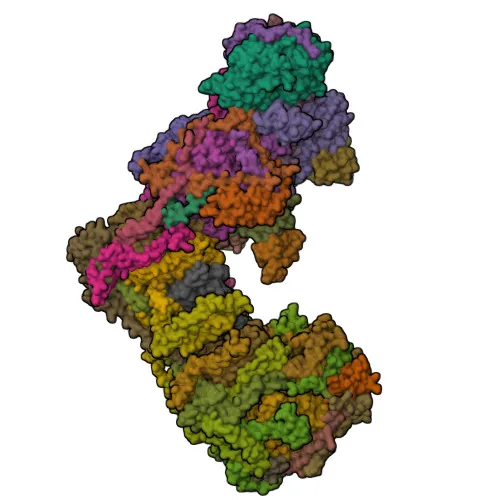
- NDUFS3 is a 30 kDa iron-sulfur protein that serves as a core subunit of mitochondrial Complex I (NADH:ubiquinone oxidoreductase).
- It is essential for the catalytic activity of Complex I, facilitating electron transfer from NADH to ubiquinone and contributing to proton translocation across the inner membrane. Related references: PMID:14729820, PMID:30140060
- NDUFS3 plays a crucial role in the assembly and stabilization of the Complex I holoenzyme; mutations in this gene cause mitochondrial complex I deficiency (MC1DN8). Related references: PMID:24028823
- The protein is synthesized as a precursor with an N-terminal mitochondrial targeting sequence, which is cleaved upon import into the mitochondrion.
- It localizes to the mitochondrial inner membrane, where it integrates into the membrane arm of Complex I.
- Alternative splicing of the NDUFS3 gene produces multiple transcript variants, potentially regulating protein expression or function.
- As part of the respiratory chain, NDUFS3 is ubiquitously expressed but is particularly abundant in energy-demanding tissues.
Experimental Guidance and Technical Tips
- The immunogen corresponds to a region common to human NDUFS3 (aa 37-264), which is highly conserved in mouse, supporting cross-reactivity datasheet claims. Researchers should validate species-specific reactivity in their own experimental system.
- For Western blotting, use mitochondrial-enriched lysates or whole-cell lysates from tissues with high mitochondrial content (e.g., heart, liver) to enhance detection of the ~30 kDa band.
- In ELISA applications, consider using the same recombinant protein fragment as a coating antigen for quantitative detection of NDUFS3-specific antibodies.
- Include appropriate controls: a positive control such as a human or mouse tissue lysate known to express NDUFS3, and a negative control (e.g., NDUFS3 knockout or depleted sample) to confirm specificity.
- Optimize antibody dilution and incubation conditions empirically for each application, as polyclonal antibodies may exhibit lot-to-lot variability.
CamelBio: Your One-Stop Sourcing Bridge
CamelBio offers a comprehensive portfolio of IVD raw materials, including validated antibody pairs, optimized monoclonal and polyclonal antibodies, bulk ancillary reagents, and custom sourcing for rare targets like mitochondrial respiratory chain proteins. Whether you are developing diagnostic assays for mitochondrial disorders or exploring energy metabolism, we provide one-stop access to high-quality reagents and technical support to accelerate your research and clinical applications.
REQUEST A QUOTE
Our professional team will reply to you within one business day. Please feel free to contact us!