Monoclonal Antibodies
Anti-NDUFB9 Rabbit Monoclonal Antibody for WB, IHC-P, ELISA - Q9Y6M9
Item Number : CM0002250
Price varies based on specs and customizations
- Application
- WB, IHC-P, ELISA
- Cross Reactivity
- Human, Mouse, Rat
- Protein Weight
- 22kDa

Shipping:
Contact us to get shipping details Enjoy On-time Dispatch Guarantee.
Why Choose Us
Easy ordering process, quality products, and dedicated support for your business success.
Core Product Specifications and Parameters
| Parameter | Value |
|---|---|
| Product Name | NDUFB9 Rabbit mAb |
| Remarks/Alias | B22; LYRM3; CI-B22; UQOR22; NDUFB9 |
| Species | Human |
| GeneID (Human) | 4715 |
| GeneID | 4715 |
| Immunogen | Recombinant protein corresponding to amino acids 80-170 of human NDUFB9 (Q9Y6M9) |
| Source | Rabbit |
| Category | Monoclonal Antibodies |
| Application | WB, IHC-P, ELISA |
| Cross Reactivity | Human, Mouse, Rat |
| SWISS | Q9Y6M9 |
| Protein Weight | 22kDa |
| Shipping | Ice bag |
Biological Background: NDUFB9 Function and Localization
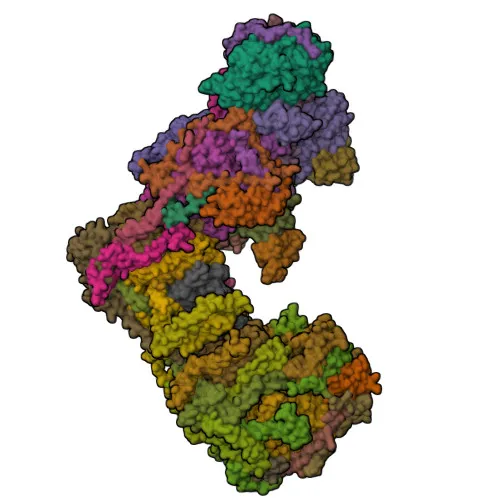
- NDUFB9, also known as CI-B22 or LYRM3, is a nuclear-encoded accessory subunit of the mitochondrial NADH dehydrogenase complex (Complex I) that is not directly involved in catalysis but is essential for complex assembly or stability.
- Complex I transfers electrons from NADH to ubiquinone in the respiratory chain, coupling this process to proton translocation across the inner mitochondrial membrane; NDUFB9 assists in maintaining this electron transfer chain.
- As a member of the LYR motif-containing protein family, NDUFB9 features a conserved LYR domain that may mediate protein-protein interactions within the complex.
- The protein is anchored to the mitochondrial inner membrane, where Complex I is embedded, positioning it within the oxidative phosphorylation machinery.
- Post-translational modifications include acetylation and phosphorylation, which may regulate Complex I activity or assembly dynamics under metabolic conditions.
- Mutations in NDUFB9 have been associated with primary mitochondrial disease, specifically Complex I deficiency, underscoring its clinical relevance in metabolic disorders.
Experimental Guidance and Technical Tips
- The immunogen corresponds to residues 80-170 of human NDUFB9, a region that is likely well-conserved across species, consistent with reported cross-reactivity with mouse and rat. Consider Western blot sample preparation with mitochondrial-enriched fractions to enhance signal.
- For IHC-P, antigen retrieval methods and tissue fixation conditions may impact antibody binding; validate in both frozen and paraffin-embedded sections from relevant tissues.
- In ELISA, the antibody can be used as a capture or detection reagent; pairing with a compatible secondary antibody is recommended, and optimal dilutions should be determined empirically.
CamelBio: Your One-Stop Sourcing Bridge
CamelBio connects diagnostic manufacturers and researchers with validated raw materials for mitochondrial biology and metabolic research. We offer this anti-NDUFB9 rabbit monoclonal antibody alongside complementary reagents—including antibody pairs, bulk ancillary proteins, and custom sourcing for rare targets—to streamline your assay development pipeline.
REQUEST A QUOTE
Our professional team will reply to you within one business day. Please feel free to contact us!