Polyclonal Antibodies
Anti-NDUFB1 Rabbit Polyclonal Antibody for WB, IF/ICC, ELISA - O75438
Item Number : CM0019816
Price varies based on specs and customizations
- Application
- WB, IF/ICC, ELISA
- Cross Reactivity
- Human, Mouse
- Protein Weight
- 7kDa

Shipping:
Contact us to get shipping details Enjoy On-time Dispatch Guarantee.
Why Choose Us
Easy ordering process, quality products, and dedicated support for your business success.
Core Product Specifications and Parameters
| Parameter | Value |
|---|---|
| Product Name | NDUFB1 Rabbit pAb |
| Remarks/Alias | MNLL; CI-MNLL; CI-SGDH; NDUFB1 |
| Species | Human |
| Gene ID (Human) | 4707 |
| Immunogen | Recombinant fusion protein containing a sequence corresponding to amino acids 1-105 of human NDUFB1 (NP_004536.2) |
| Source | Rabbit |
| Category | Polyclonal Antibodies |
| Application | WB, IF/ICC, ELISA |
| Cross Reactivity | Human, Mouse |
| SWISS | O75438 |
| Protein Weight | 7kDa |
| Shipping | Ice bag |
Biological Background: NDUFB1 Function and Localization
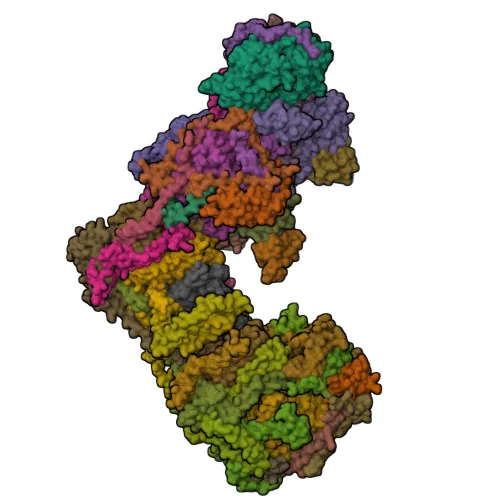
- NDUFB1 (NADH dehydrogenase [ubiquinone] 1 beta subcomplex subunit 1), also known as Complex I-MNLL (CI-MNLL) or MNLL, is an accessory subunit of mitochondrial Complex I.
- As a non‑catalytic subunit, NDUFB1 is believed not to be involved in catalysis but contributes to the structural stability of Complex I.
- Complex I functions in the electron transport chain by transferring electrons from NADH to ubiquinone, playing a critical role in cellular respiration.
- NDUFB1 is located in the mitochondrial inner membrane, consistent with its role in oxidative phosphorylation.
- The protein undergoes alternative splicing and contains a transmembrane helix, as indicated by its UniProt keywords.
- Its small size (approximately 7 kDa) makes it a distinct subunit among Complex I components.
- Key post‑translational modifications and tissue‑specific roles have not been extensively documented for this subunit.
Experimental Guidance and Technical Tips
- The immunogen used is a recombinant protein corresponding to residues 1–105 of human NDUFB1, covering nearly the full‑length protein; this broad coverage may aid in detecting various isoforms or cleavage products.
- For Western blotting, a band near 7 kDa is expected; consider optimizing transfer conditions for small proteins using low‑molecular‑weight markers and high‑retention membranes.
- In immunofluorescence/immunocytochemistry, mitochondrial staining patterns should be validated using organelle‑specific counterstains (e.g., MitoTracker) to confirm localization.
- For ELISA, ensure the antigen coating matches the immunogen to avoid detection of unrelated epitopes.
- Since the antibody reacts with human and mouse, verify cross‑reactivity in your specific model system before quantification.
CamelBio: Your One‑Stop Sourcing Bridge
CamelBio provides diagnostic manufacturers, labs, and research institutes with one‑stop access to IVD raw materials, technical services, and consulting—covering every stage from concept to clinic. This anti‑NDUFB1 polyclonal antibody is an excellent tool for mitochondrial and respiratory chain research; we also offer validated antibody pairs, optimized monoclonal/polyclonal antibodies, bulk ancillary reagents, and rare‑target raw‑material sourcing. For bulk orders or technical consultation on Complex I‑related projects, our team can help streamline your procurement process.
Product Datasheet
Anti-NDUFB1 Rabbit Polyclonal Antibody for WB, IF/ICC, ELISA - O75438
REQUEST A QUOTE
Our professional team will reply to you within one business day. Please feel free to contact us!