Polyclonal Antibodies
Anti-NDUFA7 Polyclonal Antibody for WB, ELISA - O95182
Item Number : CM0024128
Price varies based on specs and customizations
- Application
- WB, ELISA
- Cross Reactivity
- Mouse
- Protein Weight
- 13kDa

Shipping:
Contact us to get shipping details Enjoy On-time Dispatch Guarantee.
Why Choose Us
Easy ordering process, quality products, and dedicated support for your business success.
Core Product Specifications and Parameters
| Parameter | Value |
|---|---|
| Product Name | NDUFA7 Rabbit pAb |
| Remarks/Alias | B14.5a; CI-B14.5a; NDUFA7 |
| Species | Human |
| GeneID (Human) | 4701 |
| GeneID | 4701 |
| Immunogen | Recombinant protein: Recombinant fusion protein containing a sequence corresponding to amino acids 1-113 of human NDUFA7 (NP_004992.2). |
| Source | Rabbit |
| Category | Polyclonal Antibodies |
| Application | WB, ELISA |
| Cross Reactivity | Mouse |
| SWISS | O95182 |
| Protein Weight | 13kDa |
| Shipping | Ice bag |
Biological Background: NDUFA7 Function and Localization
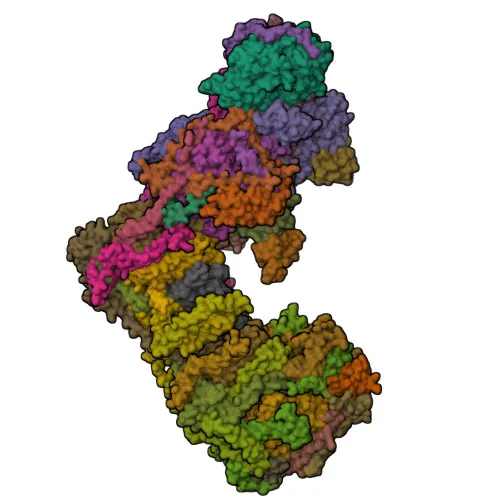
- NDUFA7 (NADH dehydrogenase [ubiquinone] 1 alpha subcomplex subunit 7) is an accessory subunit of mitochondrial complex I, also known as CI-B14.5a or NADH-ubiquinone oxidoreductase subunit B14.5a.
- It is not directly involved in catalysis but is essential for the structural integrity and assembly of complex I, which transfers electrons from NADH to ubiquinone in the respiratory chain.
- This protein anchors to the mitochondrial inner membrane, contributing to the proper organization of the multisubunit complex within the lipid bilayer.
- NDUFA7 is part of the nuclear-encoded subunits of complex I and works alongside core catalytic subunits to facilitate efficient electron transport and proton translocation.
- Post-translational modifications include acetylation and phosphorylation, which may regulate complex I activity or assembly.
- The protein is classified under reference proteome and is identified in proteomics studies, reflecting its constitutive expression in mitochondria.
Experimental Guidance and Technical Tips
- The immunogen used to generate this antibody is a recombinant fusion protein covering amino acids 1-113 of human NDUFA7 (NP_004992.2), ensuring recognition of the full mature protein.
- For Western blot applications, consider using mitochondrial-enriched lysates to enhance detection of this 13 kDa protein; validate with a molecular weight marker and a positive control such as HEK293 or HeLa cell extracts.
- The antibody shows cross-reactivity with mouse NDUFA7, so it can be employed in murine models; however, always confirm specificity via knockdown or knockout validation.
- In ELISA, titrate the antibody against the immunogen or native complex I to establish optimal working concentrations; be aware that polyclonal antibodies may exhibit lot-to-lot variation.
CamelBio: Your One-Stop Sourcing Bridge
CamelBio connects diagnostic manufacturers, laboratories, and research institutes with high-quality IVD raw materials, including validated antibodies for mitochondrial targets like NDUFA7. Our portfolio encompasses polyclonal and monoclonal antibodies, recombinant proteins, and ancillary reagents to support oxidative phosphorylation and mitochondrial disease research. With a focus on seamless supply from concept to clinic, we also offer custom sourcing and technical services to accelerate your assay development.
REQUEST A QUOTE
Our professional team will reply to you within one business day. Please feel free to contact us!