Polyclonal Antibodies
Anti-NDUFA1 Rabbit Polyclonal Antibody for WB, ELISA - O15239
Item Number : CM0027101
Price varies based on specs and customizations
- Application
- WB, ELISA
- Cross Reactivity
- Human, Mouse, Rat
- Protein Weight
- 8kDa

Shipping:
Contact us to get shipping details Enjoy On-time Dispatch Guarantee.
Why Choose Us
Easy ordering process, quality products, and dedicated support for your business success.
Core Product Specifications and Parameters
| Parameter | Value |
|---|---|
| Product Name | NDUFA1 Rabbit pAb |
| Remarks/Alias | MWFE; ZNF183; CI-MWFE; MC1DN12; NDUFA1 |
| Species | Human |
| Gene ID (Human) | 4694 |
| Gene ID | 4694 |
| Immunogen | Recombinant fusion protein containing a sequence corresponding to amino acids 1-70 of human NDUFA1 (NP_004532.1). |
| Source | Rabbit |
| Category | Polyclonal Antibodies |
| Application | WB, ELISA |
| Cross Reactivity | Human, Mouse, Rat |
| SWISS | O15239 |
| Protein Weight | 8kDa |
| Shipping | Ice bag |
Biological Background: NDUFA1 Function and Localization
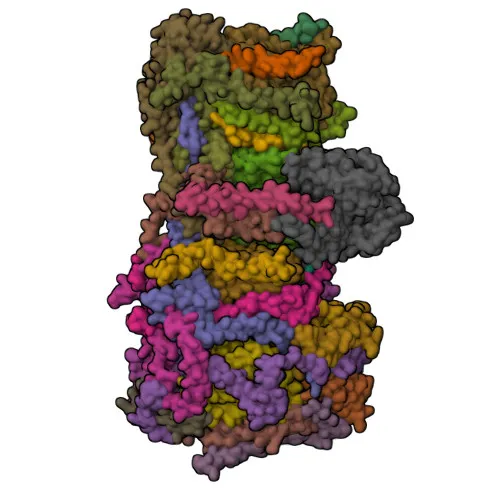
- NDUFA1 encodes an accessory subunit of mitochondrial Complex I (NADH dehydrogenase) that is believed to be non-catalytic; it participates in the transfer of electrons from NADH to ubiquinone.
- The protein is also known as Complex I-MWFE (CI-MWFE) or NADH-ubiquinone oxidoreductase MWFE subunit.
- It localizes to the mitochondrial inner membrane, where it integrates into the respiratory chain supercomplex.
- Expression is enriched primarily in heart and skeletal muscle, consistent with tissues of high oxidative demand.
- Mutations in NDUFA1 are associated with mitochondrial complex I deficiency (MC1DN12), a primary mitochondrial disease.
- The mature protein has a calculated molecular weight of approximately 8 kDa, consistent with the observed band size.
- Post-translational modifications and additional transmembrane topology details are annotated, including a single transmembrane helix (keywords: Transmembrane, Transmembrane helix).
- High sequence conservation across Human, Mouse, and Rat supports the observed cross-reactivity of this antibody.
Experimental Guidance and Technical Tips
- The immunogen corresponds to the N-terminal 70 amino acids, suggesting the antibody is likely to recognize the N-terminal region of NDUFA1; consider running appropriate controls to verify specificity.
- For Western blotting, a band around 8 kDa is expected; using high-percentage gels (e.g., 15% or gradient gels) is advisable to resolve this low-molecular-weight protein.
- Validate the antibody in lysates from heart or skeletal muscle, where NDUFA1 is most abundant; include mitochondrial enrichment protocols if endogenous signal is weak.
- For ELISA applications, consider using recombinant NDUFA1 protein or peptides to optimize coating conditions.
- When testing across species, check sequence alignment of the N-terminal region for potential epitope variations; positive signals have been observed in Human, Mouse, and Rat samples.
CamelBio: Your One-Stop Sourcing Bridge
CamelBio empowers diagnostic manufacturers and research laboratories with comprehensive access to high-quality IVD raw materials. This anti-NDUFA1 rabbit polyclonal antibody supports research into mitochondrial disorders and respiratory chain biology. Through our streamlined sourcing model, we supply validated antibody pairs, bulk ancillary reagents, and custom antibody development services to accelerate your project from concept to clinic.
REQUEST A QUOTE
Our professional team will reply to you within one business day. Please feel free to contact us!