Polyclonal Antibodies
Anti-NCSTN Rabbit Polyclonal Antibody for WB, IF/ICC, ELISA - Q92542
Item Number : CM0015485
Price varies based on specs and customizations
- Application
- WB, IF/ICC, ELISA
- Cross Reactivity
- Human, Mouse, Rat
- Protein Weight
- 78kDa

Shipping:
Contact us to get shipping details Enjoy On-time Dispatch Guarantee.
Why Choose Us
Easy ordering process, quality products, and dedicated support for your business success.
Core Product Specifications and Parameters
| Parameter | Value |
|---|---|
| Product Name | NCSTN Rabbit pAb |
| Remarks/Alias | ATAG1874; NCSTN |
| Species | Human |
| GeneID (Human) | 23385 |
| Immunogen | Recombinant fusion protein containing a sequence corresponding to amino acids 250-578 of human NCSTN (NP_056146.1) |
| Source | Rabbit |
| Category | Polyclonal Antibodies |
| Application | WB, IF/ICC, ELISA |
| Cross Reactivity | Human, Mouse, Rat |
| SWISS | Q92542 |
| Protein Weight | 78kDa |
| Shipping | Ice bag |
Biological Background: NCSTN Function and Localization
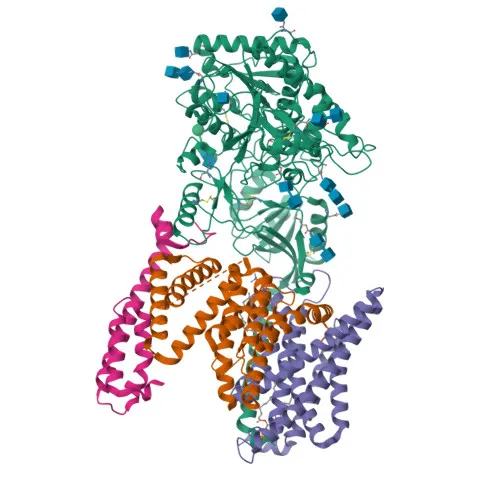
- Nicastrin (NCSTN), encoded by the NCSTN gene (also known as KIAA0253), exists in multiple isoforms due to alternative splicing. It is a 78 kDa, type I transmembrane glycoprotein that contains disulfide bonds, and is a component of the gamma-secretase complex.
- As a core subunit of the gamma-secretase complex, Nicastrin is essential for the intramembrane cleavage of integral membrane proteins, most notably Notch receptors and amyloid-beta precursor protein (APP), thereby playing a pivotal role in Notch and Wnt signaling and the regulation of CTNNB1 levels. Related references: PMID:10993067 PMID:12679784 PMID:25043039
- Nicastrin is widely expressed, with detectable protein levels in the brain, highlighting its neurological significance. Related references: PMID:10993067 PMID:11396676
- Subcellularly, Nicastrin is localized primarily to the membrane, as well as to cytoplasmic vesicle membranes and melanosomes.
- Key post-translational modifications include N-glycosylation and disulfide bond formation, which are critical for the protein's stability and function within the gamma-secretase complex.
Experimental Guidance and Technical Tips
- The immunogen used is a recombinant fusion protein covering amino acids 250-578 of human NCSTN. This region includes part of the extracellular domain, which may yield antibodies recognizing native as well as denatured protein, making it suitable for applications such as ELISA and immunofluorescence.
- As a polyclonal antibody, it offers robust detection due to recognition of multiple epitopes but may require careful validation in your specific sample system and application (WB, IF/ICC, ELISA). The predicted molecular weight is 78 kDa; however, due to heavy glycosylation, observed bands in WB may migrate at higher molecular weights.
- For IF/ICC, consider appropriate permeabilization to access intracellular epitopes if the target is intracellular.
CamelBio: Your One-Stop Sourcing Bridge
At CamelBio, we understand the stringent demands of diagnostic and research reagent sourcing. As a dedicated one-stop bridge, we supply high-quality antibodies like this anti-NCSTN polyclonal antibody to support your investigations into gamma-secretase biology, Alzheimer's disease, and Notch/Wnt signaling. Beyond single products, our portfolio includes validated antibody pairs, bulk monoclonal/polyclonal antibodies, ancillary reagents, and custom rare-target sourcing to accelerate your projects from concept to clinic.
REQUEST A QUOTE
Our professional team will reply to you within one business day. Please feel free to contact us!