Polyclonal Antibodies
Anti-NCOA1 Polyclonal Antibody for WB, ELISA - Q15788
Item Number : CM0018593
Price varies based on specs and customizations
- Application
- WB, ELISA
- Cross Reactivity
- Human, Mouse
- Protein Weight
- 157kDa

Shipping:
Contact us to get shipping details Enjoy On-time Dispatch Guarantee.
Why Choose Us
Easy ordering process, quality products, and dedicated support for your business success.
Core Product Specifications and Parameters
| Parameter | Value |
|---|---|
| Product Name | NCOA1 Rabbit pAb |
| Remarks/Alias | SRC1; KAT13A; RIP160; F-SRC-1; bHLHe42; bHLHe74; NCOA1 |
| Species | Human |
| Gene ID (Human) | 8648 |
| Immunogen | Recombinant fusion protein containing a sequence corresponding to amino acids 720-980 of human NCOA1 (NP_003734.3) |
| Source | Rabbit |
| Category | Polyclonal Antibodies |
| Application | WB, ELISA |
| Cross Reactivity | Human, Mouse |
| SWISS | Q15788 |
| Protein Weight | 157kDa |
| Shipping | Ice bag |
Biological Background: NCOA1 Function and Localization
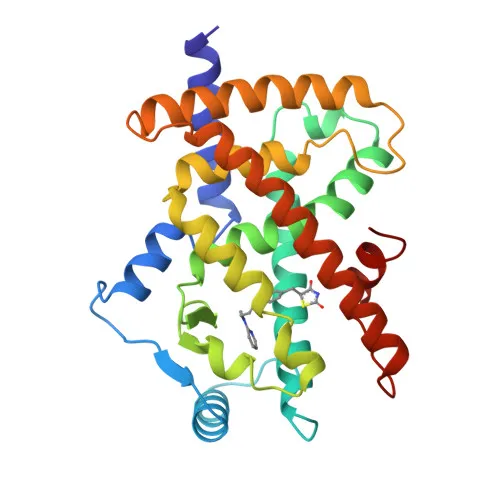
- NCOA1 (Nuclear receptor coactivator 1), also known as SRC-1, is a member of the p160/steroid receptor coactivator family and acts as a transcriptional coactivator for nuclear receptors in a hormone-dependent manner.
- It interacts with various nuclear receptors including steroid receptors (PGR, GR, ER), retinoid X receptors (RXRs), thyroid hormone receptors (TRs), and peroxisome proliferator-activated receptors (PPARs), enhancing their transcriptional activity.
- NCOA1 also coactivates STAT transcription factors (STAT3, STAT5A, STAT5B, STAT6) and possesses intrinsic histone acetyltransferase (HAT) activity toward histones H3 and H4.
- It plays a central role in chromatin remodeling and recruitment of general transcription factors, forming multisubunit coactivator complexes.
- Together with NCOA2, NCOA1 is required for energy balance regulation between white and brown adipose tissues and for mediating steroid hormone responses.
- Isoform 2 exhibits higher thyroid hormone-dependent transactivation activity compared to isoforms 1 and 3.
- The protein is localized in the nucleus and is widely expressed in tissues.
- Post-translational modifications include acetylation, phosphorylation, methylation, and ubiquitination, which regulate its activity and stability.
Experimental Guidance and Technical Tips
- The immunogen corresponds to a central region of NCOA1 (aa 720-980); consider using this antibody to detect full-length NCOA1 in Western blotting.
- For ELISA applications, validate antibody specificity with recombinant protein or peptide blocking to confirm target recognition.
- Due to the high molecular weight (~157 kDa), use an appropriate low-percentage SDS-PAGE gel for better separation in WB.
- Confirm cross-reactivity with mouse samples, as sequence homology supports reactivity; include appropriate controls.
- Polyclonal antibodies may exhibit lot-to-lot variation; consider optimizing dilution factors and including standardized positive and negative controls.
CamelBio: Your One-Stop Sourcing Bridge
As a one-stop sourcing partner for IVD raw materials, CamelBio provides diagnostic manufacturers and research labs with access to validated antibody pairs, optimized polyclonal antibodies, and bulk ancillary reagents. Our supply chain covers rare targets like NCOA1, supporting your nuclear receptor coactivator studies from concept to clinical application. Whether you need monoclonal antibodies, recombinant antigens, or technical consulting, CamelBio streamlines your procurement process for efficient assay development.
REQUEST A QUOTE
Our professional team will reply to you within one business day. Please feel free to contact us!