Polyclonal Antibodies
Anti-Na+/K+-ATPase Rabbit Polyclonal Antibody for WB - P05023
Item Number : CM0026181
Price varies based on specs and customizations
- Application
- WB, IF-P, IHC-P, ELISA
- Cross Reactivity
- Human, Mouse, Rat
- Protein Weight
- 113kDa

Shipping:
Contact us to get shipping details Enjoy On-time Dispatch Guarantee.
Why Choose Us
Easy ordering process, quality products, and dedicated support for your business success.
Core Product Specifications and Parameters
| Parameter | Value |
|---|---|
| Product Name | Na+/K+-ATPase Rabbit pAb |
| Remarks/Alias | CMT2DD; HOMGSMR2; Na+/K+-ATPase |
| Species | Human |
| GeneID (Human) | 476 |
| GeneID | 476 |
| Immunogen | Recombinant fusion protein containing a sequence corresponding to amino acids 1-100 of human Na+/K+-ATPase (NP_000692.2) |
| Source | Rabbit |
| Category | Polyclonal Antibodies |
| Application | WB, IF-P, IHC-P, ELISA |
| Cross Reactivity | Human, Mouse, Rat |
| SWISS | P05023 |
| Protein Weight | 113kDa |
| Shipping | Ice bag |
Biological Background: Sodium/potassium-transporting ATPase subunit alpha-1 Function and Localization
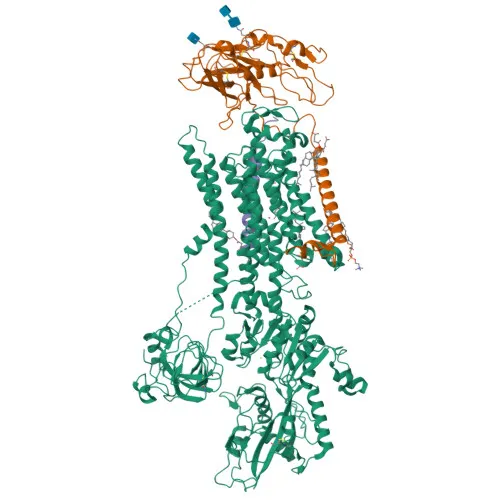
- The ATP1A1 gene encodes the alpha-1 subunit of the Na+/K+-ATPase pump, also known as the sodium pump subunit alpha-1.
- It catalyzes the active transport of 3 Na+ out and 2 K+ into the cell per ATP hydrolyzed, establishing essential transmembrane ion gradients (PubMed:29499166, PubMed:30388404, PubMed:35803952). Related references: PMID:29499166 PMID:30388404 PMID:35803952
- ATP-driven conformational changes mediate alternating access to ion-binding sites, enabling the cyclical ion exchange process (PubMed:35803952). Related references: PMID:35803952
- These ion gradients are critical for maintaining membrane potential, driving secondary active transport, and supporting neural excitability.
- The pump localizes to the plasma membrane, with enriched expression at basolateral surfaces of epithelia, sarcolemma of muscle cells, axons, and melanosomes.
- Post-translational modifications including acetylation and phosphorylation regulate pump activity; mutations are associated with neurological disorders such as Charcot-Marie-Tooth disease type 2DD (CMT2DD), epilepsy, and intellectual disability.
- By similarity, it may be part of an osmosensory pathway that senses sodium levels and controls salt and water intake.
- Alternative splicing of ATP1A1 generates multiple isoforms, potentially modulating pump function in different tissues.
Experimental Guidance and Technical Tips
- For Western blot (WB), a band of approximately 113 kDa is expected in human, mouse, and rat lysates. Use appropriate loading controls and consider membrane protein extraction protocols to enhance detection.
- In immunofluorescence (IF) and immunohistochemistry (IHC), expect membranous staining, particularly at basolateral surfaces in polarized cells. Validate with appropriate negative controls (e.g., knockout tissue) in your system.
- For ELISA, the antibody may be used as capture or detection reagent; pairing with a validated monoclonal antibody can improve assay performance. Titrate antibody concentrations to optimize signal-to-noise ratio.
- The immunogen corresponds to the N-terminal region (aa 1-100), which is highly conserved across species. Confirm specificity in your target species by sequence alignment if using non-listed species.
CamelBio: Your One-Stop Sourcing Bridge
CamelBio provides diagnostic manufacturers and researchers with comprehensive access to high-quality IVD raw materials, including validated antibody pairs, optimized monoclonal and polyclonal antibodies, bulk ancillary reagents, and rare-target sourcing for ion transport and neurological disease research. Our one-stop platform streamlines procurement of specialized antibodies like anti-Na+/K+-ATPase, ensuring reliable supply and technical support for immunoassay development from concept to clinic.
REQUEST A QUOTE
Our professional team will reply to you within one business day. Please feel free to contact us!