Monoclonal Antibodies
Anti-MUM1 Rabbit Monoclonal Antibody for IF-P, IHC-P, ELISA - Q15306
Item Number : CM0006764
Price varies based on specs and customizations
- Application
- IF-P, IHC-P, ELISA
- Cross Reactivity
- Human
- Protein Weight
- 52kDa

Shipping:
Contact us to get shipping details Enjoy On-time Dispatch Guarantee.
Why Choose Us
Easy ordering process, quality products, and dedicated support for your business success.
Core Product Specifications and Parameters
| Parameter | Value |
|---|---|
| Product Name | MUM1 Rabbit mAb |
| Remarks/Alias | MUM1, LSIRF, SHEP8, NF-EM5, IRF4 |
| Species | Human |
| GeneID (Human) | 3662 |
| GeneID | 3662 |
| Immunogen | Recombinant fusion protein containing a sequence corresponding to amino acids 351-451 of human IRF4 (NP_001182215.1) |
| Source | Rabbit |
| Category | Monoclonal Antibodies |
| Application | IF-P, IHC-P, ELISA |
| Cross Reactivity | Human |
| SWISS | Q15306 |
| Protein Weight | 52kDa |
| Shipping | Ice bag |
Biological Background: IRF4/MUM1 Function and Localization
- IRF4 (Interferon regulatory factor 4), also known as MUM1, LSIRF, SHEP8, and NF-EM5, is a member of the interferon regulatory factor (IRF) family of transcription factors.
- Functions as a transcriptional activator, binding to the interferon-stimulated response element (ISRE) of the MHC class I promoter.
- Physically interacts with PU.1 to bind the immunoglobulin lambda light chain enhancer, playing a role in lymphoid-specific signal transduction.
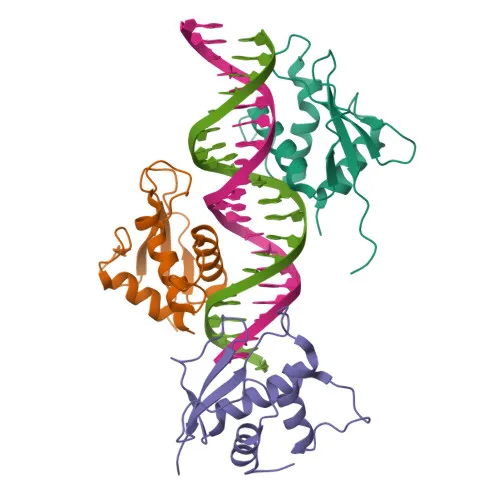
- In immune cells, IRF4 forms a complex with BATF-JUNB heterodimer to drive CD8+ dendritic cell differentiation via recognition of the AICE sequence (5'-TGAnTCA/GAAA-3').
- Localizes to both the nucleus and cytoplasm; predominantly nuclear upon activation.
- Expressed specifically in lymphoid cells, underscoring its role in lymphocyte development and immune regulation.
- Post-translational modifications include phosphorylation; the protein is also subject to alternative splicing and chromosomal rearrangement (e.g., in multiple myeloma).
- Keywords: transcriptional activator, DNA-binding, chromosomal rearrangement, disease variant, alternative splicing, phosphoprotein.
Experimental Guidance and Technical Tips
- The immunogen corresponds to the C-terminal region (aa 351-451) of human IRF4; the antibody may recognize isoforms containing this region, but users should verify cross-reactivity with alternative splice variants.
- For immunofluorescence (IF-P) and immunohistochemistry (IHC-P), optimize fixation and permeabilization protocols, as IRF4 can localize to both nucleus and cytoplasm; include positive control tissues such as lymphoid tissue or multiple myeloma samples.
- In ELISA, the antibody can be used with recombinant IRF4 protein or cell lysates; consider using a blocking buffer compatible with rabbit monoclonal antibodies.
- For chromatin immunoprecipitation (ChIP), the antibody may be suitable given IRF4's DNA-binding properties, but requires independent validation.
- Verify specificity by performing knockdown or knockout controls in human lymphoid cell lines.
CamelBio: Your One-Stop Sourcing Bridge
CamelBio is your one-stop sourcing partner for IVD raw materials, offering validated antibodies, bulk ancillary reagents, and custom development services. For researchers investigating lymphoid transcription factors and immune regulation, this high-quality anti-MUM1 rabbit monoclonal antibody is available with consistent lot-to-lot performance. Whether you need paired antibodies, large-scale production, or rare target sourcing, CamelBio provides end-to-end support from concept to clinic.
REQUEST A QUOTE
Our professional team will reply to you within one business day. Please feel free to contact us!