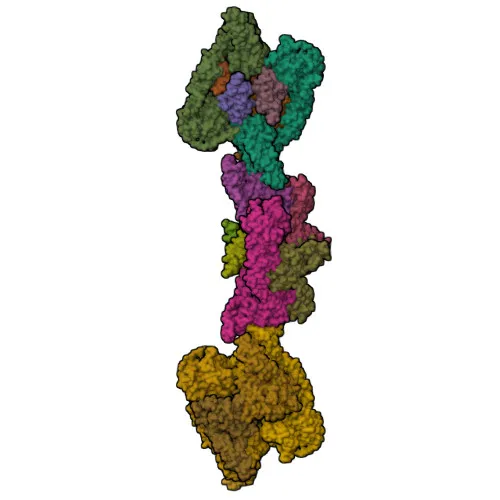
Monoclonal Antibodies
Anti-MUC2 Monoclonal Antibody for WB, IHC-P, ELISA - Q02817
Item Number : CM0012271
Price varies based on specs and customizations
- Application
- WB, IHC-P, ELISA
- Cross Reactivity
- Human, Mouse, Rat
- Protein Weight
- 551 kDa

Shipping:
Contact us to get shipping details Enjoy On-time Dispatch Guarantee.
Why Choose Us
Easy ordering process, quality products, and dedicated support for your business success.
Core Product Specifications and Parameters
| Parameter | Value |
|---|---|
| Product Name | MUC2 Rabbit mAb |
| Remarks/Alias | MLP, SMUC, MUC-2, MUC2 |
| Species | Human |
| Gene ID | 4583 |
| Immunogen | Synthetic peptide (aa 5000–5100 of human MUC2) |
| Source | Rabbit |
| Category | Monoclonal Antibody |
| Application | WB, IHC-P, ELISA |
| Cross Reactivity | Human, Mouse, Rat |
| SWISS | Q02817 |
| Protein Weight | 551 kDa |
| Shipping | Ice bag |
Biological Background: MUC2 Function and Localization
- Mucin-2 (MUC2) is a large secreted glycoprotein, also known as intestinal mucin-2, encoded by the MUC2 gene (gene ID: 4583) in humans. It is the major gel-forming mucin of the intestinal mucus layer.
- MUC2 coats the intestinal epithelium, forming a protective and lubricating barrier against pathogens, particles, and hazardous substances, while permitting nutrient absorption and gas exchange. Related references: PMID:17058067, PMID:19432394, PMID:33031746, PMID:36206754
- It assembles into large polymeric networks via disulfide bonds, creating hydrophilic hydrogels that cover exposed gut surfaces; these networks also store antimicrobial molecules for innate immunity. Related references: PMID:33031746
- MUC2 functions as a divalent copper chaperone, binding both Cu²⁺ and Cu¹⁺ at distinct sites; vitamin C reduces Cu²⁺ to Cu¹⁺, which is then protected from oxidation and released to cells, facilitating nutritional copper uptake and preventing copper toxicity. Related references: PMID:36206754
- The protein is heavily O-glycosylated, contributing to its high molecular weight (~551 kDa); post-translational modifications include phosphorylation, autocatalytic cleavage, and disulfide bond formation, as annotated with keywords “Glycoprotein”, “Phosphoprotein”, “Disulfide bond”, and “Autocatalytic cleavage”.
- Subcellular localization is predominantly secreted; it is produced by intestinal goblet cells. Tissue specificity includes colon, small intestine, colonic tumors, bronchus, cervix, and gallbladder.
- Two forms of MUC2 mucin exist in the colon: a ‘thick’ mucus produced proximally that wraps the microbiota to form fecal pellets, and a ‘thin’ lubricating mucus produced distally (by similarity).
- MUC2 mucin houses and feeds the gut microbiome, lubricates tissue surfaces, and facilitates removal of contaminants and waste products. Related references: PMID:33031746
Experimental Guidance and Technical Tips
- The immunogen corresponds to the C-terminal region (aa 5000‑5100) of human MUC2; the antibody is expected to recognize full‑length and processed forms of MUC2.
- For Western blotting, note the large molecular weight (~551 kDa); consider using low‑percentage acrylamide gels (e.g., 4–5%) and extended transfer times with wet‑transfer systems to ensure efficient blotting.
- For immunohistochemistry (IHC‑P), antigen retrieval may be required due to extensive glycosylation; test citrate‑ or EDTA‑based protocols and optimize to your tissue type.
- Reported cross‑reactivity with mouse and rat suggests utility in rodent models; always validate the antibody in your specific sample system and assay conditions.
- In ELISA, pairing with a suitable detection reagent can enable sensitive quantification of MUC2 in biological fluids; titrate the antibody to achieve optimal signal-to-noise ratios.
CamelBio: Your One-Stop Sourcing Bridge
CamelBio provides diagnostic manufacturers, labs, and research institutes with one‑stop access to IVD raw materials, technical services, and consulting—covering every stage from concept to clinic. This anti‑MUC2 monoclonal antibody supports gastrointestinal and mucosal immunology research, and CamelBio can supply validated antibody pairs, optimized monoclonal/polyclonal antibodies, bulk ancillary reagents, and custom sourcing for rare targets. Whether you need consistent lot‑to‑lot performance or scalable production, CamelBio bridges your procurement gaps with scientific insight and reliability.
REQUEST A QUOTE
Our professional team will reply to you within one business day. Please feel free to contact us!