Polyclonal Antibodies
Anti-mTOR Rabbit Polyclonal Antibody for WB, IF/ICC, IP, ELISA - P42345
Item Number : CM0014884
Price varies based on specs and customizations
- Application
- WB, IF/ICC, IP, ELISA
- Cross Reactivity
- Human, Mouse
- Protein Weight
- 289kDa

Shipping:
Contact us to get shipping details Enjoy On-time Dispatch Guarantee.
Why Choose Us
Easy ordering process, quality products, and dedicated support for your business success.
Core Product Specifications and Parameters
| Parameter | Value |
|---|---|
| Product Name | mTOR Rabbit pAb |
| Remarks/Alias | SKS; FRAP; FRAP1; FRAP2; RAFT1; RAPT1; mTOR |
| Species | Human |
| Gene ID | 2475 |
| Immunogen | Synthetic peptide corresponding to a sequence within amino acids 2400-2500 of human mTOR (NP_004949.1) |
| Source | Rabbit |
| Category | Polyclonal Antibodies |
| Application | WB, IF/ICC, IP, ELISA |
| Cross Reactivity | Human, Mouse |
| SWISS | P42345 |
| Protein Weight | 289kDa |
| Shipping | Ice bag |
Biological Background: mTOR Function and Localization
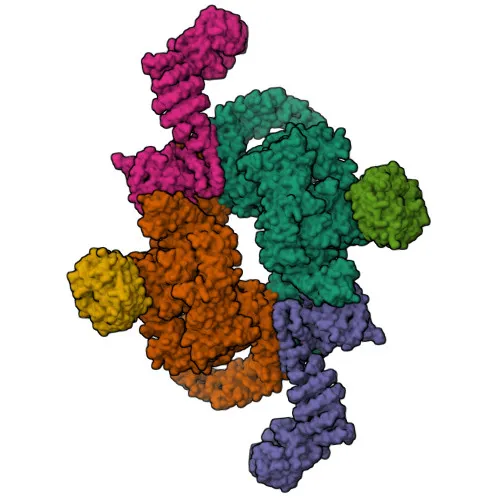
- mTOR (mechanistic target of rapamycin) is a serine/threonine protein kinase and a central regulator of cellular metabolism, growth, and survival in response to hormones, growth factors, nutrients, energy, and stress signals. Related references: PMID:12087098 PMID:12150925 PMID:12150926
- It functions within two distinct complexes: mTORC1, which promotes anabolic processes like protein, lipid, and nucleotide synthesis and inhibits autophagy, and mTORC2, which regulates cell proliferation, cytoskeletal organization, and lipogenesis via AGC kinase activation (e.g., AKT, PKC, SGK1). Related references: PMID:15268862 PMID:15467718 PMID:18497260 PMID:21376236 PMID:24670654
- By phosphorylating key regulators such as EIF4EBP1 and RPS6KB1, mTORC1 stimulates mRNA translation and ribosome biogenesis, while also driving pyrimidine and lipid synthesis. Related references: PMID:12087098 PMID:12150925 PMID:12150926 PMID:24403073 PMID:29236692 PMID:23429703 PMID:23429704 PMID:23426360
- mTORC1 suppresses autophagy through phosphorylation of ULK1, DAP, RUBCNL, and AMBRA1 under nutrient-rich conditions. Related references: PMID:32561715 PMID:20537536 PMID:30704899 PMID:23524951 PMID:25438055
- Subcellular localization includes lysosome, endoplasmic reticulum, Golgi apparatus, plasma membrane, mitochondrion outer membrane, cytoplasm, nucleus, and phagosome vesicles, reflecting its diverse signaling platforms.
- Post-translational modifications include phosphorylation, acetylation, and ubiquitination (isopeptide bond), with key roles in kinase activity and recruitment to membranes.
- Expressed widely but with highest levels in testis; plays a regulatory role in circadian clock function.
- Keywords highlight its involvement in kinase signaling, TPR repeats, disease variants (epilepsy, intellectual disability), and reference proteome status.
Experimental Guidance and Technical Tips
- For Western blot, a high molecular weight band around 289 kDa is anticipated; consider using a low-percentage SDS-PAGE gel (e.g., 6%) and extended transfer conditions to ensure efficient detection.
- The immunogen corresponds to amino acids 2400–2500 in the C-terminal region; verify that the antibody recognizes your target isoform or relevant splice variant.
- In immunofluorescence/immunocytochemistry, optimize permeabilization and fixation protocols due to mTOR’s presence in membranous organelles and nuclear bodies.
- For immunoprecipitation, confirm antibody compatibility with your lysis buffer and consider the liability of mTOR complexes to detergents.
- Cross-reactivity with mouse makes this antibody suitable for studying mTOR in common rodent models.
CamelBio: Your One-Stop Sourcing Bridge
CamelBio serves as a comprehensive sourcing partner for IVD raw materials, supporting diagnostic manufacturers and research laboratories with reliable access to high-quality antibodies and reagents. This mTOR polyclonal antibody is an essential tool for exploring signaling pathways in cancer, metabolism, and autophagy. Beyond individual antibodies, CamelBio offers validated antibody pairs, optimized monoclonal and polyclonal antibodies, bulk ancillary reagents, and custom sourcing for rare targets—streamlining your path from concept to clinic.
REQUEST A QUOTE
Our professional team will reply to you within one business day. Please feel free to contact us!