Polyclonal Antibodies
Anti-MTCO2 Polyclonal Antibody for WB, IHC-P, IF/ICC, ELISA - P00403
Item Number : CM0017767
Price varies based on specs and customizations
- Application
- WB, IHC-P, IF/ICC, ELISA
- Cross Reactivity
- Mouse, Rat
- Protein Weight
- 26kDa

Shipping:
Contact us to get shipping details Enjoy On-time Dispatch Guarantee.
Why Choose Us
Easy ordering process, quality products, and dedicated support for your business success.
Core Product Specifications and Parameters
| Parameter | Value |
|---|---|
| Product Name | MTCO2 Rabbit pAb |
| Remarks/Alias | COX2; MTCO2 |
| Species | Mouse |
| GeneID (Human) | 4513 |
| GeneID | 17709 |
| Immunogen | Synthetic peptide corresponding to a sequence within amino acids 101-200 of mouse MTCO2 (NP_904331.1) |
| Source | Rabbit |
| Category | Polyclonal Antibodies |
| Application | WB, IHC-P, IF/ICC, ELISA |
| Cross Reactivity | Mouse, Rat |
| SWISS | P00403 |
| Protein Weight | 26kDa |
| Shipping | Ice bag |
Biological Background: MTCO2 Function and Localization
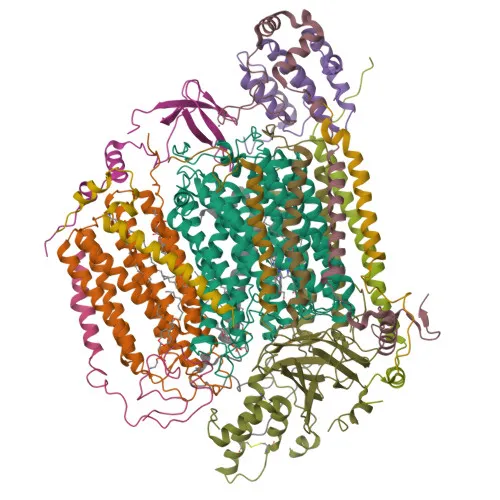
- MTCO2 (Cytochrome c oxidase subunit 2), also known as COX2 or COII, is a 26 kDa mitochondrial protein encoded by the MT-CO2 gene located on the mitochondrial DNA.
- It serves as a core component of cytochrome c oxidase (Complex IV), the terminal enzyme of the mitochondrial electron transport chain that drives oxidative phosphorylation.
- The enzyme catalyzes the final reduction of molecular oxygen to water, coupling electron transport with the pumping of protons across the inner mitochondrial membrane to generate the proton gradient essential for ATP synthesis.
- Within Complex IV, subunit 2 contains the dinuclear copper A (CuA) center, which accepts electrons from cytochrome c in the intermembrane space and transfers them to subunit 1 for catalysis at the binuclear reaction center.
- The protein is embedded in the mitochondrial inner membrane as a multi-pass transmembrane protein, positioning its active copper site toward the intermembrane space.
- Key structural and functional features include copper and magnesium metal-binding sites, which are critical for electron transfer and enzymatic activity.
- Mutations in MT-CO2 are associated with mitochondrial diseases, reflecting its essential role in cellular energy metabolism.
Experimental Guidance and Technical Tips
- The immunogen was designed from a peptide within amino acids 101–200 of mouse MTCO2; check sequence alignment with your target species if using outside mouse/rat.
- For Western blotting, a band at approximately 26 kDa is expected under reducing conditions. Validate with a relevant mitochondrial or tissue lysate.
- In immunohistochemistry (paraffin-embedded), antigen retrieval may be required; test enzymatic or heat-mediated protocols.
- For immunofluorescence, expect a mitochondrial staining pattern; co-staining with a mitochondrial marker is recommended to confirm specificity.
- As a polyclonal antibody, batch-to-batch consistency and potential cross-reactivity should be assessed in your specific assay system.
- ELISA applications can be used to detect purified protein or tissue homogenates; titration and blocking buffers should be optimized empirically.
CamelBio: Your One-Stop Sourcing Bridge
CamelBio simplifies IVD raw-material procurement with a comprehensive inventory of validated antibody pairs, high-performance polyclonal and monoclonal antibodies, and ancillary reagents. For researchers and diagnostic manufacturers working on mitochondrial function, oxidative phosphorylation, or respiratory chain disorders, we offer one-stop access to MTCO2-specific tools and can source rare targets on demand. Our traceable supply chain supports smooth transitions from concept to clinic, with custom scalability and stringent quality control to meet your project needs.
REQUEST A QUOTE
Our professional team will reply to you within one business day. Please feel free to contact us!