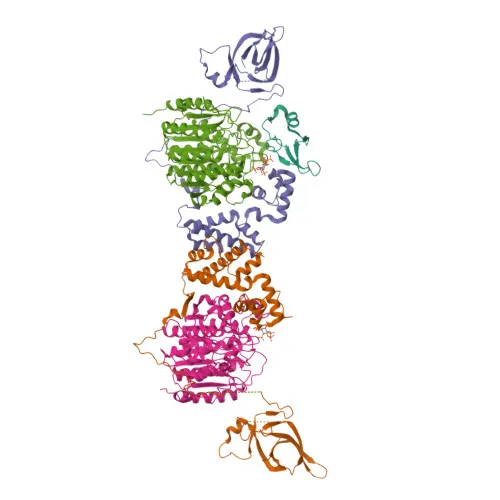
Polyclonal Antibodies
Anti-MTA1 Rabbit Polyclonal Antibody for WB and ELISA - Q13330
Item Number : CM0012986
Price varies based on specs and customizations
- Application
- WB, ELISA
- Cross Reactivity
- Human, Mouse
- Protein Weight
- 81kDa

Shipping:
Contact us to get shipping details Enjoy On-time Dispatch Guarantee.
Why Choose Us
Easy ordering process, quality products, and dedicated support for your business success.
Core Product Specifications and Parameters
| Parameter | Value |
|---|---|
| Product Name | MTA1 Rabbit pAb |
| Remarks/Alias | MTA1 |
| Species | Human |
| GeneID | 9112 |
| Immunogen | A synthetic peptide corresponding to a sequence within amino acids 600-700 of human MTA1 (NP_004680.2) |
| Source | Rabbit |
| Category | Polyclonal Antibodies |
| Application | WB, ELISA |
| Cross Reactivity | Human, Mouse |
| SWISS | Q13330 |
| Protein Weight | 81kDa |
| Shipping | Ice bag |
Biological Background: MTA1 Function and Localization
- MTA1 is a transcriptional coregulator that can act as both a transcriptional corepressor and coactivator, modulating gene expression in various physiological and pathological contexts. Related references: PMID:16617102 PMID:17671180 PMID:17922032
- As a core component of the NuRD histone deacetylase complex, MTA1 remodels chromatin and represses transcription of key target genes including BRCA1, ESR1, TFF1, and CDKN1A. Related references: PMID:16428440 PMID:28977666 PMID:17671180 PMID:17922032 PMID:24413532
- Independently of the NuRD complex, MTA1 functions as a coactivator for BCAS3, SUMO2, and WNT1, highlighting its versatility in transcriptional regulation. Related references: PMID:16617102 PMID:17671180 PMID:21965678
- MTA1 regulates p53-dependent and -independent DNA repair following genotoxic stress by inhibiting p53 ubiquitination and degradation, thereby maintaining genomic stability. Related references: PMID:19837670
- MTA1 plays an essential role in the regulation of the circadian clock by modulating CLOCK-BMAL1 transcriptional activity and SIRT1 expression (by similarity).
- Subcellularly, MTA1 is found in the nucleus, cytoplasm, nuclear envelope, and cytoskeleton, and it can sequester ESR1 in the cytoplasm to enhance its non-genomic responses.
- MTA1 is widely expressed with higher levels in brain, liver, kidney, and cardiac muscle, and is markedly upregulated in a wide variety of cancers, where its expression correlates with tumor aggressiveness and metastasis.
Experimental Guidance and Technical Tips
- The immunogen corresponds to a C-terminal region (aa 600–700) of human MTA1, which is conserved in mouse, supporting the observed cross-reactivity.
- For Western blot, a band at approximately 81 kDa is expected; consider enriching nuclear or cytoplasmic fractions to improve detection, as MTA1 localizes to multiple compartments.
- Post-translational modifications such as acetylation and phosphorylation may cause band shifts; validate the antibody in your specific sample system.
- This antibody is suitable for ELISA; optimal working dilutions should be determined empirically.
CamelBio: Your One-Stop Sourcing Bridge
CamelBio provides a one-stop supply of IVD raw materials, including validated monoclonal and polyclonal antibodies, antigen raw materials, and ancillary reagents, supporting projects from early research to clinical application. For MTA1-related studies, we offer tailored sourcing of rare-target antibody pairs and bulk reagents to streamline your diagnostic assay development. Our comprehensive portfolio and technical consulting help bridge the gap between breakthrough discovery and reliable commercial use.
REQUEST A QUOTE
Our professional team will reply to you within one business day. Please feel free to contact us!