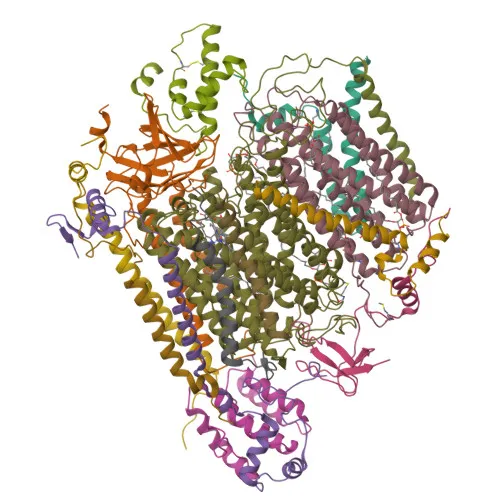
Polyclonal Antibodies
Anti-MT-CO3 Rabbit pAb for WB, IHC-P, ELISA - P00414
Item Number : CM0022567
Price varies based on specs and customizations
- Application
- WB, IHC-P, ELISA
- Cross Reactivity
- Human, Mouse, Rat
- Protein Weight
- 30kDa

Shipping:
Contact us to get shipping details Enjoy On-time Dispatch Guarantee.
Why Choose Us
Easy ordering process, quality products, and dedicated support for your business success.
Core Product Specifications and Parameters
| Parameter | Value |
|---|---|
| Product Name | MT-CO3 Rabbit pAb |
| Remarks/Alias | COIII; MTCO3; COX3; MT-CO3 |
| Species | Human |
| Gene ID (Human) | 4514 |
| Gene ID | 4514 |
| Immunogen | A synthetic peptide corresponding to a sequence within amino acids 1-100 of human MT-CO3 (YP_003024032.1) |
| Source | Rabbit |
| Category | Polyclonal Antibodies |
| Application | WB, IHC-P, ELISA |
| Cross Reactivity | Human, Mouse, Rat |
| SWISS | P00414 |
| Protein Weight | 30kDa |
| Shipping | Ice bag |
Biological Background: MT-CO3 Function and Localization
- MT-CO3 (also known as COX3, COIII, COXIII) encodes cytochrome c oxidase subunit 3, a core component of the terminal enzyme (complex IV) of the mitochondrial respiratory chain.
- Located in the mitochondrial inner membrane, MT-CO3 is a multi-pass transmembrane protein that participates in electron transfer and proton pumping, essential for establishing the proton gradient that drives ATP synthesis.
- Cytochrome c oxidase catalyzes the reduction of molecular oxygen to water using electrons from cytochrome c, a critical step in aerobic respiration.
- The protein is predominantly expressed in tissues with high metabolic activity, consistent with its role in oxidative phosphorylation.
- Pathogenic variants in MT-CO3 are associated with Leber hereditary optic neuropathy (LHON) and other primary mitochondrial diseases, highlighting its clinical significance.
- The mature protein has an approximate molecular weight of 30 kDa and is synthesized within the mitochondria from the mitochondrial genome.
Experimental Guidance and Technical Tips
- The synthetic peptide immunogen (amino acids 1-100) suggests the antibody may detect both native and denatured MT-CO3; consider standard denaturing conditions for WB and optimized fixation/permeabilization for IHC-P.
- A protein band at approximately 30 kDa is expected in Western blotting; validate molecular weight markers and loading controls in your specific sample matrix.
- Cross-reactivity with mouse and rat is indicated; verify sequence alignment of the immunogenic region to ensure epitope conservation, as minor species-specific variations may affect binding.
- For immunohistochemistry, test antigen retrieval methods (e.g., citrate buffer, pH 6.0) and antibody dilutions, as mitochondrial targets can be challenging due to membrane embedding.
- In ELISA applications, use the immunizing peptide or recombinant MT-CO3 as a positive control to assess antibody specificity and titer.
- Polyclonal antibody performance may vary between production lots; we recommend pilot experiments when switching to a new lot, and including appropriate positive and negative controls.
CamelBio: Your One-Stop Sourcing Bridge
CamelBio provides diagnostic manufacturers and research laboratories with integrated access to high-quality IVD raw materials for mitochondrial biology applications. Our portfolio includes validated antibody pairs, optimized polyclonal and monoclonal antibodies, and bulk ancillary reagents to accelerate your assay development. For targets like MT-CO3 critical in respiratory chain and mitochondrial disease research, we offer reliable sourcing and technical consultation from concept to clinic.
REQUEST A QUOTE
Our professional team will reply to you within one business day. Please feel free to contact us!