Monoclonal Antibodies
Anti-MSH6 Rabbit Monoclonal Antibody for WB, IHC-P, IF/ICC, ELISA - P52701
Item Number : CM0006364
Price varies based on specs and customizations
- Application
- WB, IHC-P, IF/ICC, ELISA
- Cross Reactivity
- Human, Mouse, Rat
- Protein Weight
- 153kDa

Shipping:
Contact us to get shipping details Enjoy On-time Dispatch Guarantee.
Why Choose Us
Easy ordering process, quality products, and dedicated support for your business success.
Core Product Specifications and Parameters
| Parameter | Value |
|---|---|
| Product Name | [KO Validated] MSH6 Rabbit mAb |
| Remarks/Alias | GTBP; HSAP; p160; GTMBP; MSH-6; HNPCC5; LYNCH5; MMRCS3 |
| Species | Human |
| GeneID (Human) | 2956 |
| GeneID | 2956 |
| Immunogen | A synthetic peptide corresponding to a sequence within amino acids 1-100 of human MSH6 (NP_000170.1). |
| Source | Rabbit |
| Category | Monoclonal Antibodies |
| Application | WB, IHC-P, IF/ICC, ELISA |
| Cross Reactivity | Human, Mouse, Rat |
| SWISS | P52701 |
| Protein Weight | 153kDa |
| Shipping | Ice bag |
Biological Background: MSH6 Function and Localization
- DNA mismatch repair protein Msh6, also known as G/T mismatch-binding protein (GTBP) or p160, is a component of the post-replicative DNA mismatch repair (MMR) system.
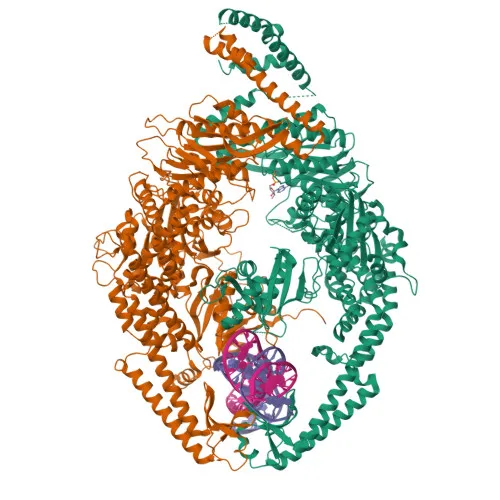
- Heterodimerizes with MSH2 to form the MutS alpha complex, which recognizes single base mismatches and dinucleotide insertion-deletion loops (IDLs) in DNA, bending the helix and shielding ~20 base pairs upon binding.
- Upon mismatch recognition, MutS alpha recruits MutL alpha to form a ternary complex, triggering downstream repair events including strand discrimination, excision, and resynthesis.
- ATP binding and hydrolysis act as a molecular switch: mismatched DNA induces ADP→ATP exchange, converting MutS alpha into a sliding clamp that diffuses along DNA, a process essential for mismatch repair.
- Recruited to chromatin in G1 and early S phase via its PWWP domain, which specifically binds histone H3 trimethylated at Lys36 (H3K36me3), enabling early marking of replication origins.
- Localizes to the nucleus and chromosomes; mutations in MSH6 are associated with hereditary nonpolyposis colorectal cancer (HNPCC/Lynch syndrome) and other disease variants.
- Annotated with keywords: DNA damage, DNA repair, DNA-binding, ATP-binding, nucleotide-binding, host-virus interaction, and alternative splicing, reflecting its diverse regulatory roles.
Experimental Guidance and Technical Tips
- Since the immunogen is a synthetic peptide from the N-terminus, ensure that the antibody recognizes the native protein by validating in a system expressing full-length MSH6, such as HeLa or MCF7 cell lysates for WB.
- For IHC-P, optimize antigen retrieval (e.g., citrate buffer pH 6.0 or EDTA pH 9.0) and consider that MSH6 is nuclear; evaluate staining in human colorectal adenocarcinoma or tonsil tissue as positive controls.
- In IF/ICC, permeabilize cells adequately to access nuclear antigens, and consider co-staining with a nuclear marker to confirm localization.
- For ELISA, a paired antibody against a non-overlapping epitope may be required; validate with recombinant MSH6 protein or peptide competition assays.
- Because MSH6 is a large protein (153 kDa), use appropriate gel percentages (e.g., 6-8% SDS-PAGE) and extended transfer times for WB.
CamelBio: Your One-Stop Sourcing Bridge
CamelBio streamlines your IVD raw material supply chain, from early-stage research to commercial kit development. For MSH6 and other DNA repair targets, we offer validated antibody pairs, optimized monoclonal/polyclonal antibodies, bulk ancillary reagents, and sourcing of rare-target raw materials. Partner with us to accelerate your diagnostic assay development with reliable, high-quality reagents.
REQUEST A QUOTE
Our professional team will reply to you within one business day. Please feel free to contact us!