Polyclonal Antibodies
Anti-MSH2 Polyclonal Antibody for WB, IF/ICC, ELISA - P43246
Item Number : CM0012954
Price varies based on specs and customizations
- Application
- WB, IF/ICC, ELISA
- Cross Reactivity
- Human, Mouse, Rat
- Protein Weight
- 105kDa

Shipping:
Contact us to get shipping details Enjoy On-time Dispatch Guarantee.
Why Choose Us
Easy ordering process, quality products, and dedicated support for your business success.
Core Product Specifications and Parameters
| Parameter | Value |
|---|---|
| Product Name | MSH2 Rabbit pAb |
| Remarks/Alias | FCC1; COCA1; HNPCC; LCFS2; MSH-2; hMSH2; HNPCC1; LYNCH1; MMRCS2; MSH2 |
| Species | Human |
| Gene ID (Human) | 4436 |
| Gene ID | 4436 |
| Immunogen | Recombinant fusion protein containing a sequence corresponding to amino acids 1-300 of human MSH2 (NP_000242.1) |
| Source | Rabbit |
| Category | Polyclonal Antibodies |
| Application | WB, IF/ICC, ELISA |
| Cross Reactivity | Human, Mouse, Rat |
| SWISS | P43246 |
| Protein Weight | 105kDa |
| Shipping | Ice bag |
Biological Background: DNA mismatch repair protein Msh2 Function and Localization
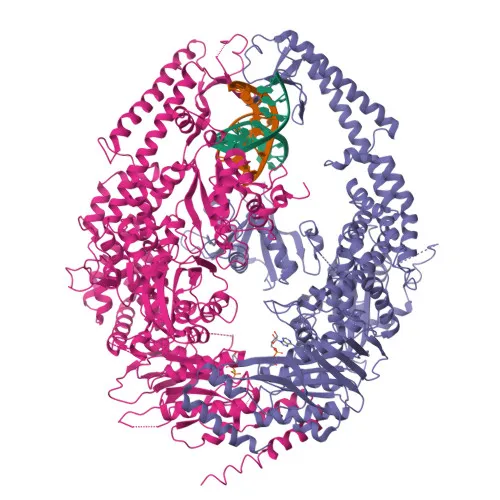
- Core component of the post-replicative DNA mismatch repair (MMR) system. Forms two heterodimers: MutS alpha (with MSH6) and MutS beta (with MSH3), which bind mismatched DNA to initiate repair.
- MutS alpha recognizes single base mismatches and small insertion-deletion loops (1–2 nucleotides), while MutS beta recognizes larger loops up to 13 nucleotides.
- Upon binding, the heterodimers bend DNA, shield approximately 20 base pairs, and recruit MutL alpha to coordinate strand discrimination, excision, and resynthesis.
- Recruits DNA helicase MCM9 to chromatin, facilitating unwinding of the mismatch-containing strand. Related references: PMID:26300262
- ATP binding and hydrolysis act as a molecular switch: mismatched DNA triggers ADP→ATP exchange, converting MutS alpha into a sliding clamp that diffuses along DNA and enables downstream repair events.
- Also plays a role in DNA homologous recombination repair, and in melanocytes may modulate UV-B-induced cell cycle regulation and apoptosis.
- Subcellular localization is predominantly nuclear and chromosome-associated, consistent with its genomic surveillance function. Ubiquitously expressed across tissues.
- Post-translational modifications include acetylation, phosphorylation, and ubiquitination. Acts as a tumor suppressor; mutations are associated with hereditary nonpolyposis colorectal cancer (HNPCC/Lynch syndrome).
Experimental Guidance and Technical Tips
- The immunogen spans the N-terminal 1–300 amino acids of human MSH2. As a polyclonal antibody, it recognizes multiple epitopes within this region, which may provide robust detection but lot-to-lot consistency should be verified.
- Expected molecular weight is 105 kDa. Suitable positive controls include commonly used human cell lines (e.g., HeLa, HEK293) and mouse/rat tissues, given the ubiquitous expression of MSH2.
- For Western blot (WB), standard protocols can be employed; consider optimizing blocking and antibody dilution for the specific sample type.
- In immunofluorescence/immunocytochemistry (IF/ICC), anticipate nuclear staining. Use appropriate fixation and permeabilization methods to preserve nuclear antigens.
- The cross-reactivity with mouse and rat enables translational studies, but validation in the relevant sample system is recommended.
CamelBio: Your One-Stop Sourcing Bridge
CamelBio serves as a reliable one-stop partner for IVD raw-material sourcing, connecting diagnostic manufacturers and research labs with high-quality reagents like the MSH2 antibody for DNA mismatch repair and oncology applications. Our portfolio includes validated antibody pairs, optimized monoclonal/polyclonal antibodies, bulk ancillary reagents, and rare target sourcing capabilities to support your entire workflow from concept to clinical application.
REQUEST A QUOTE
Our professional team will reply to you within one business day. Please feel free to contact us!