Polyclonal Antibodies
Anti-MRPL39 Polyclonal Antibody for WB - Q9NYK5
Item Number : CM0014379
Price varies based on specs and customizations
- Application
- WB, ELISA
- Cross Reactivity
- Human, Mouse, Rat
- Protein Weight
- 39kDa

Shipping:
Contact us to get shipping details Enjoy On-time Dispatch Guarantee.
Why Choose Us
Easy ordering process, quality products, and dedicated support for your business success.
Core Product Specifications and Parameters
| Parameter | Value |
|---|---|
| Product Name | MRPL39 Rabbit pAb |
| Remarks/Alias | L5mt; L39mt; MRPL5; RPML5; MRP-L5; PRED22; PRED66; MSTP003; C21orf92; MRPL39 |
| Species | Human |
| Gene ID (Human) | 54148 |
| Gene ID | 54148 |
| Immunogen | Recombinant fusion protein containing a sequence corresponding to amino acids 39-338 of human MRPL39 (NP_059142.2) |
| Source | Rabbit |
| Category | Polyclonal Antibodies |
| Application | WB, ELISA |
| Cross Reactivity | Human, Mouse, Rat |
| SWISS | Q9NYK5 |
| Protein Weight | 39kDa |
| Shipping | Ice bag |
Biological Background: MRPL39 Function and Localization
- MRPL39, also known as L39mt or MRP-L39, is a component of the mitochondrial large ribosomal subunit (39S) and plays a critical role in mitochondrial protein synthesis.
- The protein is encoded by the MRPL39 gene, which is located on chromosome 21 in humans. Alternative splicing produces at least two isoforms: isoform 1 is ubiquitously expressed, while isoform 2 is heart-specific.
- MRPL39 localizes exclusively to the mitochondrion, where it participates in the translation of 13 essential subunits of the oxidative phosphorylation complexes encoded by mitochondrial DNA.
- The protein is subject to post-translational modifications, including acetylation, which may regulate its function or stability within the ribosomal complex.
- According to UniProt keywords, MRPL39 has been identified in proteomics studies and is associated with Leigh syndrome, a severe mitochondrial disorder, suggesting its importance in mitochondrial homeostasis.
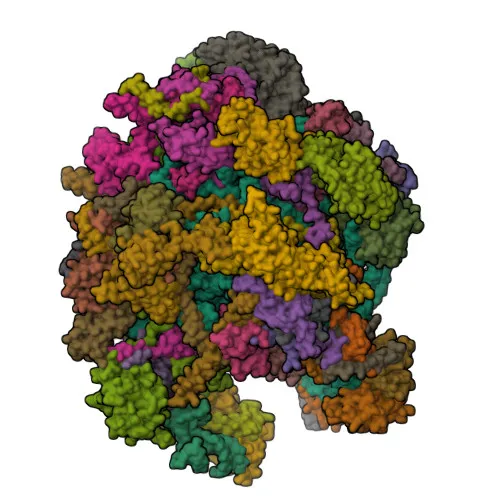
- Structural studies (3D-structure keyword) indicate that MRPL39 contributes to the architecture of the mitoribosomal large subunit, facilitating proper assembly and function.
Experimental Guidance and Technical Tips
- The immunogen used for this antibody spans amino acids 39-338 of human MRPL39, covering a large internal region. This design likely generates reactivity against conserved epitopes, enabling cross-reactivity with mouse and rat orthologs.
- For Western blot (WB), a band approximately 39 kDa is expected. However, actual migration may vary depending on gel conditions and post-translational modifications; consider using mitochondrial fractions or whole cell lysates from appropriate tissues.
- In ELISA applications, using recombinant MRPL39 protein as a coating antigen and standard curve control is recommended. The antibody may be used for both direct and indirect ELISA formats.
- As a polyclonal antibody, lot-to-lot consistency should be validated by the user. It is advisable to optimize working dilutions for each experimental system and to include positive (e.g., purified mitochondria) and negative controls.
- Given its mitochondrial localization, ensure lysis buffers are compatible with releasing mitochondrial proteins if using whole cell extracts.
CamelBio: Your One-Stop Sourcing Bridge
CamelBio offers comprehensive access to a wide range of IVD raw materials, including validated antibody pairs, recombinant proteins, and ancillary reagents, supporting research into mitochondrial biology and ribosomal targets like MRPL39. As a one-stop sourcing partner, we assist diagnostic manufacturers and laboratories in obtaining high-quality polyclonal and monoclonal antibodies, along with bulk production options and rare target raw-material procurement. Let CamelBio streamline your supply chain from early-stage development to clinical application.
REQUEST A QUOTE
Our professional team will reply to you within one business day. Please feel free to contact us!