Polyclonal Antibodies
Anti-MRPL13 Rabbit Polyclonal Antibody for WB, IHC-P, ELISA - Q9BYD1
Item Number : CM0019641
Price varies based on specs and customizations
- Application
- WB, IHC-P, ELISA
- Cross Reactivity
- Human, Mouse, Rat
- Protein Weight
- 20kDa

Shipping:
Contact us to get shipping details Enjoy On-time Dispatch Guarantee.
Why Choose Us
Easy ordering process, quality products, and dedicated support for your business success.
Core Product Specifications and Parameters
| Parameter | Value |
|---|---|
| Product Name | [KD Validated] MRPL13 Rabbit pAb |
| Remarks/Alias | MRPL13; L13; L13A; L13mt; RPL13; RPML13; mitochondrial ribosomal protein L13 |
| Species | Human |
| GeneID (human) | 28998 |
| GeneID | 28998 |
| Immunogen | Synthetic peptide within amino acids 70-178 of human MRPL13 (NP_054797.2) |
| Source | Rabbit |
| Category | Polyclonal Antibodies |
| Application | WB, IHC-P, ELISA |
| Cross Reactivity | Human, Mouse, Rat |
| SWISS | Q9BYD1 |
| Protein Weight | 20kDa |
| Shipping | Ice bag |
Biological Background: MRPL13 Function and Localization
- MRPL13 is a mitochondrial ribosomal protein that constitutes a component of the 39S large subunit of the mitochondrial ribosome.
- It plays an essential role in mitochondrial protein synthesis by participating in the translation of 13 mitochondrially-encoded mRNAs involved in oxidative phosphorylation.
- The protein is encoded by the nuclear MRPL13 gene and imported into mitochondria, where it localizes exclusively to the mitochondrial matrix as part of the mitoribosome.
- MRPL13 belongs to the universal ribosomal protein uL13 family, conserved across prokaryotes and eukaryotic organelles.
- Post-translational acetylation of MRPL13 has been identified through proteomics studies, suggesting a regulatory mechanism for mitoribosome function.
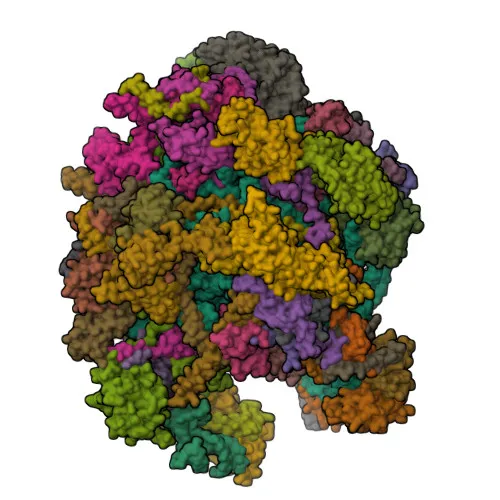
- High-resolution 3D structures of the human mitoribosome have revealed the precise location and molecular interactions of MRPL13 within the large subunit.
Experimental Guidance and Technical Tips
- The immunogen for this antibody is a synthetic peptide spanning amino acids 70–178 of human MRPL13. This region is likely exposed on the mitoribosome surface and may be accessible for antibody binding in native conformations.
- For Western blot (WB), a band of approximately 20 kDa is expected under denaturing and reducing conditions. Ensure adequate mitochondrial enrichment if endogenous expression levels in whole-cell lysates are low.
- In IHC-P applications, consider using heat-induced antigen retrieval and validate mitochondrial staining patterns in tissues with high metabolic activity (e.g., heart, skeletal muscle).
- As a polyclonal antibody, lot-to-lot consistency should be monitored; include appropriate positive and negative controls and optimize dilutions empirically for each application.
CamelBio: Your One-Stop Sourcing Bridge
CamelBio provides diagnostic manufacturers and research laboratories with streamlined access to validated IVD raw materials, including this anti-MRPL13 polyclonal antibody, which targets a key mitochondrial translation factor relevant for studies in mitochondrial biology and related disorders. Our portfolio spans monoclonal and polyclonal antibodies, recombinant proteins, and ancillary reagents, all supported by expert technical consultation. For custom or bulk requirements involving mitochondrial targets or other rare‑target materials, CamelBio serves as a procurement partner from concept through clinical supply.
REQUEST A QUOTE
Our professional team will reply to you within one business day. Please feel free to contact us!