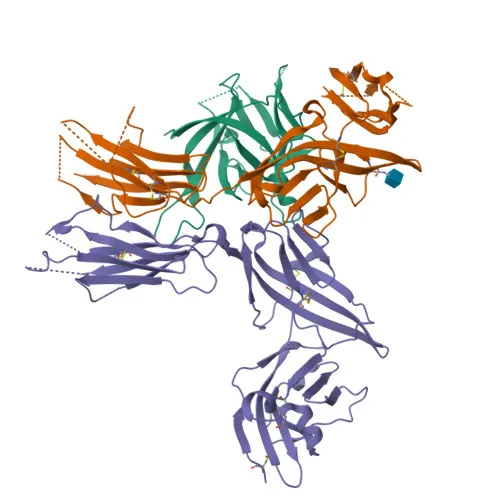
Monoclonal Antibodies
Anti-Mouse IL-33R/ST2 Monoclonal Antibody () for Flow Cytometry - P14719
Item Number : CM0004670
Price varies based on specs and customizations
- Application
- FC
- Cross Reactivity
- Mouse
- Protein Weight
- 38kDa/65kDa

Shipping:
Contact us to get shipping details Enjoy On-time Dispatch Guarantee.
Why Choose Us
Easy ordering process, quality products, and dedicated support for your business success.
Core Product Specifications and Parameters
| Parameter | Value |
|---|---|
| Product Name | Rabbit anti-Mouse IL-33R/ST2 mAb |
| Remarks/Alias | T1; St2; DER4; Ly84; ST2L; Fit-1; T1/ST2; St2-rs1 |
| Species | Mouse |
| Gene ID (Human) | 9173 |
| Gene ID (Mouse) | 17082 |
| Immunogen | Recombinant fusion protein containing a sequence corresponding to amino acids 27-332 of mouse IL-33R/ST2 (NP_001020773.1) |
| Source | Rabbit |
| Category | Monoclonal Antibodies |
| Application | FC |
| Cross Reactivity | Mouse |
| SWISS | P14719 |
| Protein Weight | 38kDa/65kDa |
| Shipping | Ice bag |
Biological Background: IL-33R/ST2 Function and Localization
- IL-33R/ST2, encoded by the Il1rl1 gene, is a member of the interleukin-1 receptor family and serves as the receptor for interleukin-33 (IL-33), playing critical roles in innate and adaptive immunity. Related references: PMID:17675517 | PMID:18450470 | PMID:22660580
- Upon IL-33 binding and complex formation with coreceptor IL1RAP, ST2 recruits MYD88, IRAKs, and TRAF6, leading to downstream MAPK pathway activation and modulation of immune responses.
- Alternatively spliced isoforms exist, including transmembrane (ST2L) and soluble (sST2) forms, which can act as a decoy receptor inhibiting IL-33 signaling.
- ST2 is predominantly expressed in hematopoietic tissues and inflammatory cell types such as macrophages, erythroid cells, epithelial cells, and fibroblasts, with isoform-specific distribution in brain astrocytes, microglia, and endothelial cells.
- The protein undergoes post-translational modifications including glycosylation, phosphorylation, and ubiquitination, and contains immunoglobulin-like domains and disulfide bonds.
- In macrophages, ST2 engagement during tissue injury can trigger UCP2-dependent mitochondrial rewiring, attenuating ROS generation and promoting an anti-inflammatory phenotype. Related references: PMID:34644537
Experimental Guidance and Technical Tips
- The immunogen, covering amino acids 27–332 of the mouse ST2 extracellular domain, is likely to recognize both membrane-bound and soluble isoforms; consider validation in the relevant sample system (e.g., cell lines, tissue homogenates) to confirm isoform detection.
- For flow cytometry applications, titrate the antibody to determine the optimal staining concentration for your cell type of interest, and include appropriate isotype controls.
- Verify cross-reactivity in your mouse model as expression levels may vary; testing on knockout or knockdown samples is recommended to confirm specificity.
CamelBio: Your One-Stop Sourcing Bridge
CamelBio provides customized IVD raw material solutions, including validated antibody pairs, optimized monoclonal and polyclonal antibodies, and bulk ancillary reagents for IL-33/ST2 research. Whether you require rare-target antibodies or a complete sourcing strategy from concept to clinic, our integrated supply chain and technical expertise support your entire development workflow.
Product Datasheet
Anti-Mouse IL-33R/ST2 Monoclonal Antibody () for Flow Cytometry - P14719
REQUEST A QUOTE
Our professional team will reply to you within one business day. Please feel free to contact us!