Monoclonal Antibodies
Anti-Mouse IgM Monoclonal Antibody for WB, IHC-P, FC, ELISA - P01872
Item Number : CM0009351
Price varies based on specs and customizations
- Application
- WB, IHC-P, FC, ELISA
- Cross Reactivity
- Mouse
- Protein Weight
- 50kDa/53kD

Shipping:
Contact us to get shipping details Enjoy On-time Dispatch Guarantee.
Why Choose Us
Easy ordering process, quality products, and dedicated support for your business success.
Core Product Specifications and Parameters
| Parameter | Value |
|---|---|
| Product Name | Mouse IgM Rabbit mAb |
| Remarks/Alias | Igm; muH; Igh6; Igh-6; Igh-M |
| Species | Mouse |
| Immunogen | Recombinant fusion protein containing a sequence corresponding to amino acids 105-454 of mouse Ighm (P01872). |
| Source | Rabbit |
| Category | Monoclonal Antibodies |
| Application | WB, IHC-P, FC, ELISA |
| Cross Reactivity | Mouse |
| SWISS | P01872 |
| Protein Weight | 50kDa/53kD |
| Shipping | Ice bag |
Biological Background: IgM Heavy Constant Region Function and Localization
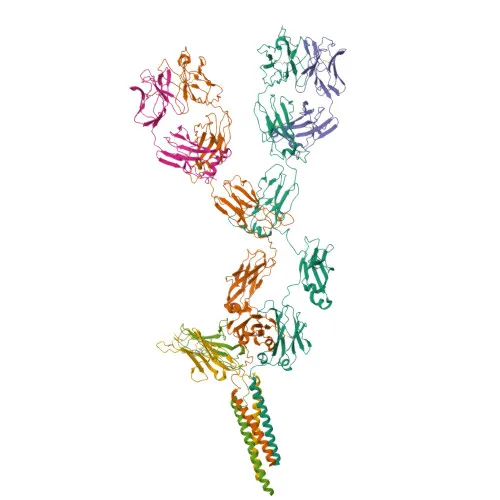
- Protein Identity and Isoforms: The target is the immunoglobulin heavy constant mu (Ig mu chain), encoded by the Ighm gene (alias Igh-6). It constitutes the constant region of IgM antibodies and exists as both secreted (sIgM) and membrane-bound (mIgM) isoforms via alternative splicing.
- Antigen Binding and Variable Domain Assembly: In humoral immunity, the variable domains of one heavy chain and one light chain form the antigen binding site. These domains are assembled by V-(D)-J rearrangement and undergo somatic hypermutation for affinity maturation after antigen exposure (By similarity).
- Secreted IgM Multimerization and Polyreactivity: sIgM multimerizes into pentamers or hexamers for high-avidity antigen binding. Natural sIgM is polyreactive, recognizing conserved self- and pathogen-derived structures, whereas immune sIgM is antigen-specific; both are essential for an efficient humoral response. Related references: PMID:10899913 PMID:28135254 PMID:34788614
- Effector Functions via Fc Receptors and Complement: sIgM effector functions are mediated through the high-affinity Fc receptor FCMR on lymphoid cells, promoting IgG responses and self-tolerance, and by recruiting C1q to activate the classical complement pathway, facilitating pathogen neutralization and phagocytosis of apoptotic cells. Related references: PMID:10899913 PMID:11062505 PMID:28135254
- Mucosal Immunity and Transcytosis: In mucosal surfaces, sIgM is transported across the epithelium by PIGR and secreted with the secretory component. IgM-antigen complexes can be retro-transcytosed via FCMR across M cells to lymphoid tissues. Related references: PMID:34788614
- Membrane-bound IgM BCR Signaling: As part of the B cell receptor complex, membrane-bound IgM provides constitutive tonic signaling necessary for B cell survival and mediates pre-BCR signaling that regulates immunoglobulin gene rearrangement and allelic exclusion.
- Subcellular Localization and Tissue Expression: The protein is located on the cell membrane (as BCR component) and is secreted. It is expressed in bone marrow and in B-1 and B-2 cells at the protein level.
- Post-translational Modifications and Structural Keywords: Characterized by disulfide bonds, N-linked glycosylation, immunoglobulin domains, and a transmembrane helix (in membrane-bound isoform). Keywords: disulfide bond, glycoprotein, immunoglobulin domain, membrane, secreted, transmembrane.
Experimental Guidance and Technical Tips
- The immunogen used is a recombinant fusion protein spanning amino acids 105-454 of mouse Ighm (P01872), corresponding to a region within the constant domain. This design may target epitopes conserved between the secreted and membrane-bound isoforms, potentially enabling detection of both forms.
- For Western blotting (WB), the predicted molecular weight of the target is approximately 50–53 kDa under reducing conditions. Consider using appropriate controls, such as mouse spleen lysates or purified IgM, and validate the band pattern in your sample system.
- In immunohistochemistry of paraffin-embedded tissues (IHC-P), optimal antigen retrieval and antibody dilution should be experimentally determined. The antibody is intended for use on mouse tissues; cross-reactivity with other species has not been reported.
- For flow cytometry (FC), ensure proper Fc receptor blocking and use directly conjugated or secondary detection reagents compatible with the rabbit monoclonal format. Pre-validation of staining in mouse B lymphocyte populations (e.g., splenocytes) is recommended.
- In ELISA applications, the antibody can be used for capture or detection of mouse IgM. Consider pairing with an appropriate detection antibody for sandwich ELISA setups and validate the assay's sensitivity and specificity.
CamelBio: Your One-Stop Sourcing Bridge
As a dedicated IVD raw material partner, CamelBio offers a comprehensive portfolio of antibodies, antigens, and ancillary reagents to support diagnostic developers and researchers. This anti-mouse IgM monoclonal antibody targets the constant region of the mu heavy chain, serving as a key tool for humoral immunity studies, B cell phenotyping, and IgM quantification assays. From validated antibody pairs to bulk reagent supply, CamelBio streamlines your sourcing workflow from concept to clinic.
REQUEST A QUOTE
Our professional team will reply to you within one business day. Please feel free to contact us!