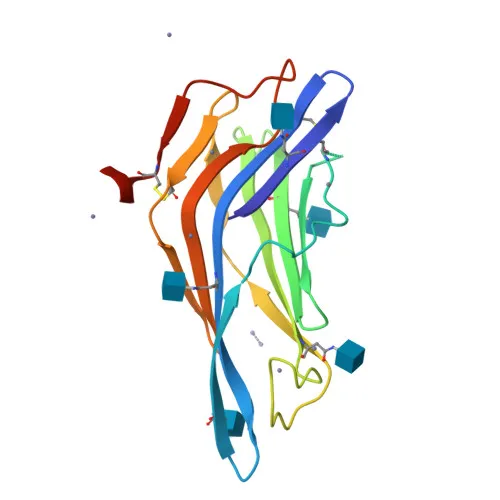
Monoclonal Antibodies
Anti-Mouse CD107b Monoclonal Antibody for Flow Cytometry - P17047
Item Number : CM0004911
Price varies based on specs and customizations
- Application
- FC
- Cross Reactivity
- Mouse
- Protein Weight
- 46kDa

Shipping:
Contact us to get shipping details Enjoy On-time Dispatch Guarantee.
Why Choose Us
Easy ordering process, quality products, and dedicated support for your business success.
Core Product Specifications and Parameters
| Parameter | Value |
|---|---|
| Product Name | Rabbit anti-Mouse CD107b mAb |
| Remarks/Alias | Mac3; LGP-B; CD107b; Lamp-2; Lamp II; Lamp-2a; Lamp-2b; Lamp-2c |
| Species | Mouse |
| GeneID (Human) | 3920 |
| GeneID | 16784 |
| Immunogen | Recombinant fusion protein containing a sequence corresponding to amino acids 26-189 of mouse CD107b (NP_001017959.1) |
| Source | Rabbit |
| Category | Monoclonal Antibodies |
| Application | FC |
| Cross Reactivity | Mouse |
| SWISS | P17047 |
| Protein Weight | 46kDa |
| Shipping | Ice bag |
Biological Background: Lysosome-associated membrane glycoprotein 2 (LAMP-2) Function and Localization
- LAMP-2, also designated CD107b, Mac3, LGP-B, Lamp II, and Lamp-2 isoforms (Lamp-2a, Lamp-2b, Lamp-2c), is a lysosome-associated membrane glycoprotein encoded by the Lamp2 gene in mice.
- It plays a critical role in lysosome biogenesis and lysosomal pH regulation by acting as a direct inhibitor of the proton channel TMEM175, thereby facilitating lysosomal acidification for optimal hydrolase activity.
- LAMP-2 functions in chaperone-mediated autophagy (CMA) by binding target proteins such as GAPDH, GPX4, NLRP3, and MLLT11, and targeting them for lysosomal degradation. Related references: PMID:30718432
- It is required for the fusion of autophagosomes with lysosomes during autophagy; cells lacking LAMP2 fail to accumulate STX17 on autophagosomes. Related references: PMID:27628032
- LAMP-2 is required for normal degradation of autophagosome contents. Related references: PMID:10972293, PMID:12221139
- Subcellularly, it localizes to the lysosome membrane, endosome membrane, autophagosome membrane, and cell membrane.
- Detected in mouse liver and kidney at the protein level.
- The protein is a glycoprotein with alternative splicing, disulfide bonds, a signal peptide, and a transmembrane helix; its calculated molecular weight is ~46 kDa.
Experimental Guidance and Technical Tips
- This antibody is validated for flow cytometry on mouse cells. The immunogen (residues 26–189, luminal domain) targets the N-terminal extracellular region, making it suitable for surface staining of membrane-localized LAMP-2.
- For detection of cell surface CD107b (e.g., on activated immune cells), live cell staining without permeabilization may be effective; for intracellular lysosomal pools, consider permeabilization protocols.
- Optimize antibody titration and include appropriate isotype controls. Validate performance in your specific sample type and treatment conditions.
CamelBio: Your One-Stop Sourcing Bridge
CamelBio provides diagnostic manufacturers, labs, and research institutes with one-stop access to IVD raw materials, technical services, and consulting—covering every stage from concept to clinic. This anti-mouse CD107b monoclonal antibody supports research in autophagy, lysosomal storage disorders, and immune cell degranulation studies. Beyond antibodies, we offer validated antibody pairs, optimized monoclonals, bulk ancillary reagents, and rare target sourcing to accelerate your IVD development.
REQUEST A QUOTE
Our professional team will reply to you within one business day. Please feel free to contact us!