Polyclonal Antibodies
Anti-MMP8 Rabbit Polyclonal Antibody for WB, IHC-P, ELISA - P22894
Item Number : CM0020434
Price varies based on specs and customizations
- Application
- WB, IHC-P, ELISA
- Cross Reactivity
- Human, Mouse, Rat
- Protein Weight
- 53kDa

Shipping:
Contact us to get shipping details Enjoy On-time Dispatch Guarantee.
Why Choose Us
Easy ordering process, quality products, and dedicated support for your business success.
Core Product Specifications and Parameters
| Parameter | Value |
|---|---|
| Product Name | MMP8 Rabbit pAb |
| Remarks/Alias | HNC; CLG1; MMP-8; PMNL-CL; MMP8 |
| Species | Human |
| Gene ID (Human) | 4317 |
| Gene ID | 4317 |
| Immunogen | Recombinant fusion protein containing a sequence corresponding to amino acids 101-467 of human MMP8 (NP_002415.1) |
| Source | Rabbit |
| Category | Polyclonal Antibodies |
| Application | WB, IHC-P, ELISA |
| Cross Reactivity | Human, Mouse, Rat |
| SWISS | P22894 |
| Protein Weight | 53kDa |
| Shipping | Ice bag |
Biological Background: MMP8 Function and Localization
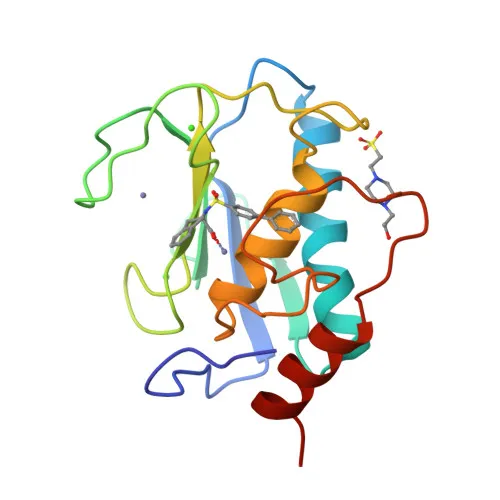
- MMP8, also known as neutrophil collagenase or PMNL-CL, is a member of the matrix metalloproteinase (MMP) family, encoded by the MMP8 gene in humans.
- It functions as a collagenase that degrades fibrillar type I, II, and III collagens, playing a key role in extracellular matrix remodeling.
- Expression is highly tissue-specific, with MMP8 predominantly produced in neutrophils and stored within cytoplasmic granules.
- Upon activation, MMP8 is secreted into the extracellular space and localizes to the extracellular matrix, facilitating collagen breakdown.
- The protein is synthesized as a zymogen and requires proteolytic cleavage for activation; it contains structural features such as a signal peptide, disulfide bonds, and glycosylation sites.
- Catalytic activity depends on calcium and zinc ions, which coordinate within the active site, characteristic of metzincin metalloproteases.
- MMP8 is involved in physiological processes like neutrophil migration and wound healing, and its dysregulation is associated with inflammatory conditions and tissue destruction.
Experimental Guidance and Technical Tips
- For Western blotting (WB), consider titrating the antibody to optimize signal, as polyclonal preparations may detect both pro and active forms of MMP8 around 53 kDa.
- In immunohistochemistry (IHC-P), antigen retrieval (e.g., heat-induced epitope retrieval) is likely necessary for formalin-fixed paraffin-embedded tissues; include no-primary and isotype controls to confirm specificity.
- For ELISA, this antibody can be used as a capture or detection reagent; pairing with a monoclonal antibody or a conjugated secondary antibody may improve sensitivity.
- Given MMP8’s neutrophil-specific expression, sample selection (e.g., inflamed tissue, bone marrow, or isolated neutrophils) is critical for robust detection; validate cross-reactivity in mouse or rat models as needed.
CamelBio: Your One-Stop Sourcing Bridge
CamelBio supports diagnostic manufacturers, laboratories, and research institutes with a comprehensive pipeline of IVD raw materials, technical services, and consulting—from concept to clinic. This anti-MMP8 polyclonal antibody is part of our robust portfolio, which includes validated antibody pairs, optimized monoclonal/polyclonal antibodies, and bulk ancillary reagents tailored for immunoassay development. For niche targets in inflammation, matrix biology, or collagen-related diseases, we offer specialized sourcing and supply solutions to accelerate your assay design and scale-up.
REQUEST A QUOTE
Our professional team will reply to you within one business day. Please feel free to contact us!