Polyclonal Antibodies
Anti-MMP1 Rabbit Polyclonal Antibody for WB, ELISA - P03956
Item Number : CM0018522
Price varies based on specs and customizations
- Application
- WB, ELISA
- Cross Reactivity
- Human
- Protein Weight
- 54kDa

Shipping:
Contact us to get shipping details Enjoy On-time Dispatch Guarantee.
Why Choose Us
Easy ordering process, quality products, and dedicated support for your business success.
Core Product Specifications and Parameters
| Parameter | Value |
|---|---|
| Product Name | MMP1 Rabbit pAb |
| Remarks/Alias | CLG; CLGN; MMP1 |
| Species | Human |
| GeneID (human) | 4312 |
| GeneID | 4312 |
| Immunogen | Recombinant fusion protein containing a sequence corresponding to amino acids 20-280 of human MMP1 (NP_002412.1). |
| Source | Rabbit |
| Category | Polyclonal Antibodies |
| Application | WB, ELISA |
| Cross Reactivity | Human |
| SWISS | P03956 |
| Protein Weight | 54kDa |
| Shipping | Ice bag |
Biological Background: MMP1 Function and Localization
-
MMP1 (interstitial collagenase or fibroblast collagenase) is a member of the matrix metalloproteinase family that cleaves collagens I, II, and III at a single helical site, as well as collagens VII and X.
Related references:
PMID:1645757 PMID:2153297 PMID:2557822 -
During HIV infection, MMP1 interacts with and cleaves secreted viral Tat protein, reducing Tat-mediated neurotoxicity.
Related references:
PMID:16807369 -
Synthesized as an inactive zymogen (pro-MMP1), activation requires autocatalytic cleavage of the propeptide, regulated by the cysteine switch and zinc-binding motif.
-
The secreted enzyme localizes to the extracellular space and extracellular matrix, where it mediates collagen degradation and tissue remodeling.
-
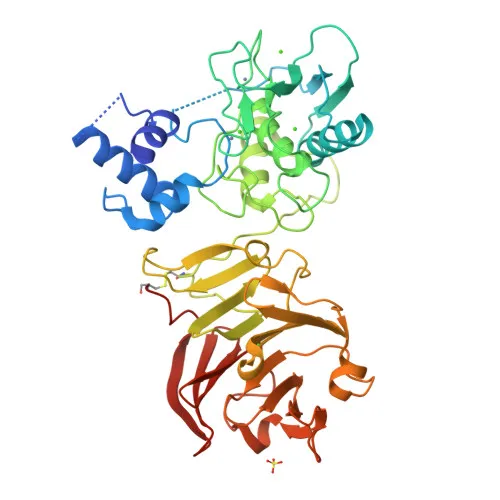
Structurally, MMP1 possesses a signal peptide, propeptide, catalytic domain with a zinc-binding site, and a hemopexin-like domain; it is a glycoprotein with stabilizing disulfide bonds.
-
Post-translational modifications include phosphorylation and possibly glycosylation, which may influence enzymatic activity and extracellular interactions.
-
The human MMP1 gene encodes a protein with a calculated molecular weight of approximately 54 kDa, acting as a calcium-dependent metalloprotease.
-
MMP1 participates in extracellular matrix turnover, contributing to processes such as wound healing, embryonic development, and pathological matrix destruction.
Experimental Guidance and Technical Tips
- The immunogen (aa 20-280) spans the propeptide and catalytic domains, potentially recognizing both pro and active MMP1 forms, making it suitable for total MMP1 detection in WB.
- Under reducing WB conditions, the pro-form (~54 kDa) and active form (~44 kDa) may be resolved; validate band sizes with appropriate controls.
- For ELISA, consider pairing this antibody with a monoclonal capture antibody targeting a distinct epitope to enhance specificity; test cross-reactivity in the relevant sample matrix.
- Cell culture supernatants or tissue homogenates are recommended sample types; for intracellular detection, a secretion inhibitor (e.g., brefeldin A) may improve signal.
- Include positive controls (e.g., PMA-stimulated fibroblasts) and negative controls to confirm MMP1 induction and antibody specificity.
CamelBio: Your One-Stop Sourcing Bridge
CamelBio provides a comprehensive portfolio of IVD raw materials, including validated antibody pairs, optimized polyclonal antibodies, and bulk ancillary reagents to support your diagnostic development. This MMP1 polyclonal antibody is suited for extracellular matrix and collagen degradation research, and CamelBio can assist in sourcing additional specific reagents or custom development to accelerate your project from concept to clinic.
REQUEST A QUOTE
Our professional team will reply to you within one business day. Please feel free to contact us!