Monoclonal Antibodies
Anti-MLKL Rabbit Monoclonal Antibody for WB, IF/ICC, IHC-P, ELISA - Q8NB16
Item Number : CM0011895
Price varies based on specs and customizations
- Application
- WB, IF/ICC, IHC-P, ELISA
- Cross Reactivity
- Human, Mouse
- Protein Weight
- 54kDa

Shipping:
Contact us to get shipping details Enjoy On-time Dispatch Guarantee.
Why Choose Us
Easy ordering process, quality products, and dedicated support for your business success.
Core Product Specifications and Parameters
| Parameter | Value |
|---|---|
| Product Name | MLKL Rabbit mAb |
| Remarks/Alias | hMLKL |
| Species | Human |
| GeneID (Human) | 197259 |
| GeneID | 197259 |
| Immunogen | Recombinant fusion protein containing a sequence corresponding to amino acids 369-471 of human MLKL (NP_689862.1). |
| Source | Rabbit |
| Category | Monoclonal Antibodies |
| Application | WB, IF/ICC, IHC-P, ELISA |
| Cross Reactivity | Human, Mouse |
| SWISS | Q8NB16 |
| Protein Weight | 54kDa |
| Shipping | Ice bag |
Biological Background: MLKL Function and Localization
-
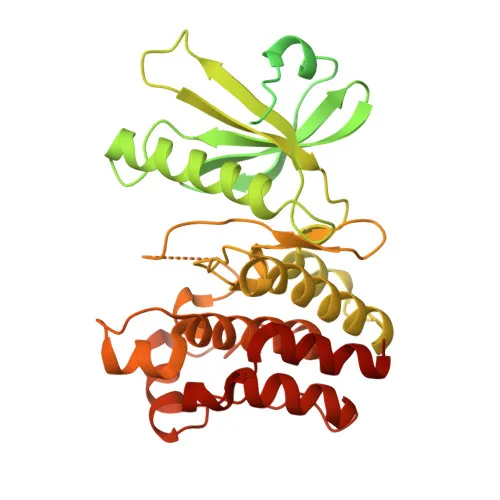
MLKL is a pseudokinase that lacks intrinsic protein kinase activity, functioning as a critical executor of TNF-induced necroptotic cell death. Related references: PMID:22265413, PMID:22265414, PMID:22421439
-
Upon phosphorylation by RIPK3, MLKL undergoes homotrimerization and translocates to the plasma membrane, where it triggers calcium influx and plasma membrane rupture, hallmark features of necroptosis. Related references: PMID:22265413, PMID:22265414, PMID:22421439
-
In addition to cytoplasmic necroptosis, MLKL can also promote nuclear necroptosis during orthomyxovirus infection. ZBP1 senses viral Z-RNA and activates RIPK3 in the nucleus, leading to MLKL phosphorylation, nuclear envelope disruption, and cytosolic leakage of DNA (By similarity).
-
MLKL binding to inositolhexakisphosphate (InsP6) is essential for its necroptotic function, linking phosphoinositide signaling to cell death execution. Related references: PMID:29883610
-
Subcellularly, MLKL resides primarily in the cytoplasm but shuttles to the cell membrane and nucleus upon activation, consistent with its dual roles in membrane and nuclear envelope disruption.
-
The protein contains an N-terminal coiled-coil domain and a C-terminal pseudokinase domain, and is subject to alternative splicing, yielding isoforms that may regulate necroptosis or have unknown functions.
-
Post-translational modifications, particularly RIPK3-mediated phosphorylation, are critical for MLKL activation, oligomerization, and membrane targeting; other modifications and interactions may fine-tune its activity.
Experimental Guidance and Technical Tips
-
The immunogen used spans amino acids 369-471 within the C-terminal pseudokinase domain of human MLKL (NP_689862.1). This region is likely to recognize both the full-length protein and any isoforms containing this segment; confirm specificity in your model system by RNAi or knockout controls.
-
For Western blot, a band around 54kDa is expected for human MLKL. Optimal dilution should be empirically determined using necroptosis-induced cell lysates (e.g., TNF-alpha + Smac mimetic + z-VAD-fmk treatment) as positive controls.
-
IF/ICC and IHC-P applications may require antigen retrieval and permeabilization optimized for your sample type. Necroptotic stimuli can enrich MLKL at the plasma membrane, providing a dynamic localization control.
-
ELISA protocols can be developed using recombinant MLKL protein or cell lysates; consider paired antibody sets for sandwich ELISA to enhance sensitivity.
-
Cross-reactivity is reported against human and mouse; however, validation in the relevant species and tissue is recommended before large-scale studies.
CamelBio: Your One-Stop Sourcing Bridge
CamelBio is your integrated partner for IVD raw material sourcing, offering validated antibody pairs, optimized monoclonal/polyclonal antibodies, bulk ancillary reagents, and rare-target procurement to support your diagnostic development from concept to clinic. For necroptosis and cell death research, we provide a reliable supply of anti-MLKL antibodies and complementary reagents to accelerate assay development and biomarker discovery.
Product Datasheet
Anti-MLKL Rabbit Monoclonal Antibody for WB, IF/ICC, IHC-P, ELISA - Q8NB16
REQUEST A QUOTE
Our professional team will reply to you within one business day. Please feel free to contact us!