Monoclonal Antibodies
Anti-MITF Monoclonal Antibody for WB, IHC-P, ELISA - O75030
Item Number : CM0007243
Price varies based on specs and customizations
- Application
- WB, IHC-P, ELISA
- Cross Reactivity
- Human
- Protein Weight
- 59kDa

Shipping:
Contact us to get shipping details Enjoy On-time Dispatch Guarantee.
Why Choose Us
Easy ordering process, quality products, and dedicated support for your business success.
Core Product Specifications and Parameters
| Parameter | Value |
|---|---|
| Product Name | MITF Rabbit mAb |
| Remarks/Alias | MI; WS2; CMM8; WS2A; COMMAD; MITF-A; bHLHe32 |
| Species | Human |
| GeneID (human) | 4286 |
| GeneID | 4286 |
| Immunogen | Recombinant fusion protein containing a sequence corresponding to amino acids 402-526 of human MITF (NP_001341533.1). |
| Source | Rabbit |
| Category | Monoclonal Antibodies |
| Application | WB, IHC-P, ELISA |
| Cross Reactivity | Human |
| SWISS | O75030 |
| Protein Weight | 59kDa |
| Shipping | Ice bag |
Biological Background: MITF Function and Localization
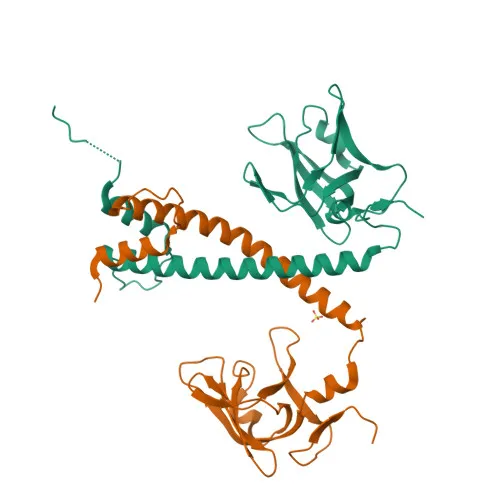
- MITF (Microphthalmia-associated transcription factor) is a member of the basic helix-loop-helix leucine zipper (bHLH-Zip) family of transcription factors, encoded by the MITF gene (also designated BHLHE32).
- Functions as a master regulator of melanocyte survival, differentiation, and melanosome biogenesis by binding to M-box (5'-TCATGTG-3') and E-box (5'-CACGTG-3') DNA sequences in the promoters of pigmentation genes such as TYR and TYRP1 (PubMed:10587587, PubMed:22647378, PubMed:27889061). Related references: PMID:10587587 PMID:22647378 PMID:27889061
- Participates in the cellular response to amino acid availability via the MTOR signaling pathway: under nutrient-rich conditions, MTOR phosphorylates MITF, leading to its inactivation; conversely, starvation or lysosomal stress inhibits MTOR, promoting MITF dephosphorylation and transcriptional activation (PubMed:36608670). Related references: PMID:36608670
- Localizes predominantly to the nucleus but is also detected in the cytoplasm and on lysosome membranes, reflecting its transcriptional and signaling roles.
- Expressed in melanocytes, retinal pigment epithelium, brain, placenta, and kidney, with melanocyte expression being pivotal for pigmentation and related disorders.
- Multiple isoforms produced by alternative splicing affect tissue distribution and functional specificity; mutations in MITF are associated with Waardenburg syndrome type 2A, Tietz syndrome, and COMMAD syndrome.
- Heavily regulated by post-translational modifications including phosphorylation and ubiquitination, which modulate its stability, DNA-binding affinity, and transcriptional activity.
Experimental Guidance and Technical Tips
- The immunogen corresponds to amino acids 402-526 of human MITF (NP_001341533.1), a region that includes the leucine zipper dimerization motif; consider verifying isoform reactivity and epitope accessibility in your experimental system.
- For Western blot (WB), MITF has a predicted molecular weight of approximately 59 kDa, but multiple isoforms and post-translational modifications may produce additional bands; validate using appropriate positive controls (e.g., pigmented melanoma cell lines) and loading controls.
- For immunohistochemistry (IHC-P), antigen retrieval conditions and antibody dilution should be empirically determined; pigmented tissues such as skin or uveal melanoma can serve as positive controls.
- For ELISA, preliminary checkerboard titrations are recommended to determine optimal coating and detection conditions; pairing with validated capture antibodies may improve sensitivity.
- Since MITF is a low-abundance transcription factor, sample enrichment or high-sensitivity detection methods may be necessary for reliable detection in some sample types.
CamelBio: Your One-Stop Sourcing Bridge
CamelBio serves as a comprehensive one-stop sourcing partner for IVD raw materials, supporting researchers and manufacturers from early-stage development to clinical application. This anti-MITF monoclonal antibody supports investigations into melanocyte biology, pigmentation disorders, and melanoma, and CamelBio can supply complementary reagents such as validated antibody pairs, bulk ancillary reagents, and optimized monoclonal/polyclonal antibodies for your assay. For custom sourcing of rare targets or technical consultation, our team ensures seamless procurement to accelerate your diagnostic pipeline.
REQUEST A QUOTE
Our professional team will reply to you within one business day. Please feel free to contact us!