Polyclonal Antibodies
Anti-MICA Rabbit Polyclonal Antibody for WB, ELISA - Q29983
Item Number : CM0013609
Price varies based on specs and customizations
- Application
- WB, ELISA
- Cross Reactivity
- Human, Mouse
- Protein Weight
- 43kDa

Shipping:
Contact us to get shipping details Enjoy On-time Dispatch Guarantee.
Why Choose Us
Easy ordering process, quality products, and dedicated support for your business success.
Core Product Specifications and Parameters
| Parameter | Value |
|---|---|
| Product Name | MICA Rabbit pAb |
| Remarks/Alias | MIC-A; PERB11.1; MICA |
| Species | Human |
| GeneID (Human) | 100507436 |
| GeneID | 100507436 |
| Immunogen | Recombinant protein |
| Source | Rabbit |
| Category | Polyclonal Antibodies |
| Application | WB, ELISA |
| Cross Reactivity | Human, Mouse |
| SWISS | Q29983 |
| Protein Weight | 43kDa |
| Shipping | Ice bag |
Biological Background: MICA (MHC Class I Polypeptide-Related Sequence A) Function and Localization
- MICA is a widely expressed membrane-bound protein that serves as a ligand for the activating receptor KLRK1/NKG2D, which is expressed on natural killer (NK) cells, γδ T cells, and CD8+ αβ T cells. Related references: PMID:11491531, PMID:11777960
- Upon cellular stress such as viral or bacterial infection or DNA damage, MICA is upregulated, acting as a signal of distress; engagement of NKG2D triggers NK cell-mediated cytotoxicity and cytokine production. Related references: PMID:10426993
- The MICA gene belongs to the MHC class I family but does not associate with β2-microglobulin or present peptides; it is also known as PERB11.1.
- MICA is localized to the cell membrane and cytoplasm, and its expression is broad except in the central nervous system; it is particularly high in gastric epithelium, monocytes, keratinocytes, endothelial cells, and fibroblasts.
- In tumors, MICA is overexpressed in many epithelial cancers (lung, breast, kidney, ovary, prostate, colon) and is associated with increased infiltration of γδ T cells, highlighting its role in tumor immune surveillance.
- Key post-translational modifications include N-glycosylation and palmitoylation, and the protein contains immunoglobulin-like domains, a transmembrane helix, and a cytoplasmic tail; alternative splicing generates isoforms.
Experimental Guidance and Technical Tips
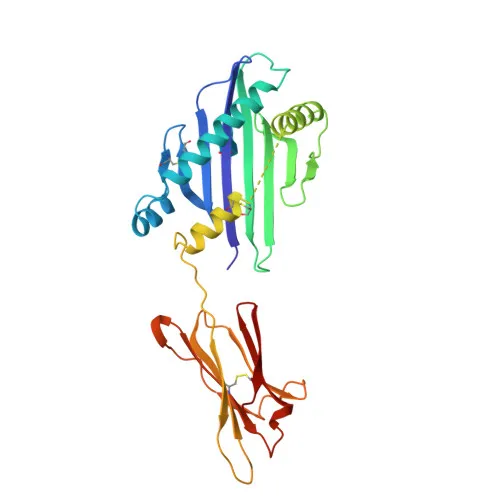
- The immunogen spans amino acids 24-307 of human MICA, covering the extracellular region, and is expected to recognize both full-length and soluble forms of the protein.
- For Western blot, consider using a 1:500-1:2000 dilution and validate in the relevant sample system; MICA is detected at ~43 kDa, though glycosylation may cause a shift.
- This antibody has been tested in ELISA; optimize coating and detection conditions for sandwich or direct assays depending on the experimental design.
- Cross-reactivity is reported for human and mouse; however, sequence homology with other species should be verified if used with other samples.
CamelBio: Your One-Stop Sourcing Bridge
CamelBio is your trusted partner for IVD raw material sourcing, offering validated antibody pairs, bulk ancillary reagents, and customized monoclonal/polyclonal antibody development. This MICA antibody supports research in immuno-oncology, infectious disease, and transplant diagnostics. Leverage our integrated supply chain to accelerate your assay development from concept to clinic.
REQUEST A QUOTE
Our professional team will reply to you within one business day. Please feel free to contact us!