Polyclonal Antibodies
Anti-MGLL Rabbit Polyclonal Antibody for WB, IHC-P, ELISA - Q99685
Item Number : CM0029800
Price varies based on specs and customizations
- Application
- WB, IHC-P, ELISA
- Cross Reactivity
- Human, Mouse, Rat
- Protein Weight
- 33kDa

Shipping:
Contact us to get shipping details Enjoy On-time Dispatch Guarantee.
Why Choose Us
Easy ordering process, quality products, and dedicated support for your business success.
Core Product Specifications and Parameters
| Parameter | Value |
|---|---|
| Product Name | MGLL Rabbit pAb |
| Remarks/Alias | MGL; HUK5; MAGL; HU-K5; MGLL |
| Species | Human |
| Gene ID (Human) | 11343 |
| Immunogen | Recombinant fusion protein containing a sequence corresponding to amino acids 11-313 of human MGLL (NP_009214.1). |
| Source | Rabbit |
| Category | Polyclonal Antibodies |
| Application | WB, IHC-P, ELISA |
| Cross Reactivity | Human, Mouse, Rat |
| SWISS | Q99685 |
| Protein Weight | 33kDa |
| Shipping | Ice bag |
Biological Background: MGLL Function and Localization
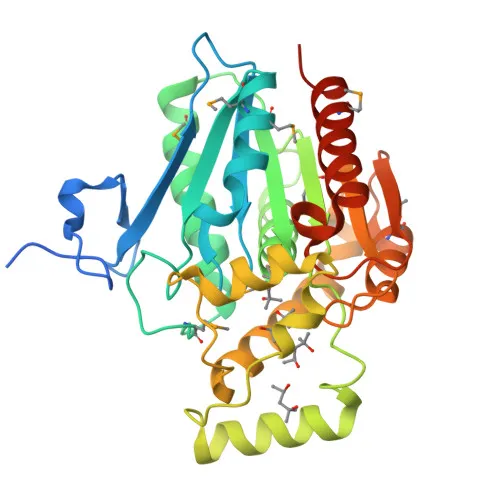
- MGLL (Monoglyceride lipase), also known as MAGL, HU-K5, lysophospholipase homolog, MGL, and HUK5, is a serine esterase enzyme encoded by the MGLL gene.
- It catalyzes the hydrolysis of monoacylglycerides into free fatty acids and glycerol. Related references: PMID:19029917, PMID:20079333, PMID:21049984
- MGLL hydrolyzes the endocannabinoid 2-arachidonoylglycerol (2-AG), thereby regulating endocannabinoid signaling, nociperception, and pain perception. Related references: PMID:19029917, PMID:20079333, PMID:21049984
- The enzyme regulates levels of fatty acid signaling molecules that promote cancer cell migration, invasion, and tumor growth. Related references: PMID:20079333
- Subcellular localization includes cytoplasm, cytosol, and membrane.
- It is expressed in adipose tissue, lung, liver, kidney, brain, and heart.
- Post-translational modifications include phosphorylation and nitration, and alternative splicing generates multiple isoforms.
Experimental Guidance and Technical Tips
- The immunogen spans amino acids 11-313, encompassing the catalytic domain; consider validating for detection of both full-length (predicted ~33 kDa) and potential isoforms in relevant samples.
- For western blotting (WB), expect a primary band near 33 kDa; optimize antibody dilution and blocking conditions using lysates from tissues with known MGLL expression (e.g., brain, adipose).
- For immunohistochemistry (IHC-P), antigen retrieval may be necessary; test in formalin-fixed paraffin-embedded tissues such as brain or liver sections.
- For ELISA, this antibody can be used as a detection or capture reagent; pairing with a matched antibody pair is recommended for sandwich assays.
- Cross-reactivity with mouse and rat orthologs has been reported; validate specificity in your model system if using non-human samples.
CamelBio: Your One-Stop Sourcing Bridge
CamelBio is a trusted partner for IVD manufacturers, offering a comprehensive range of raw materials and technical support from concept to clinic. For MGLL-related research and diagnostic development, we can supply validated antibody pairs, bulk polyclonal or monoclonal anti-MGLL antibodies, and ancillary reagents. Our sourcing network is adept at procuring rare targets and custom immunogens, ensuring you have single-point access to the critical materials needed for lipid metabolism, endocannabinoid signaling, and oncology assays.
REQUEST A QUOTE
Our professional team will reply to you within one business day. Please feel free to contact us!