Monoclonal Antibodies
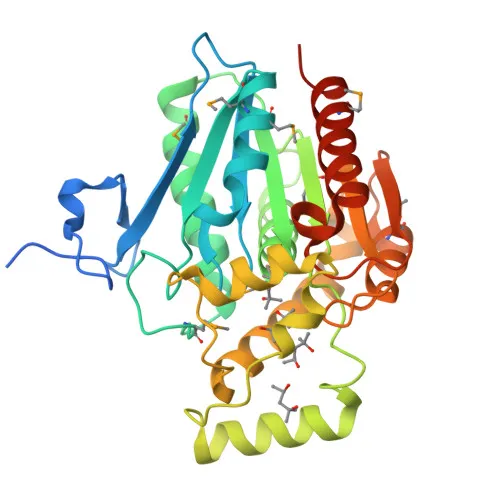
Anti-MGLL (MAGL) Rabbit Monoclonal Antibody for WB, IHC, IF, ELISA - Q99685
Item Number : CM0006942
Price varies based on specs and customizations
- Application
- WB, IF/ICC, IF-P, IHC-P, ELISA
- Cross Reactivity
- Mouse, Rat
- Protein Weight
- 33kDa

Shipping:
Contact us to get shipping details Enjoy On-time Dispatch Guarantee.
Why Choose Us
Easy ordering process, quality products, and dedicated support for your business success.
Core Product Specifications and Parameters
| Parameter | Value |
|---|---|
| Product Name | MGLL Rabbit mAb |
| Remarks/Alias | MGL, HUK5, MAGL, HU-K5, MGLL |
| Species | Human |
| GeneID (Human) | 11343 |
| Immunogen | Recombinant fusion protein containing a sequence corresponding to amino acids 1-300 of human MGLL |
| Source | Rabbit |
| Category | Monoclonal Antibodies |
| Application | WB, IF/ICC, IF-P, IHC-P, ELISA |
| Cross Reactivity | Mouse, Rat |
| SWISS | Q99685 |
| Protein Weight | 33kDa |
| Shipping | Ice bag |
Biological Background: MGLL Function and Localization
- MGLL (Monoacylglycerol lipase), also known as MAGL, HU-K5, or MGL, is a serine hydrolase enzyme that catalyzes the conversion of monoacylglycerides into free fatty acids and glycerol, playing a central role in lipid metabolism. Related references: PMID:19029917, PMID:20079333, PMID:21049984
- It specifically hydrolyzes the endocannabinoid 2-arachidonoylglycerol (2-AG), thereby regulating endocannabinoid signaling pathways involved in pain perception (nociperception) and neuroinflammation. Related references: PMID:19029917, PMID:20079333, PMID:21049984
- In cancer biology, MGLL-derived free fatty acids act as signaling molecules that promote cancer cell migration, invasion, and tumor growth. Related references: PMID:20079333
- MGLL is predominantly localized in the cytoplasm and cytosol, and it also associates with cellular membranes.
- It is widely expressed across multiple tissues, with detection in adipose tissue, lung, liver, kidney, brain, and heart.
- Post-translational modifications include nitration and phosphorylation, and the protein belongs to the serine esterase family. The canonical isoform has a calculated molecular weight of approximately 33 kDa.
Experimental Guidance and Technical Tips
- The immunogen corresponds to the N-terminal region (aa 1-300) of human MGLL, suggesting the antibody likely recognizes an epitope within this domain; consider epitope accessibility in native vs. denaturing conditions.
- For Western blotting, a band around 33 kDa is expected; validate using appropriate positive and negative control lysates (e.g., from human, mouse, or rat tissues/cells known to express MGLL).
- When using immunofluorescence (IF/ICC) or immunohistochemistry (IHC), anticipate cytoplasmic and membrane-associated staining patterns; testing with knockdown or knockout models is recommended to confirm specificity.
- This antibody may be suitable for ELISA applications; optimal working concentrations should be determined experimentally by the end user.
CamelBio: Your One-Stop Sourcing Bridge
CamelBio provides a one-stop sourcing bridge for IVD raw materials, from concept to clinic. This high-quality rabbit monoclonal antibody against MGLL facilitates research into lipid metabolism and endocannabinoid signaling. Beyond antibodies, CamelBio offers validated antibody pairs, bulk ancillary reagents, and expert sourcing for rare targets to streamline your development pipeline.
Product Datasheet
Anti-MGLL (MAGL) Rabbit Monoclonal Antibody for WB, IHC, IF, ELISA - Q99685
REQUEST A QUOTE
Our professional team will reply to you within one business day. Please feel free to contact us!