Polyclonal Antibodies
Anti-MGAM Polyclonal Antibody for WB, ELISA - O43451
Item Number : CM0021730
Price varies based on specs and customizations
- Application
- WB, ELISA
- Cross Reactivity
- Human
- Protein Weight
- 312kDa

Shipping:
Contact us to get shipping details Enjoy On-time Dispatch Guarantee.
Why Choose Us
Easy ordering process, quality products, and dedicated support for your business success.
Core Product Specifications and Parameters
| Parameter | Value |
|---|---|
| Product Name | MGAM Rabbit pAb |
| Remarks/Alias | MG; MGA; MGAM |
| Species | Human |
| Gene ID | 8972 |
| Immunogen | Recombinant fusion protein containing a sequence corresponding to amino acids 860-1090 of human MGAM (NP_004659.2) |
| Source | Rabbit |
| Category | Polyclonal Antibodies |
| Application | WB, ELISA |
| Cross Reactivity | Human |
| SWISS | O43451 |
| Protein Weight | 312kDa |
| Shipping | Ice bag |
Biological Background: Maltase-glucoamylase Function and Localization
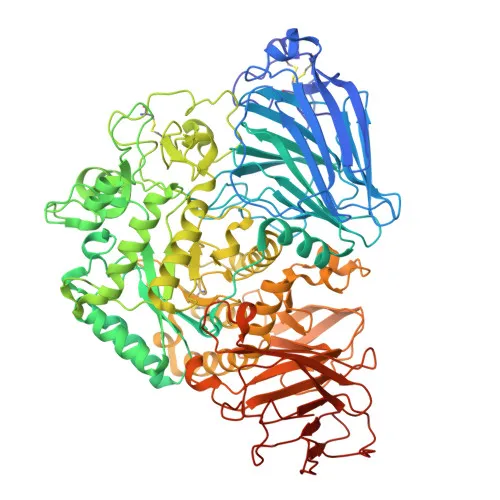
- Maltase-glucoamylase (MGAM), also known as alpha-1,4-glucosidase, is a multifunctional enzyme encoded by the MGAM gene in humans.
- It functions as an alpha-(1,4) exo-glucosidase that breaks down dietary starch oligosaccharides in the small intestine by cleaving non-reducing terminal glucose residues from linear dextrins.
Related references: PMID:12547908, PMID:18036614, PMID:18356321 - The enzyme preferentially hydrolyzes short oligomaltoses with two to seven glucose units, and can also cleave alpha-(1,2), alpha-(1,3), and alpha-(1,6) linkages with lower efficiency, while beta linkages are generally resistant.
Related references: PMID:27480812 - MGAM is localized to the apical cell membrane of enterocytes, consistent with its role in the final steps of starch digestion at the brush border.
- The protein is broadly expressed but highly abundant in the small intestine, and is also detected in granulocytes.
- Post-translational modifications include glycosylation, disulfide bond formation, and sulfation, as indicated by Swiss-Prot keywords.
- Alternative splicing generates multiple transcript variants, potentially contributing to functional diversity.
- The full-length protein has a calculated molecular weight of approximately 312 kDa.
Experimental Guidance and Technical Tips
- The immunogen corresponds to amino acids 860–1090 of human MGAM, which is within the C-terminal region. When performing Western blot, adjust transfer conditions for high molecular weight proteins (~312 kDa), and consider using a low-percentage polyacrylamide gel.
- For ELISA, validate coating conditions using the recombinant immunogen or native MGAM from intestinal tissue lysates to ensure antibody specificity.
- As MGAM contains disulfide bonds and glycosylation, denaturing and reducing conditions may affect epitope accessibility; test both reducing and non-reducing sample preparations in your assay.
- Cross-reactivity has been confirmed for human MGAM. For other species, check sequence homology in the immunogen region before use.
CamelBio: Your One-Stop Sourcing Bridge
CamelBio serves as a comprehensive sourcing partner for IVD manufacturers and research labs, offering reliable access to raw materials such as this anti-MGAM polyclonal antibody for digestive enzyme and intestinal disease research. We supply validated antibody pairs, recombinant proteins, and bulk ancillary reagents to streamline your assay development pipeline. Explore our catalog to find optimized monoclonal and polyclonal antibodies tailored to your diagnostic needs.
REQUEST A QUOTE
Our professional team will reply to you within one business day. Please feel free to contact us!