Polyclonal Antibodies
Anti-MED20 Polyclonal Antibody for WB, ELISA - Q9H944
Item Number : CM0023537
Price varies based on specs and customizations
- Application
- WB, ELISA
- Cross Reactivity
- Human, Mouse, Rat
- Protein Weight
- 23kDa

Shipping:
Contact us to get shipping details Enjoy On-time Dispatch Guarantee.
Why Choose Us
Easy ordering process, quality products, and dedicated support for your business success.
Core Product Specifications and Parameters
| Parameter | Value |
|---|---|
| Product Name | MED20 Rabbit pAb |
| Remarks/Alias | SRB2; TRFP; PRO0213; MED20 |
| Species | Human |
| GeneID (Human) | 9477 |
| GeneID | 9477 |
| Immunogen | Recombinant fusion protein containing a sequence corresponding to amino acids 1-212 of human MED20 (NP_004266.2) |
| Source | Rabbit |
| Category | Polyclonal Antibodies |
| Application | WB, ELISA |
| Cross Reactivity | Human, Mouse, Rat |
| SWISS | Q9H944 |
| Protein Weight | 23kDa |
| Shipping | Ice bag |
Biological Background: MED20 Function and Localization
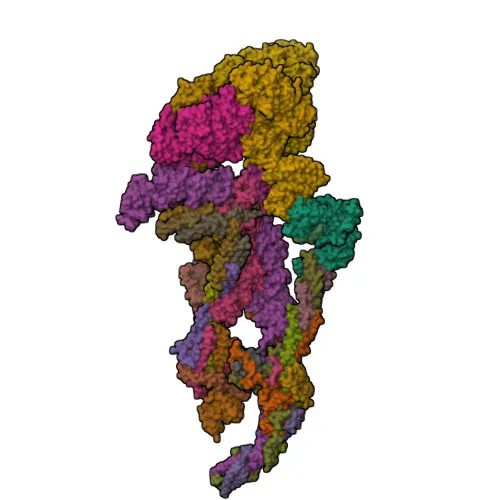
- MED20, also known as Mediator complex subunit 20 or TRF-proximal protein homolog (hTRFP), is a component of the Mediator complex, a large multi-subunit coactivator essential for regulated transcription by RNA polymerase II.
- The Mediator complex functions as a molecular bridge, conveying regulatory signals from gene-specific transcription factors to the basal transcription machinery, thereby facilitating the assembly of the preinitiation complex.
- MED20 is ubiquitously expressed and localizes to the nucleus, consistent with its role in transcription regulation.
- Alternative splicing of the MED20 gene produces multiple transcript variants, which may contribute to functional diversity.
- Structurally, MED20 has been characterized by 3D-structure analysis, providing insights into its interactions within the Mediator complex.
- As a reference component of the transcription apparatus, MED20 is subjected to proteomics identification and has been validated by direct protein sequencing.
- MED20 is classified as a transcriptional activator and a key reference proteome entry, highlighting its fundamental role in gene expression.
Experimental Guidance and Technical Tips
- This polyclonal antibody was raised against a recombinant protein corresponding to the N-terminal region (aa 1-212), which is predicted to be accessible in native conformation; it may recognize multiple epitopes.
- For Western blot (WB), standard denaturing conditions (e.g., sample boiling with loading buffer containing SDS and reducing agent) are recommended; the expected band size is approximately 23 kDa. Validate the antibody in a relevant sample system, considering potential splice isoforms.
- For ELISA applications, the antibody can be used as either capture or detection reagent; pairing with a monoclonal anti-MED20 antibody may enhance specificity in sandwich formats.
- Due to the reported cross-reactivity with human, mouse, and rat samples, consider sequence alignment of the immunogen across species if using in non-human systems.
CamelBio: Your One-Stop Sourcing Bridge
CamelBio provides diagnostic manufacturers and research laboratories with comprehensive access to IVD raw materials, including validated antibody pairs and optimized monoclonal/polyclonal antibodies like this anti-MED20 polyclonal antibody. Explore our bulk ancillary reagents and rare target sourcing solutions to support your transcription and gene regulation studies throughout product development.
REQUEST A QUOTE
Our professional team will reply to you within one business day. Please feel free to contact us!