Polyclonal Antibodies
Anti-MED15 Rabbit Polyclonal Antibody for WB, IF/ICC, ELISA - Q96RN5
Item Number : CM0019672
Price varies based on specs and customizations
- Application
- WB, IF/ICC, ELISA
- Cross Reactivity
- Human, Mouse, Rat
- Protein Weight
- 87kDa

Shipping:
Contact us to get shipping details Enjoy On-time Dispatch Guarantee.
Why Choose Us
Easy ordering process, quality products, and dedicated support for your business success.
Core Product Specifications and Parameters
| Parameter | Value |
|---|---|
| Product Name | MED15 Rabbit pAb |
| Remarks/Alias | TIG1; CAG7A; CTG7A; PCQAP; TIG-1; TNRC7; ARC105; MED15 |
| Species | Human |
| Gene ID (Human) | 51586 |
| Gene ID | 51586 |
| Immunogen | A synthetic peptide corresponding to a sequence within amino acids 1-100 of human MED15 (NP_001003891.1) |
| Source | Rabbit |
| Category | Polyclonal Antibodies |
| Application | WB, IF/ICC, ELISA |
| Cross Reactivity | Human, Mouse, Rat |
| SWISS | Q96RN5 |
| Protein Weight | 87kDa |
| Shipping | Ice bag |
Biological Background: MED15 Function and Localization
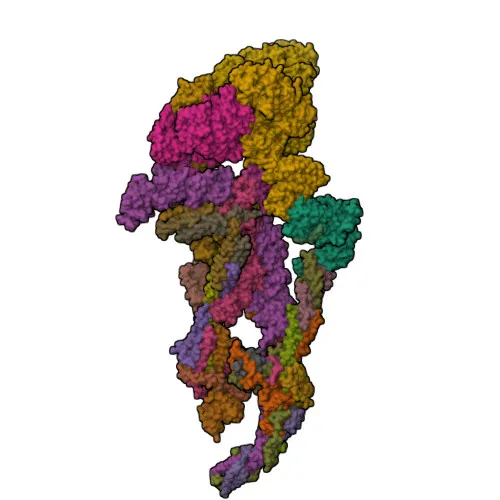
- MED15 (Mediator of RNA polymerase II transcription subunit 15), also known as ARC105, PCQAP, TIG1, is a component of the Mediator complex.
- The Mediator complex acts as a transcriptional coactivator for nearly all RNA polymerase II-dependent genes, bridging regulatory proteins and the basal transcription machinery.
- MED15 is recruited to promoters via direct interactions with gene-specific regulatory proteins, facilitating the assembly of the preinitiation complex with RNA polymerase II and general transcription factors.
- It positively regulates the Nodal signaling pathway and is required for cholesterol-dependent gene regulation.
- Subcellular localization includes both the nucleus and cytoplasm, consistent with its role in transcriptional regulation and potential shuttling.
- MED15 is expressed in a wide range of tissues; highest expression is observed in placenta and peripheral blood, with lower levels in pancreas and kidney.
- Post-translational modifications include phosphorylation, methylation, and ubiquitin-like conjugation, as indicated by UniProt keywords.
- The MED15 gene is associated with triplet repeat expansion and alternative splicing, yielding multiple isoforms.
Experimental Guidance and Technical Tips
- The immunogen is a synthetic peptide from the N-terminus (aa 1–100) of human MED15. This region may recognize all major isoforms; however, isoform-specific expression should be verified if needed.
- For Western blotting (WB), a band of approximately 87 kDa is expected. Consider testing a range of antibody dilutions and optimizing blocking conditions for your sample type.
- In immunofluorescence/immunocytochemistry (IF/ICC), observe both nuclear and cytoplasmic staining. Co-staining with a nuclear marker can help confirm localization.
- For ELISA applications, this polyclonal antibody can be used as a capture or detection reagent; validate with recombinant MED15 or cell lysates.
- Cross-reactivity is reported for human, mouse, and rat. When using mouse or rat samples, confirm sequence homology to ensure comparable detection sensitivity.
CamelBio: Your One-Stop Sourcing Bridge
CamelBio streamlines IVD raw-material procurement for diagnostic developers and researchers. This Anti-MED15 rabbit polyclonal antibody supports investigations into Mediator complex biology and transcription regulation. Beyond standard catalog antibodies, CamelBio can source validated antibody pairs, bulk monoclonals/polyclonals, ancillary reagents, and rare-target materials to accelerate your assay development from concept to clinic.
REQUEST A QUOTE
Our professional team will reply to you within one business day. Please feel free to contact us!