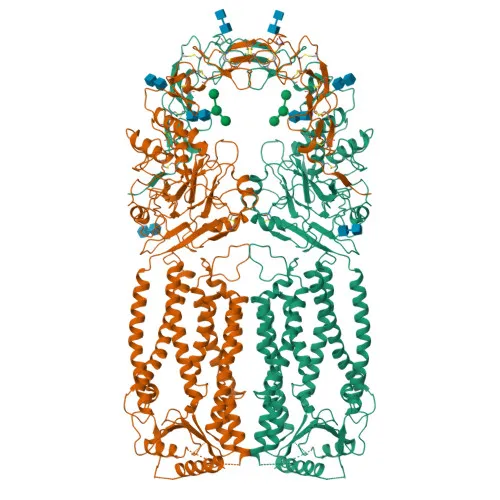
Monoclonal Antibodies
Anti-Meckelin Monoclonal Antibody for WB, IHC-P, ELISA - Q5HYA8
Item Number : CM0003857
Price varies based on specs and customizations
- Application
- WB, IHC-P, ELISA
- Cross Reactivity
- Human, Mouse, Rat
- Protein Weight
- 112kDa

Shipping:
Contact us to get shipping details Enjoy On-time Dispatch Guarantee.
Why Choose Us
Easy ordering process, quality products, and dedicated support for your business success.
Core Product Specifications and Parameters
| Parameter | Value |
|---|---|
| Product Name | Meckelin Rabbit mAb |
| Remarks/Alias | MKS3; JBTS6; NPHP11; TNEM67; MECKELIN; Meckelin |
| Species | Human |
| GeneID (human) | 91147 |
| GeneID | 91147 |
| Immunogen | Recombinant fusion protein containing a sequence corresponding to amino acids 800-880 of human Meckelin (NP_714915.3). |
| Source | Rabbit |
| Category | Monoclonal Antibodies |
| Application | WB, IHC-P, ELISA |
| Cross Reactivity | Human, Mouse, Rat |
| SWISS | Q5HYA8 |
| Protein Weight | 112kDa |
| Shipping | Ice bag |
Biological Background: Meckelin Function and Localization
- Meckelin, encoded by the TMEM67 gene, is a transmembrane protein also known as Meckel syndrome type 3 protein (MKS3). Mutations in TMEM67 are linked to a spectrum of ciliopathies, including Meckel syndrome, Joubert syndrome, and nephronophthisis.
- The protein is a core component of ciliary structure and function. It participates in the tectonic-like complex, which is essential for tissue-specific ciliogenesis and regulation of ciliary membrane composition.
- Meckelin is involved in centrosome migration to the apical cell surface during early cilium formation and controls cilia length and number through centrosome duplication. It also acts as a key regulator of stereociliary bundle orientation in sensory cells.
- In the Wnt signaling pathway, Meckelin negatively regulates the canonical Wnt cascade and activates non-canonical Wnt signaling stimulated by WNT5A, possibly functioning as a ROR2 coreceptor. Related references: PMID:26035863
- The protein is required for epithelial cell branching morphology and is essential for endoplasmic reticulum-associated degradation (ERAD) of surfactant protein C (SFTPC).
- Subcellularly, Meckelin localizes to the cell membrane, endoplasmic reticulum membrane, and the cilium, particularly the basal body region, reflecting its role in ciliary trafficking and organization.
- Expression is widespread in adult and fetal tissues, with elevated levels observed in the spinal cord, consistent with its importance in neurodevelopment and ciliopathy phenotypes.
- Post-translational modifications include glycosylation and structural disulfide bonds, and the protein contains a coiled-coil domain and multiple transmembrane helices, as indicated by UniProt keywords.
Experimental Guidance and Technical Tips
- The immunogen corresponds to an internal region (amino acids 800–880) of human Meckelin, which is conserved across species. For optimal results, validate antibody binding in the target species and sample type, as post-translational modifications or splice variants may affect recognition.
- For Western blot analysis, a band of approximately 112 kDa is expected. Use appropriate loading controls and consider reducing/denaturing conditions to account for disulfide bonds.
- In immunohistochemistry (IHC-P), antigen retrieval may be necessary to expose the epitope. Titrate the antibody and include appropriate positive and negative tissue controls, particularly from tissues with high expression (e.g., spinal cord).
- When performing ELISA, standard optimization of coating, blocking, and detection conditions is recommended. Antibody affinity and specificity for the recombinant protein should be verified in the relevant assay buffer.
- As the antibody cross-reacts with mouse and rat, it is suitable for preclinical models. Confirm epitope conservation via sequence alignment before applying to non-human samples.
CamelBio: Your One-Stop Sourcing Bridge
CamelBio equips diagnostic manufacturers and researchers with premium IVD raw materials, including rigorously validated antibodies for ciliopathy and developmental signaling targets like Meckelin. Our product line encompasses bulk monoclonal and polyclonal antibodies, antigen-grade recombinant proteins, and ancillary reagents to accelerate your assay development from discovery through clinical validation. Whether you require rare-target sourcing or scalable supply of core reagents, CamelBio provides integrated support to bridge innovation and diagnostic application.
REQUEST A QUOTE
Our professional team will reply to you within one business day. Please feel free to contact us!