Polyclonal Antibodies
Anti-ME2 Polyclonal Antibody for WB, ELISA - P23368
Item Number : CM0025407
Price varies based on specs and customizations
- Application
- WB, ELISA
- Cross Reactivity
- Human
- Protein Weight
- 65kDa

Shipping:
Contact us to get shipping details Enjoy On-time Dispatch Guarantee.
Why Choose Us
Easy ordering process, quality products, and dedicated support for your business success.
Core Product Specifications and Parameters
| Parameter | Value |
|---|---|
| Product Name | ME2 Rabbit pAb |
| Remarks/Alias | ODS1; ME2 |
| Species | Human |
| GeneID (Human) | 4200 |
| GeneID | 4200 |
| Immunogen | Recombinant fusion protein containing a sequence corresponding to amino acids 220-479 of human ME2 (NP_001161807.1) |
| Source | Rabbit |
| Category | Polyclonal Antibodies |
| Application | WB, ELISA |
| Cross Reactivity | Human |
| SWISS | P23368 |
| Protein Weight | 65kDa |
| Shipping | Ice bag |
Biological Background: ME2 Function and Localization
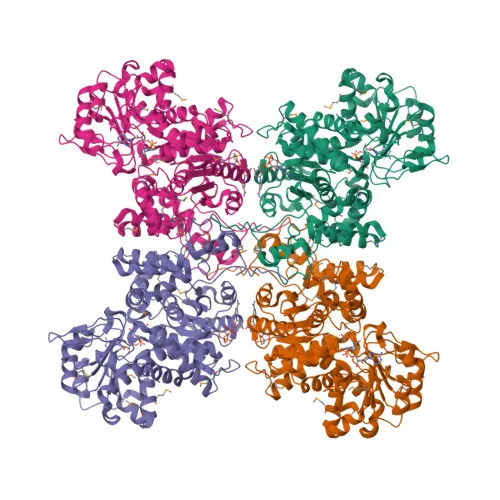
- ME2 (NAD-dependent malic enzyme, mitochondrial) is also known as ODS1 and malic enzyme 2. It is encoded by the ME2 gene in humans.
- This enzyme catalyzes the oxidative decarboxylation of malate to pyruvate, using NAD+ as a cofactor. The reaction is key in linking the TCA cycle to pyruvate metabolism and NADH production.
- ME2 is an allosteric enzyme and requires divalent metal ions for activity, typically Mg2+ or Mn2+, which facilitate substrate binding and catalysis.
- The protein localizes to the mitochondrial matrix, where it functions in malate metabolism. It is imported into mitochondria via an N-terminal transit peptide that is cleaved after translocation.
- Alternative splicing generates multiple transcript variants, potentially yielding isoforms with distinct regulatory properties or expression patterns.
- Post-translational modifications include acetylation, which may regulate enzyme activity or stability in response to cellular metabolic states.
- ME2 is broadly expressed but plays specialized roles in tissues with high mitochondrial activity, such as liver, heart, and brain, where it contributes to lipid and amino acid metabolism.
- Keywords from UniProt highlight its characteristics: 3D-structure (structural data available), acetylation, allosteric enzyme, alternative splicing, direct protein sequencing, metal-binding, mitochondrion, NAD, oxidoreductase, and reference proteome.
Experimental Guidance and Technical Tips
- The immunogen is designed against the C-terminal region (aa 220-479) of human ME2. This region is distinct from the N-terminal transit peptide, so the antibody is expected to recognize the mature mitochondrial form.
- As a polyclonal antibody, it may detect multiple isoforms arising from alternative splicing. In Western blotting, the predominant band is expected at ~65 kDa, but additional bands could appear depending on the sample and conditions.
- For WB, using mitochondrial-enriched lysates or tissues with high mitochondrial content (e.g., liver, heart) may improve detection sensitivity. Optimize blocking and washing conditions to reduce background.
- In ELISA, the antibody can be used for direct or indirect detection. Validate with recombinant ME2 protein or cell lysates to confirm specificity and determine optimal dilution.
- Cross-reactivity is stated for human ME2. For other species, check sequence homology in the immunogen region before use, as reactivity is not guaranteed.
CamelBio: Your One-Stop Sourcing Bridge
CamelBio offers a comprehensive portfolio of IVD raw materials, including validated antibody pairs, optimized monoclonal and polyclonal antibodies, bulk ancillary reagents, and rare target sourcing. For ME2-related metabolic and mitochondrial research, we provide ready-to-use reagents and can assist with custom antibody development to meet your specific assay requirements. Let CamelBio be your reliable partner from concept to clinic.
REQUEST A QUOTE
Our professional team will reply to you within one business day. Please feel free to contact us!