Polyclonal Antibodies
Anti-MCM3 Rabbit Polyclonal Antibody for WB, IP, ELISA - P25205
Item Number : CM0013573
Price varies based on specs and customizations
- Application
- WB, IP, ELISA
- Cross Reactivity
- Human, Mouse, Rat
- Protein Weight
- 91kDa

Shipping:
Contact us to get shipping details Enjoy On-time Dispatch Guarantee.
Why Choose Us
Easy ordering process, quality products, and dedicated support for your business success.
Core Product Specifications and Parameters
| Parameter | Value |
|---|---|
| Product Name | MCM3 Rabbit pAb |
| Remarks/Alias | HCC5; P1.h; RLFB; P1-MCM3; MCM3 |
| Species | Human |
| GeneID (Human) | 4172 |
| GeneID | 4172 |
| Immunogen | Recombinant fusion protein containing a sequence corresponding to amino acids 1-295 of human MCM3 (NP_002379.2). |
| Source | Rabbit |
| Category | Polyclonal Antibodies |
| Application | WB, IP, ELISA |
| Cross Reactivity | Human, Mouse, Rat |
| SWISS | P25205 |
| Protein Weight | 91kDa |
| Shipping | Ice bag |
Biological Background: MCM3 Function and Localization
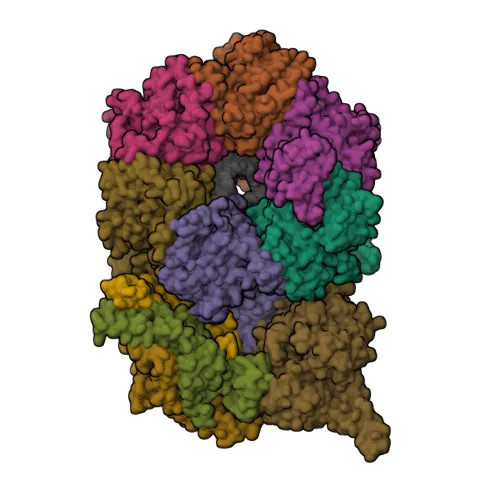
- MCM3 (DNA replication licensing factor MCM3), also designated HCC5, P1.h, RLFB, or P1-MCM3, is a core component of the hexameric MCM2-7 complex.
- As part of the MCM2-7 helicase and the CDC45-MCM-GINS (CMG) complex, MCM3 is essential for DNA replication initiation and elongation, enforcing once-per-cell-cycle genome duplication (PubMed:32453425, PubMed:34694004, PubMed:34700328). Related references: PMID:32453425 PMID:34694004 PMID:34700328
- The active ATPase sites within the MCM2-7 ring are formed at subunit interfaces, where MCM3 provides a conserved arginine finger motif critical for ATP hydrolysis and helicase processivity (PubMed:32453425). Related references: PMID:32453425
- MCM3 is required for entry into S phase and for cell division, playing a central role in cell cycle progression.
- The protein localizes predominantly in the nucleus and associates with chromosomes.
- Post-translational modifications include acetylation and phosphorylation; it contains functional nucleotide-binding (ATP), DNA-binding, and helicase domains.
- The molecular mass of MCM3 is approximately 91 kDa (UniProt: 90981 Da).
Experimental Guidance and Technical Tips
- The immunogen encompasses the N-terminal region (amino acids 1–295) of human MCM3; consider this when designing epitope-based assays.
- For western blot (WB) and immunoprecipitation (IP), perform a dilution series to optimize the polyclonal antibody concentration in your experimental system.
- Verify cross-reactivity with mouse and rat samples using appropriate tissue or cell lysates.
- Ensure the antibody is validated in your specific ELISA format; preliminary checkerboard titrations are recommended.
- As with all polyclonal antibodies, lot-to-lot consistency should be monitored when transitioning to production-scale workflows.
CamelBio: Your One-Stop Sourcing Bridge
CamelBio connects diagnostic manufacturers and research teams with high-quality IVD raw materials, including validated polyclonal antibodies like this MCM3 rabbit pAb. Our supply network covers optimized antibody pairs, bulk ancillary reagents, and rare-target sourcing, supporting your DNA replication and cell cycle–focused assay development. From concept to clinic, CamelBio streamlines procurement so you can accelerate project timelines with confidence.
REQUEST A QUOTE
Our professional team will reply to you within one business day. Please feel free to contact us!