Polyclonal Antibodies
Anti-MCHR1 Polyclonal Antibody for WB and ELISA - Q99705
Item Number : CM0021737
Price varies based on specs and customizations
- Application
- WB, ELISA
- Cross Reactivity
- Human, Mouse, Rat
- Protein Weight
- 46kDa

Shipping:
Contact us to get shipping details Enjoy On-time Dispatch Guarantee.
Why Choose Us
Easy ordering process, quality products, and dedicated support for your business success.
Core Product Specifications and Parameters
| Parameter | Value |
|---|---|
| Product Name | MCHR1 Rabbit pAb |
| Remarks/Alias | SLC1; GPR24; MCH1R; SLC-1; MCH-1R; MCHR1 |
| Species | Human |
| GeneID (Human) | 2847 |
| GeneID | 2847 |
| Immunogen | Recombinant fusion protein containing a sequence corresponding to amino acids 1-95 of human MCHR1 (NP_005288.3) |
| Source | Rabbit |
| Category | Polyclonal Antibodies |
| Application | WB, ELISA |
| Cross Reactivity | Human, Mouse, Rat |
| SWISS | Q99705 |
| Protein Weight | 46kDa |
| Shipping | Ice bag |
Biological Background: MCHR1 (Melanin-Concentrating Hormone Receptor 1) Function and Localization
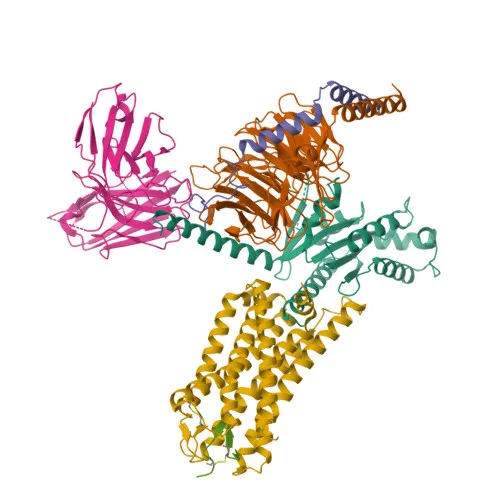
- MCHR1, also known as GPR24, SLC-1, or MCH1R, is a G protein-coupled receptor for melanin-concentrating hormone (MCH).
- Upon MCH binding, MCHR1 primarily signals through G(i/o) proteins to inhibit adenylyl cyclase, and can additionally couple to G(q/11) to stimulate phospholipase C and mobilize intracellular calcium. Related references: PMID:10421367, PMID:15340116, PMID:38710677
- MCHR1 is predominantly expressed in the central nervous system, where it regulates key physiological processes such as feeding behavior, energy homeostasis, stress/anxiety responses, and sleep. Related references: PMID:10421367, PMID:15166293, PMID:15941924
- The receptor localizes to the cell membrane, consistent with its role as a membrane-bound GPCR.
- Highest expression levels are observed in the brain, particularly the frontal cortex and hypothalamus, with lower levels detected in liver and heart.
- MCHR1 belongs to the somatostatin receptor-like protein family and contains characteristic features of GPCRs, including seven transmembrane helices, disulfide bonds, and glycosylation sites.
Experimental Guidance and Technical Tips
- The immunogen corresponds to amino acids 1-95 of human MCHR1 (N-terminal region). Given that this is a polyclonal antibody, multiple epitopes may be recognized. Consider epitope mapping if precise binding site is critical.
- For Western blot, a specific band around 46 kDa is expected; note that the theoretical molecular weight is approximately 39 kDa, and the observed difference may be due to glycosylation or other modifications. Always include appropriate positive and negative controls.
- This antibody is validated for ELISA; consider optimizing coating antigen concentration and detection conditions.
- Cross-reactivity with mouse and rat MCHR1 has been reported; thus, the antibody can be used in rodent models, but validate in the relevant species' tissue or cell lysates.
- Since MCHR1 is a multi-pass membrane protein, sample preparation and solubilization methods may influence detection efficiency in denaturing gel electrophoresis.
CamelBio: Your One-Stop Sourcing Bridge
As a dedicated provider of IVD raw materials, CamelBio offers one-stop access to high-quality antibodies and reagents for neuroscience and metabolic disorder research. In addition to the MCHR1 polyclonal antibody, we supply validated antibody pairs, optimized monoclonal antibodies, bulk ancillary reagents, and rare target raw-material sourcing to support your assay development from concept to clinic.
REQUEST A QUOTE
Our professional team will reply to you within one business day. Please feel free to contact us!