Polyclonal Antibodies
Anti-MCCC1 Polyclonal Antibody for WB, IHC-P, ELISA - Q96RQ3
Item Number : CM0014812
Price varies based on specs and customizations
- Application
- WB, IHC-P, ELISA
- Cross Reactivity
- Human, Mouse, Rat
- Protein Weight
- 80kDa

Shipping:
Contact us to get shipping details Enjoy On-time Dispatch Guarantee.
Why Choose Us
Easy ordering process, quality products, and dedicated support for your business success.
Core Product Specifications and Parameters
| Parameter | Value |
|---|---|
| Product Name | MCCC1 Rabbit pAb |
| Remarks/Alias | MCCA; MCC-B; MCCCalpha; MCCC1 |
| Species | Human |
| Gene ID (Human) | 56922 |
| Immunogen | Recombinant fusion protein containing a sequence corresponding to amino acids 640-725 of human MCCC1 (NP_064551.3) |
| Source | Rabbit |
| Category | Polyclonal Antibodies |
| Application | WB, IHC-P, ELISA |
| Cross Reactivity | Human, Mouse, Rat |
| SWISS | Q96RQ3 |
| Protein Weight | 80kDa |
| Shipping | Ice bag |
Biological Background: MCCC1 Function and Localization
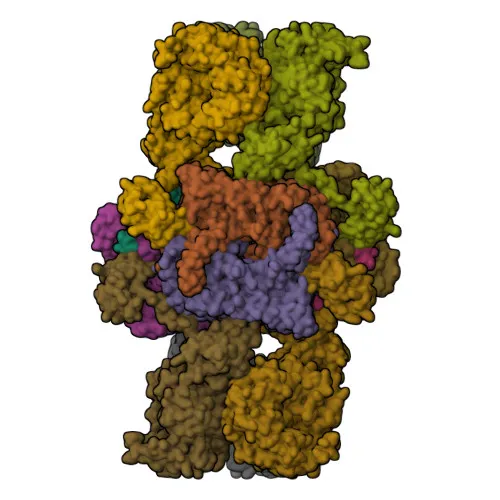
- Methylcrotonoyl-CoA carboxylase subunit alpha (MCCC1) is the biotin-containing subunit of the 3-methylcrotonyl-CoA carboxylase enzyme, which catalyzes the ATP-dependent carboxylation of 3-methylcrotonyl-CoA to form 3-methylglutaconyl-CoA.
- This reaction is a critical step in the mitochondrial catabolism of leucine and isovaleric acid, linking amino acid degradation to energy metabolism.
- The enzyme functions as a heteromeric complex, with MCCC1 as the alpha subunit responsible for biotin carboxylation and MCCC2 as the beta subunit mediating carboxyltransferase activity.
- MCCC1 is localized to the mitochondrial matrix, reflecting its role in the compartmentalized degradation of branched-chain amino acids.
- Alternative names include MCCA, MCC-B, MCCCalpha, and 3-methylcrotonyl-CoA carboxylase 1, consistent with its function as a biotin-dependent ligase.
- Post-translational modifications include biotinylation at a conserved lysine residue, which is essential for catalytic activity, as well as acetylation and ATP-binding motifs.
- Mutations in the MCCC1 gene are associated with 3-methylcrotonyl-CoA carboxylase deficiency, a rare autosomal recessive inborn error of metabolism characterized by impaired leucine breakdown and organic aciduria.
Experimental Guidance and Technical Tips
- The immunogen was designed against amino acids 640-725 near the C-terminus of human MCCC1 (isoform 1). This region is likely well-conserved across species, consistent with the observed cross-reactivity with mouse and rat.
- For Western blot (WB), a band corresponding to the predicted molecular weight of ~80 kDa should be detected in human, mouse, or rat tissue lysates. Consider using mitochondrial-enriched fractions to enhance signal intensity.
- In immunohistochemistry (IHC-P), antigen retrieval may be required. Test both citrate and EDTA-based buffers to optimize staining in formalin-fixed paraffin-embedded sections.
- The antibody is suitable for ELISA applications; ensure the recombinant protein or peptide immunogen is used as a positive control to validate assay specificity.
- As with all polyclonal antibodies, lot-to-lot variability can occur. Validate each new lot in your specific assay system to ensure consistent performance.
CamelBio: Your One-Stop Sourcing Bridge
CamelBio serves as a comprehensive procurement partner for IVD raw materials, connecting diagnostic developers and research laboratories with high-quality reagents. This anti-MCCC1 polyclonal antibody supports studies in amino acid metabolism, mitochondrial disorders, and metabolic disease biomarker development. Through its extensive supply network, CamelBio facilitates access to validated antibody pairs, optimized monoclonal/polyclonal antibodies, and ancillary reagents, offering one-stop sourcing solutions for customer-specific diagnostic and research needs.
REQUEST A QUOTE
Our professional team will reply to you within one business day. Please feel free to contact us!