Polyclonal Antibodies
Anti-MAPK13 Polyclonal Antibody for WB, ELISA - O15264
Item Number : CM0019739
Price varies based on specs and customizations
- Application
- WB, ELISA
- Cross Reactivity
- Human, Mouse, Rat
- Protein Weight
- 42kDa

Shipping:
Contact us to get shipping details Enjoy On-time Dispatch Guarantee.
Why Choose Us
Easy ordering process, quality products, and dedicated support for your business success.
Core Product Specifications and Parameters
| Parameter | Value |
|---|---|
| Product Name | MAPK13 Rabbit pAb |
| Remarks/Alias | SAPK4; PRKM13; MAPK 13; MAPK-13; p38delta; MAPK13 |
| Species | Human |
| Gene ID | 5603 |
| Immunogen | Synthetic Peptide|A synthetic peptide corresponding to a sequence within amino acids 300-400 of human MAPK13 (O15264). |
| Source | Rabbit |
| Category | Polyclonal Antibodies |
| Application | WB, ELISA |
| Cross Reactivity | Human, Mouse, Rat |
| SWISS | O15264 |
| Protein Weight | 42kDa |
| Shipping | Ice bag |
Biological Background: MAPK13 Function and Localization
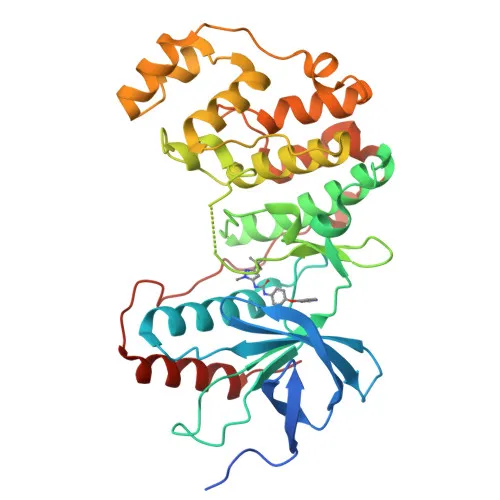
- MAPK13, also known as p38 delta or stress-activated protein kinase 4 (SAPK4), is a member of the p38 MAP kinase family and is encoded by the MAPK13 gene (Gene ID: 5603).
- As a serine/threonine kinase, MAPK13 plays a critical role in the MAP kinase signal transduction pathway, mediating cellular responses to pro-inflammatory cytokines and physical stress by phosphorylating transcription factors such as ELK1 and ATF2.
- MAPK13 regulates protein translation by phosphorylating and inactivating EEF2K, and is involved in cytoskeletal remodeling through phosphorylation of MAPT and STMN1.
- This kinase mediates UV irradiation-induced up-regulation of CXCL14 gene expression and plays a key role in epidermal keratinocyte differentiation, apoptosis, and skin tumor development.
- Under stress conditions, MAPK13 phosphorylates the transcriptional activator MYB, promoting its proteasome-dependent degradation.
- In pancreatic beta cells, MAPK13 phosphorylates and down-regulates PRKD1, contributing to the regulation of insulin secretion.
- MAPK13 is expressed in testes, pancreas, small intestine, lung, kidney, and is abundant in macrophages, neutrophils, CD4+ T-cells, and endothelial cells.
- Keywords associated with MAPK13 include alternative splicing, ATP-binding, cell cycle, kinase, stress response, and transcription regulation, reflecting its multifunctional roles.
Experimental Guidance and Technical Tips
- Based on the immunogen region (aa 300–400), the antibody is expected to recognize the target protein in Western blotting at approximately 42 kDa.
- For WB, consider using lysates from cell lines or tissues with confirmed MAPK13 expression (e.g., macrophages, pancreatic beta cells, or lung tissue).
- In ELISA assays, appropriate pairing and dilution should be empirically determined; the polyclonal nature offers broad epitope recognition.
- Cross-reactivity with mouse and rat MAPK13 suggests potential utility across species, but validation in the relevant sample system is recommended.
CamelBio: Your One-Stop Sourcing Bridge
CamelBio provides diagnostic manufacturers and research institutes with a comprehensive one-stop platform for IVD raw-material procurement, including validated antibody pairs, high-affinity monoclonal and polyclonal antibodies, and bulk ancillary reagents. Our expertise in MAPK pathway targets ensures reliable sourcing for immunoassay development and stress-response research. Contact us to streamline your supply chain and accelerate progress from concept to clinic.
REQUEST A QUOTE
Our professional team will reply to you within one business day. Please feel free to contact us!